
How to Lose Weight When Life Won’t Slow Down
May 27, 2026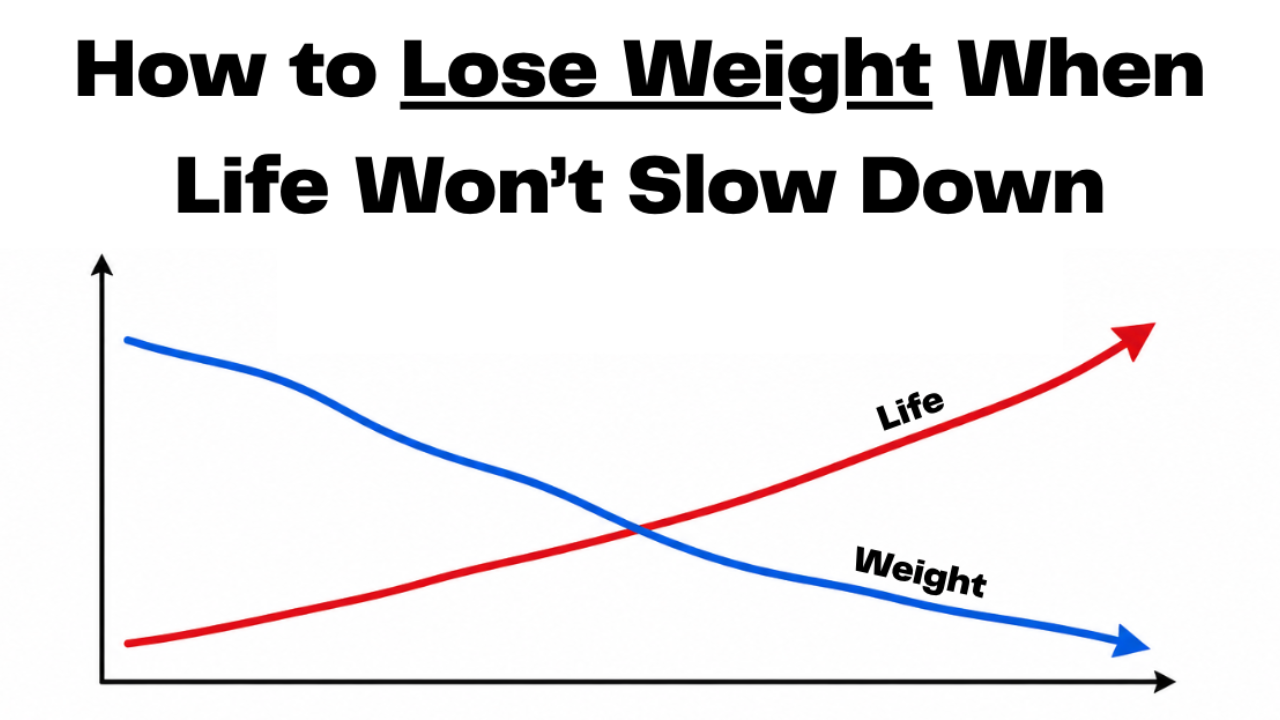
When your calendar runs your life, most fat-loss advice starts to feel insulting.
Meal prep for three hours every Sunday. Cook every meal at home. Sleep eight hours every night. Hit the gym six days a week. Track every bite perfectly.
Oh, great - thanks! I guess I'll just ignore the back-to-back meetings, kids’ activities, dinner reservations, travel, messy kitchen, poor sleep, and "lunch break" I rarely get.
That’s the real world for most high-achievers I work with and talk to.
I'm not here to give you another plan that only works when your life is calm. I'm here to share a proven fat-loss system that works when life your life is full to the brim.
That’s the point of this blueprint.
Not perfection or punishment. Not living in the gym. Not eating tiny meals that leave you thinking about snacks all afternoon.
A simple system.
Because when your days are packed:
Fat loss has to become less dependent on willpower and more dependent on structure.
This is general wellness information based on current research, not medical advice. If you have specific health concerns, please consult with a healthcare provider. Some links in this article may be affiliate links. If you buy through those links, I may earn a commission at no extra cost to you. I only recommend products that fit the recipe, meal prep goal, or health context of the article.
Why most high achievers struggle with fat loss
Most people don’t struggle because they’re lazy.
They struggle because their life is built around everyone else’s demands first.
You wake up and you're already behind. You answer messages before your nervous system has even come online. You drink coffee, maybe skip breakfast, or grab something random, then push through the day on fumes.
By the time dinner comes around...
You’re not making a nutrition decision from a calm, regulated place. You’re making it from a state of exhaustion, with your phone still buzzing, kids screaming, or teens asking "what's for dinner?"
That’s why generic advice like “just eat less and move more” usually underperforms.
It ignores the actual bottleneck.
After working with 100+ clients to help them lose almost 2000 pounds combined, I can tell you with confidence that the bottleneck isn't knowledge.
Most people know they should eat more protein, walk more, lift weights, drink water, and eat fewer ultra-processed foods. The true bottleneck is execution under pressure.
A sustainable fat-loss plan for busy, high achievers has to solve for:
- Decision fatigue
- Protein consistency
- Hunger control
- Blood sugar stability
- Travel, restaurants, and imperfect schedules
- Recovery and stress load
- A clear fallback plan when the day goes sideways
If your plan doesn’t account for those things...
It’s not a plan. It’s a fantasy.
The better question: what can you repeat?
When life is busy, your best fat-loss strategy isn't the most aggressive one.
It’s the one you can repeat when your week is only 70% under control.
That means the plan should be simple enough to run on a Tuesday when you’re tired, not just on a Sunday when motivation is high.
This is where most high-achieving parents and professionals get trapped.
You’re used to being excellent. So when you can’t do the plan perfectly, you feel like you failed. Then the whole thing collapses.
But fat loss is not pass or fail.
It’s a series of repeated signals.
- Every high-protein meal is a signal.
- Every walk is a signal.
- Every better restaurant order is a signal.
- Every skipped liquid calorie is a signal.
- Every grocery trip with a plan is a signal.
Those signals compound.
That’s how you build sustainable fat loss without making your life smaller.
Why belly fat gets attention for the right reasons
One of topics I get repeatedly asked about is visceral fat.
Because most people think about belly fat as a mirror problem, but the deeper issue is what that fat can represent inside the body.
Visceral fat is the fat stored around your organs. It’s different from the pinchable fat under your skin, and higher levels are associated with insulin resistance, inflammation, fatty liver, higher blood pressure, and higher cardiometabolic risk.
That doesn't mean you need to panic about your waistline.
It just means that belly fat is a useful signal.
If your waist is increasing, cravings are louder, energy is unstable, and your blood sugar or cholesterol markers are drifting, your body is telling you the current system is not working.
The answer isn't an extreme diet, but a better metabolic environment:
- More high protein meals with fiber
- More muscle-supporting meals
- Better blood sugar control
- Less liquid sugar and alcohol by default
- More walking and resistance training
- Better sleep and stress management
- Fewer ultra-processed foods
- A grocery system that makes the better choice easier
That’s why this blueprint focuses on structure instead of punishment.
So you can become more metabolically flexible, more insulin sensitive, and more capable of using stored energy when life gets busy.
THE BLUEPRINT
Step 1: Build your day around protein anchors
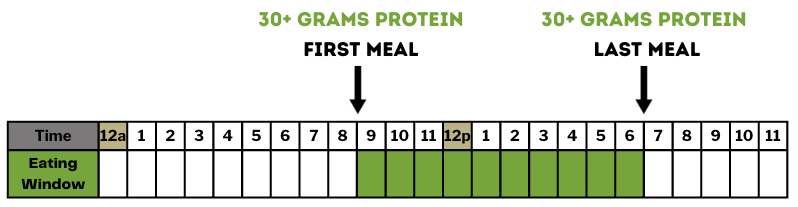
If you do nothing else, start here.
Not because protein is magic, but because it solves several problems at once:
High-protein meals help you stay fuller longer, support lean muscle, increase the energy cost of digestion, and make it easier to control cravings later in the day.
For fat loss after 35 or 40, this matters even more.
Because muscle becomes one of the biggest drivers of metabolic health, body composition, strength, and long-term independence.
The simple target I like for most busy adults is this:
Build your first and last meals around 30 to 40 grams of protein.
That could be:
- Eggs, Greek yogurt, and berries
- Chicken sausage with eggs and avocado
- Cottage cheese with fruit and chia seeds
- A protein smoothie with Greek yogurt or protein powder
- Salmon with roasted vegetables
- Turkey burger bowls
- Chicken breast, rice, and vegetables
- Lean beef with a big salad
- Shrimp tacos on high-fiber tortillas
You don’t need complicated recipes here, just something simple and sustainable
A demanding career doesn't need a Pinterest-perfect breakfast.
Just a breakfast that keeps you from eating crackers over the sink at 9:30 p.m.
That’s the real win.
Protein is more than just a macro:
It’s a satiety tool, a muscle-preservation tool, and a key metabolic signal.
Step 2: Use a shorter eating window instead of grazing all day
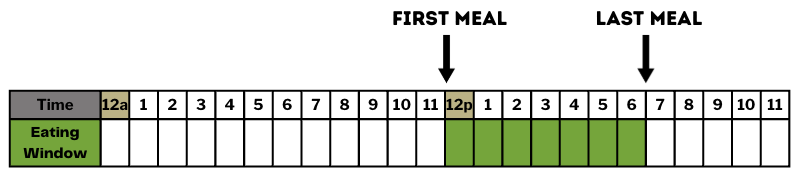
You don’t need to turn intermittent fasting into your religion.
But most people do better when they stop grazing from the second they wake up until the second they go to bed.
A shorter eating window can help create structure, reduce random snacking, and make it easier to control total calories without obsessing over every bite.
For many people, a 6-10 hour eating window is a realistic starting point.
That could mean:
- First meal at 9 a.m., dinner done by 7 p.m.
- First meal at 10 a.m., last calories by 6 p.m.
- First meal at noon, last meal by 6 p.m.
The exact daily window matters less than the consistency.
You don't need to be perfect with the same window every single day.
Intermittent fasting is a metabolic tool, that helps you stop turning the entire day into one long feeding window.
If you’re currently eating or drinking calories across 12-15 hours...
Start by shrinking that to 10.
Then adjust from there.
Make it boring. Make it doable. Make it repeatable.
One important note:
If fasting makes you anxious, ravenous, lightheaded, or more likely to binge later, don’t force it. You can lose fat without aggressive fasting. The structure should help you, not punish you.
Step 3: Move before your first meal when it fits your life
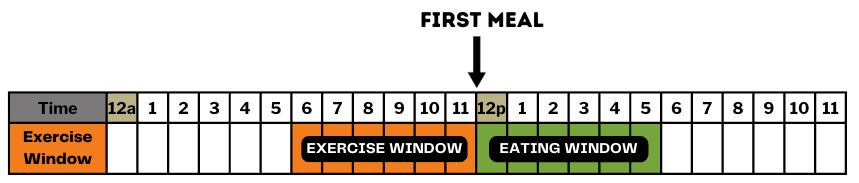
One of the simplest ways to improve your metabolic flexibility is to move before your first meal.
That doesn't mean a you have to do a brutal workout.
- It can be a 20 minute walk.
- It can be a few laps with the dog before breakfast.
- It can be a few bodyweight squats while coffee brews.
- It can be a short strength circuit before your first call. dog before breakfast.
Your goal is to create low-friction movement patterns that help your body use stored energy and improves glucose control.
I often refer to this as "minimum viable movement" with clients.
Because the best exercise is often the one that doesn’t require a drive, a perfect outfit, or an entire production - it's the one that you can do in under 10 minutes total.
Try this simple hierarchy:
- Good: 10 minute walk before your first meal
- Better: 20 to 30 minute walk before your first meal
- Stronger: 5 minutes x 5 times of bodyweight strength exercises
- Best: Structured resistance training 2-4 days per week + short daily walks
Don’t overcomplicate the first step.
If you’re doing nothing right now, walking isn't “just walking.”
It’s a vote for the person you want to become.
If you want to be lean, energized, pain-free, and mentally sharp, you have to take the minimum viable actions of that person TODAY.
Otherwise that future state never arrives.
The blood sugar piece most fat-loss plans ignore
Most high achieving parents and professionals know what it feels like when blood sugar is running the day:
- Coffee instead of breakfast
- A random snack because lunch got pushed
- Afternoon cravings
- Dinner decisions made from exhaustion
- Nighttime hunger that feels louder than logic
This is why protein anchors matter so much.
A high-protein first meal can make the rest of the day easier because it gives your body amino acids, helps control appetite, and reduces the chance that you’re chasing energy with snacks all afternoon.
You don’t need to fear carbohydrates.
But if your day starts with low protein, high stress, and quick carbs, you will spend the rest of the day trying to recover from that first decision.
Better first meal ➜ better second decision.
That’s the game.
Step 4: Stop drinking your calories & carbs.
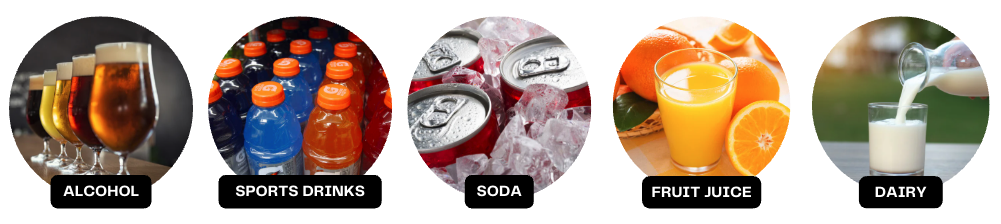
This one isn't sexy, but it's absolutely critical.
Liquid calories & carbs (sugar) are the easiest ways to accidentally erase progress.
Sports drinks, fruit juice, wine, cocktails, sweet tea, soda, and even smoothies that are basically dessert...
It all adds up fast.
And because they don’t give you the fullness of solid food, they rarely solve hunger.
For sustainable fat loss, your default should be simple:
Most of your drinks should be zero or low calorie.
That means:
- Water
- Black coffee
- Sparkling water
- Unsweetened tea
- Lemon or lime juice in water
- Electrolytes without sugar when appropriate
This doesn't mean you need to give up wine, a latte, or the occasional cocktail.
It means you need to stop pretending those choices don’t count.
Your goal is awareness, not guilt.
If you want a glass of wine at dinner, have it intentionally. Just don’t let the day accidentally include a sweet coffee, juice, two handfuls of snacks, and wine because no single choice felt like a big deal.
Fat loss is won or lost in your invisible defaults.
Step 5: Make your first meal protein, fat, and fiber focused.
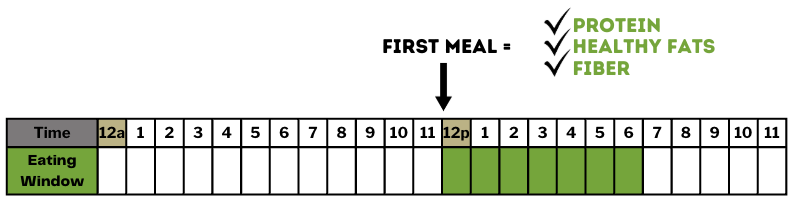
For most overwhelmed parents and professionals, the first meal sets the tone for the entire day.
Carbs can absolutely fit into a healthy fat-loss plan, especially around training, high-activity days, and meals where they help you stay consistent.
But if your goal is appetite control, fat loss, and steady energy?
Your carbs should ALWAYS contain fiber.
And adding some healthy fats will help you absorb fat soluble vitamins and slow gastric emptying, keeping you full for longer.
Examples:
- Eggs with avocado, sweet potatoes, and sauerkraut
- Greek yogurt with chia seeds and walnuts
- Turkey sausage with sautéed vegetables
- Smoked salmon with cottage cheese and cucumber
- Protein smoothie with leafy greens, Greek yogurt, and nut butter
- Chicken salad bowl with olive oil dressing
Those meals give you the amino acids, micronutrients, and a steadier runway into the rest of the day.
Better inputs lead to better outputs.
Step 6: Build your grocery store system
You don’t win most food battles in the pantry.
You win them at the grocery store.
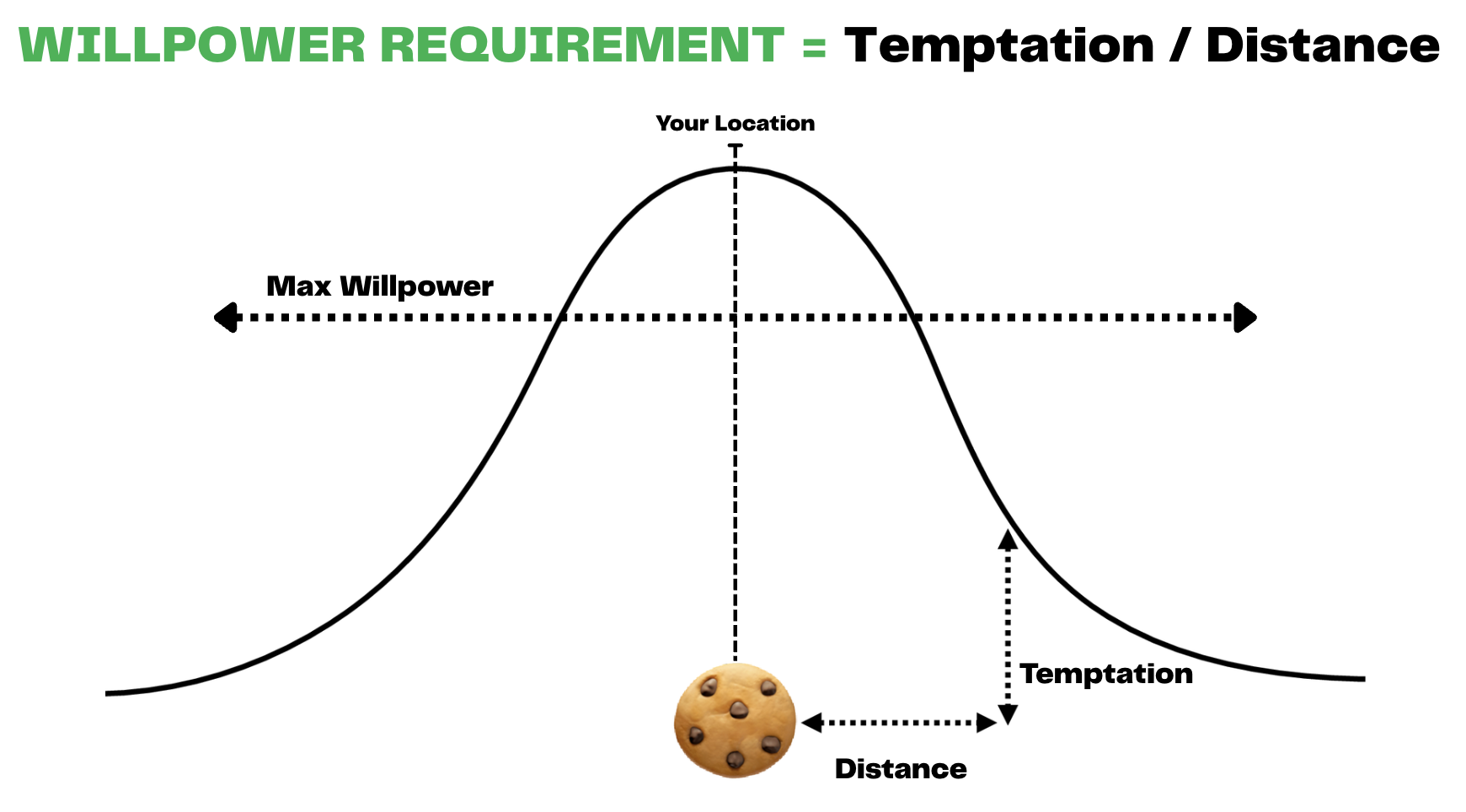
A cookie in your house isn't the same temptation as a cookie at the store.
- Friction matters.
- Distance matters.
- Environment matters.
If you’re trying to lose fat while managing a demanding life, your kitchen should not require heroic discipline every night.
It should be intentionally structured for healthy choices.
Build your grocery list around the following 4 categories:
1 - Proteins:
- Chicken breast or thighs
- Turkey
- Ground beef or steak
- Salmon
- Shrimp
- Tuna
- Eggs
- Sardines and Anchovies
- Greek yogurt
- Cottage cheese
- Tofu or tempeh
2 - Fiber and Plants:
- Salad kits
- Frozen vegetables
- Berries
- Apples
- Avocados
- Sweet potatoes
- Beans or lentils (especially if you have a pressure cooker to make them easier to digest)
3 - Healthy Fats:
- Extra virgin olive oil
- Avocados / Avocado oil
- Beef tallow
- Grass Fed Ghee
- Nuts
- Seeds
- Eggs
- Fatty fish
4 - Convenience Helpers:
- Pre-cooked chicken
- Frozen shrimp
- High-protein wraps
- Bagged salads
- Protein powder
- Low-sugar sauces
- Pre-cut vegetables
Having worked with over 100 clients:
These categories are where healthiest working parents and professionals build their an advantage.
Why?
Because they allow you to buy back consistency.
- Pre-cut vegetables are not lazy.
- A rotisserie chicken is not cheating.
- A meal delivery backup is not failure.
- A high-quality protein powder is not “fake food” if it helps you hit your target on a brutal day.
You might view structure as restriction.
But in reality?
Structure is how you protect the outcome when life gets crazy.
Step 7: Use the “something beats nothing” rule
All-or-nothing thinking destroys more progress than one imperfect meal ever will.
And it's probably the single biggest mindset trap I see with clients.
If you can’t do the full workout ➜ take the walk or do the push-ups.
If you can’t hit 40 grams of protein ➜ hit 25.
If you can’t cook dinner➜ order the grilled protein with vegetables and move on.
If you can’t fast for 14 hours➜ do 12.
If you miss the morning routine ➜ take 10 minutes after dinner.
Something ALWAYS beats nothing.
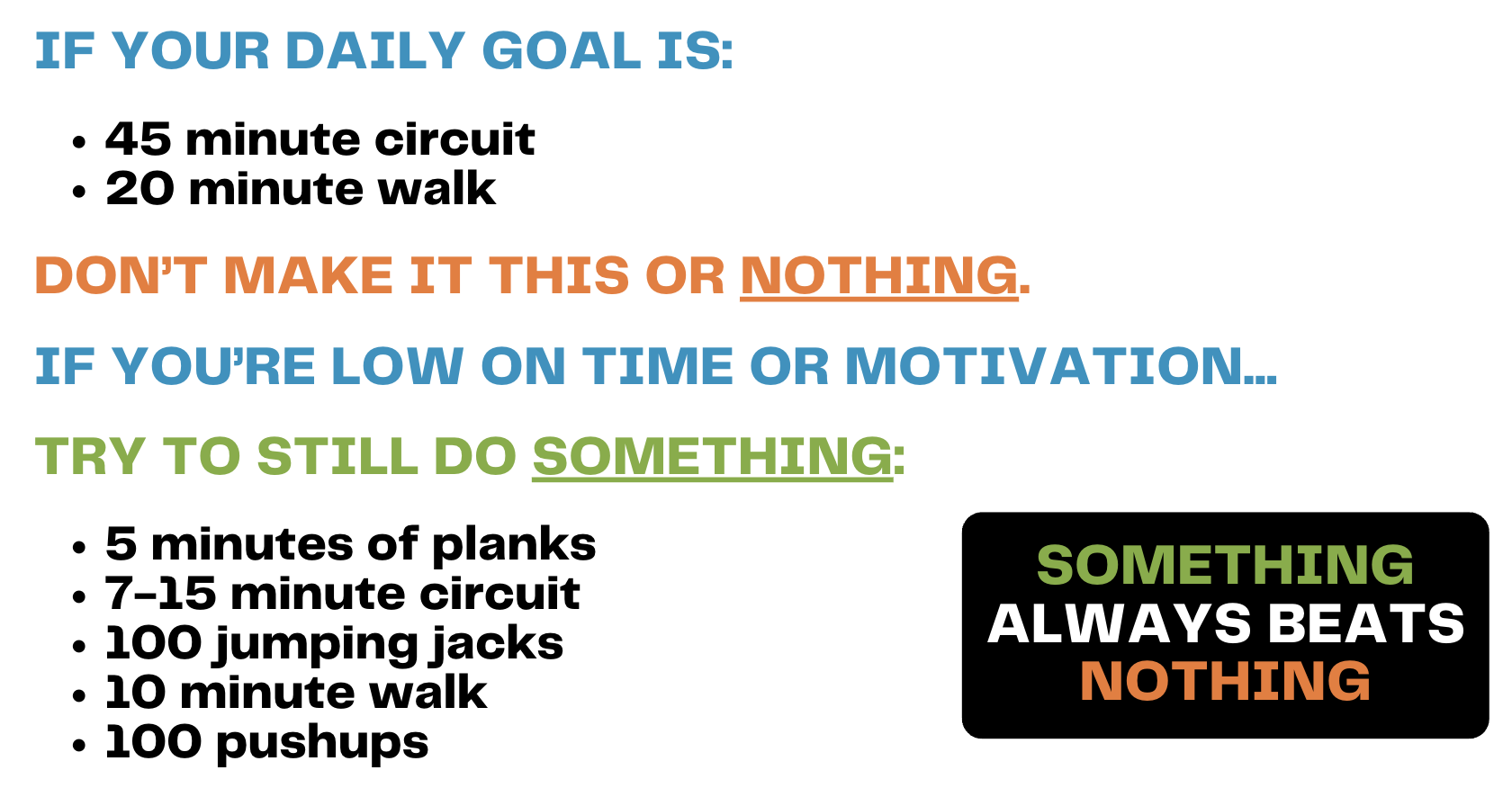
This is especially important for high achievers to embrace. Because you’re probably wired to respect and seek excellence. That might be great in your career, but it can be brutal in your health.
A "perfect plan" doesn't work.
Your body needs enough repeated evidence that you’re taking care of it.
And that doesn't require perfection; it requires awareness and flexibility.
Here’s what this might look like in real life:
Morning:
- Black coffee or water
- 10 to 20 minute walk before your first meal
- First meal with 30 to 40 grams of protein
Midday:
- High-protein lunch, ideally protein plus fiber
- Water or unsweetened tea
- Short walk after lunch if possible
Afternoon:
- Protein-forward snack if needed, like Greek yogurt, cottage cheese, jerky, tuna packets, or a protein shake
- Avoid random grazing from stress or boredom hunger
Dinner:
- Protein anchor first
- Vegetables or salad
- Smart carbs if they fit your training, hunger, and goals
- Finish calories at a consistent time most nights
Night:
- No “I already messed up” spiral
- Set up tomorrow’s first protein anchor
That probably doesn't seem glamorous to you.
...and that’s why it works.
Who this blueprint is for
This approach is for you if:
✅ You’re busy and need fat loss to fit real life
✅ You want high-protein meals without complicated meal prep
✅ You’re tired of starting over every Monday
✅ You want to lose weight without losing muscle
✅ You want more energy, better cravings, and better consistency
✅ You’re willing to build systems instead of chasing hacks
This approach isn't for you if:
❌ You want a crash diet
❌ You want to outsource all responsibility to a supplement
❌ You want extreme restriction
❌ You want a plan that ignores sleep, stress, movement, and protein
❌ You want a magic pill fix
Fat loss involves so much more than just "eating less."
It starts with building a body and environment where healthier choices become easy to repeat.
If you want the FULL version of this blueprint, with some extra bonus tips:
You can download my free 5-Step Fat-Loss Formula.
It walks you through the these exact steps in more detail, plus more that I often use to help busy professionals drop body fat, improve energy, protect muscle, and build better health habits without needing a gym membership, expensive supplements, or hours of daily exercise.
The Bottom Line:
You don’t need life to slow down before you start taking care of your body.
You need a better system for the life you already have.
- Start with protein.
- Tighten the eating window.
- Move before the day owns you.
- Stop drinking calories by default.
- Build the grocery store system.
- Refuse all-or-nothing thinking.
The next meal is just the next meal.
Make it count!!!
You can download the free 5-Step Fat-Loss Formula here.
