8 Mediterranean Anti-Inflammatory Meals You’ll Want on Repeat
Sep 01, 2026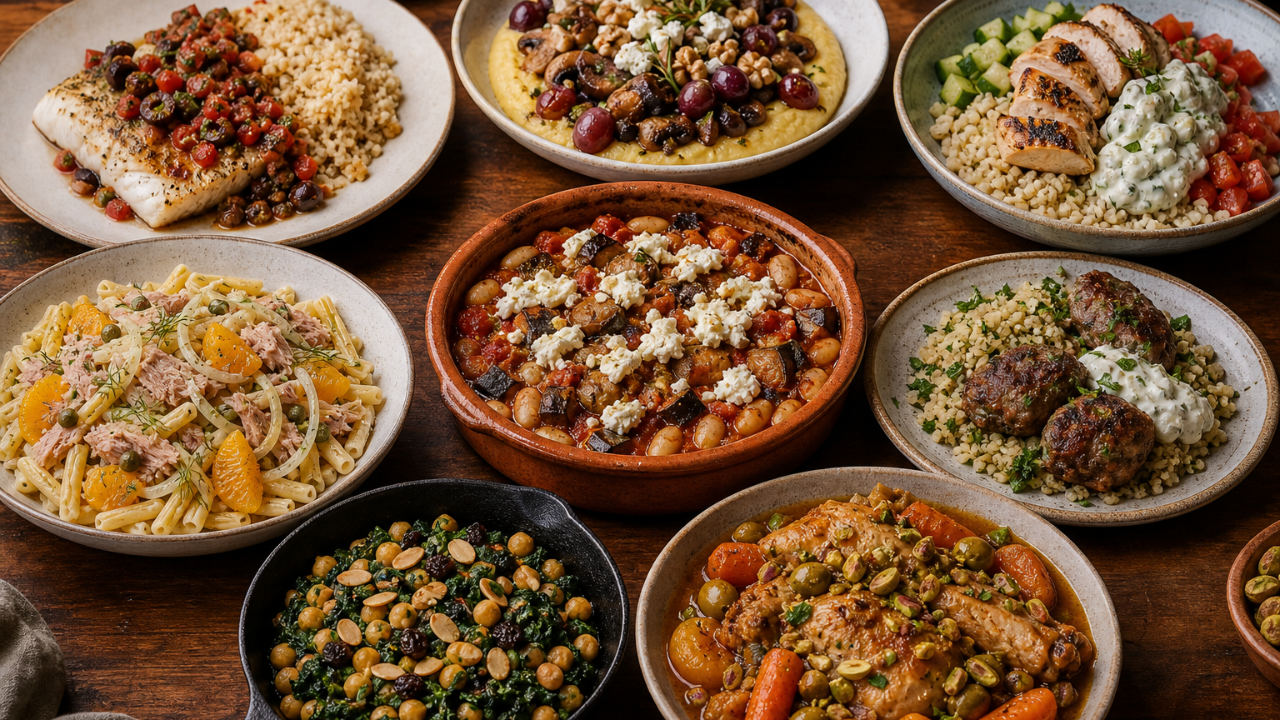
You leave a health appointment thinking about cholesterol or blood pressure, then get home to a refrigerator full of ingredients that don’t add up to dinner. You want the Mediterranean approach to become your normal, but another complicated recipe will probably be cooked once and forgotten.
Food choices can shape your health in a meaningful way when a low-inflammatory eating pattern becomes familiar. In my coaching experience, I see lemon and herbs, tomato and olives, or yogurt and warm spices return to the calendar because people already know what those combinations are supposed to taste like. These anti-inflammatory meals use that familiar backbone across 8 genuinely different forms.
Choose the meal you’d gladly eat twice this month, and add it your calendar now.
This is general wellness information based on current research, not medical advice. If you have specific health concerns, please consult with a healthcare provider.
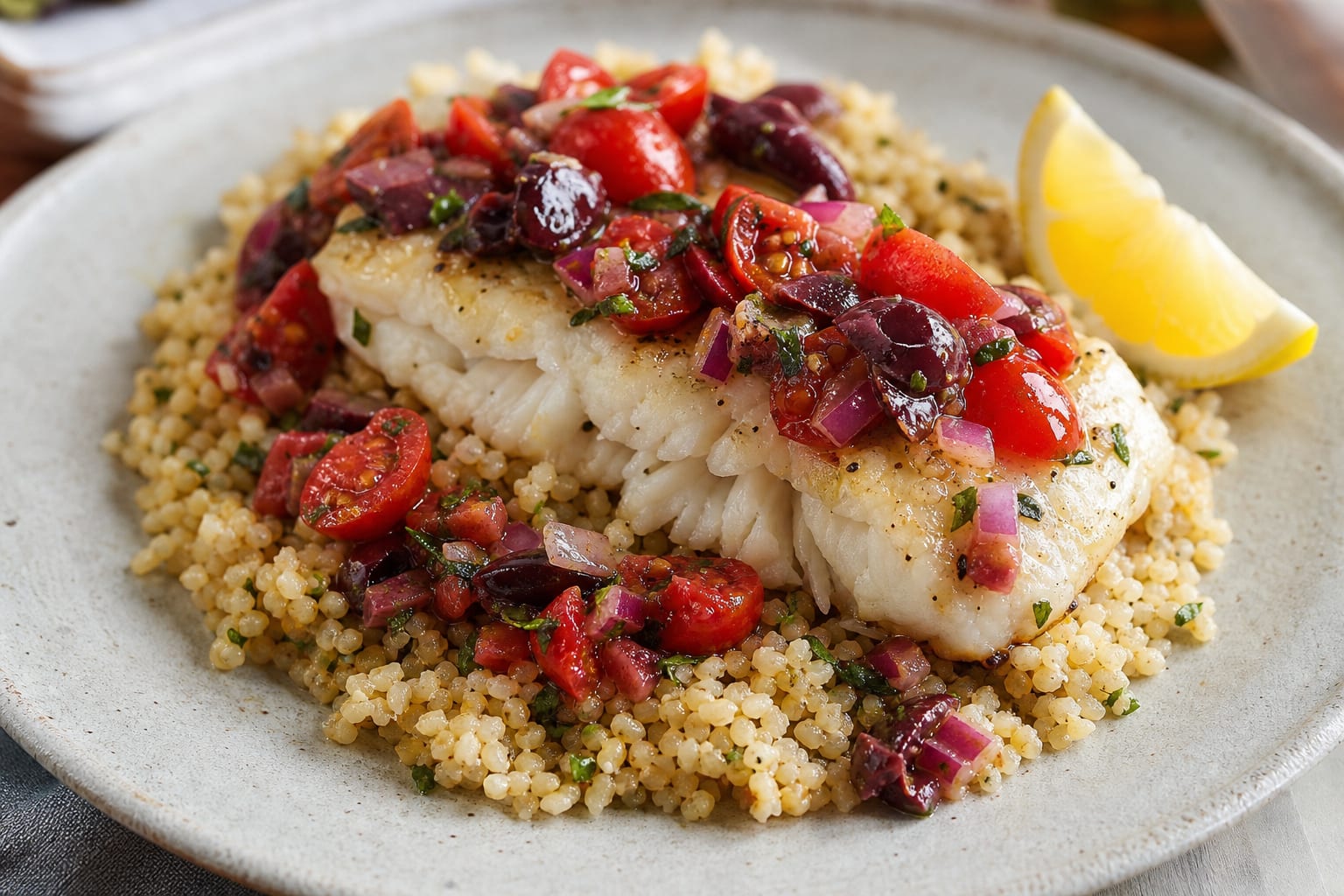
1. Greek Baked Haddock With Olive Tomato Relish
Ingredients:
- 4 haddock fillets (5 ounces each)
- 1 pint cherry tomatoes, halved
- 1/2 cup Kalamata olives, sliced
- 1 small red onion, thinly sliced
- 2 tablespoons extra-virgin olive oil
- 1 teaspoon dried oregano
- 1 lemon, half sliced and half juiced
- 2 cups cooked bulgur
Directions:
Heat the oven to 400°F, place the haddock in a baking dish, scatter the tomatoes, olives, and onion around it, drizzle with olive oil and lemon juice, season with oregano, and lay the lemon slices over the fish. Bake for 14 to 17 minutes, until the haddock flakes and reaches 145°F. Spoon the warm olive-tomato relish over the fish and serve with hot cooked bulgur on 4 plates.
Why It Works: The relish cooks in the same dish as the fish, so the tomatoes soften into a briny sauce. Bulgur catches those juices and makes the plate feel complete. This is what heart healthy recipes can look like in practice: fish, whole grains, tomatoes, olives, and olive oil.
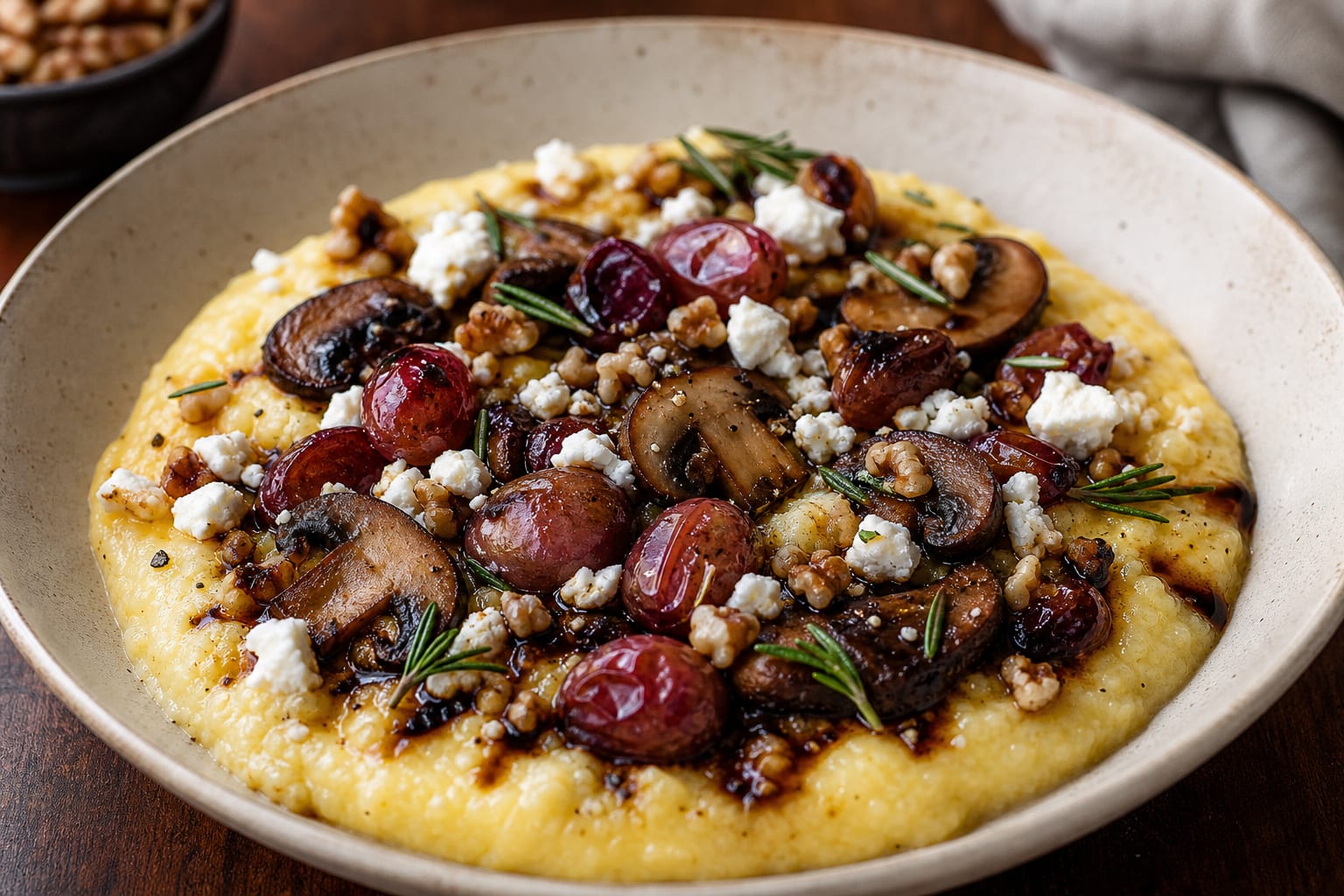
2. Creamy Polenta With Rosemary Mushrooms and Roasted Grapes
Ingredients:
- 1 pound cremini mushrooms, halved
- 2 cups seedless red grapes
- 2 tablespoons extra-virgin olive oil
- 1 teaspoon chopped fresh rosemary
- 1 1/2 cups quick-cooking polenta
- 6 cups low-sodium vegetable broth
- 1/2 cup crumbled goat cheese
- 1/3 cup toasted walnuts, chopped
- 1 tablespoon balsamic vinegar
Directions:
Heat the oven to 425°F, toss the mushrooms and grapes with the olive oil and rosemary on a rimmed sheet pan, and roast for 20 to 25 minutes, stirring once, until the mushrooms are browned and the grapes have softened and started to burst. While they roast, bring the broth to a boil in a saucepan, whisk in the polenta, lower the heat, and cook according to package directions, usually 5 to 8 minutes, stirring often until creamy, then stir in the goat cheese. Divide the polenta among 4 shallow bowls and top with the roasted mushrooms, grapes, walnuts, and balsamic vinegar to make 4 bowls.
Why It Works: Roasting grapes beside mushrooms creates a sweet-savory topping without another sauce to make. Creamy polenta, tangy goat cheese, and toasted walnuts give the bowl enough contrast to bring back as a full dinner. The combination shows how healthy anti-inflammatory meals can be both earthy and bright.
Before we get to Meal #3...
My clients frequently ask me “Which foods actually help with inflammation?”
Knowing the foods is only useful if you understand why they matter and how to use them consistently.
Because knowledge is power.
So I ranked 10 science-backed foods that can support a lower-inflammatory eating pattern, including why they matter and practical ways to use them.
I hope you find it helpful!
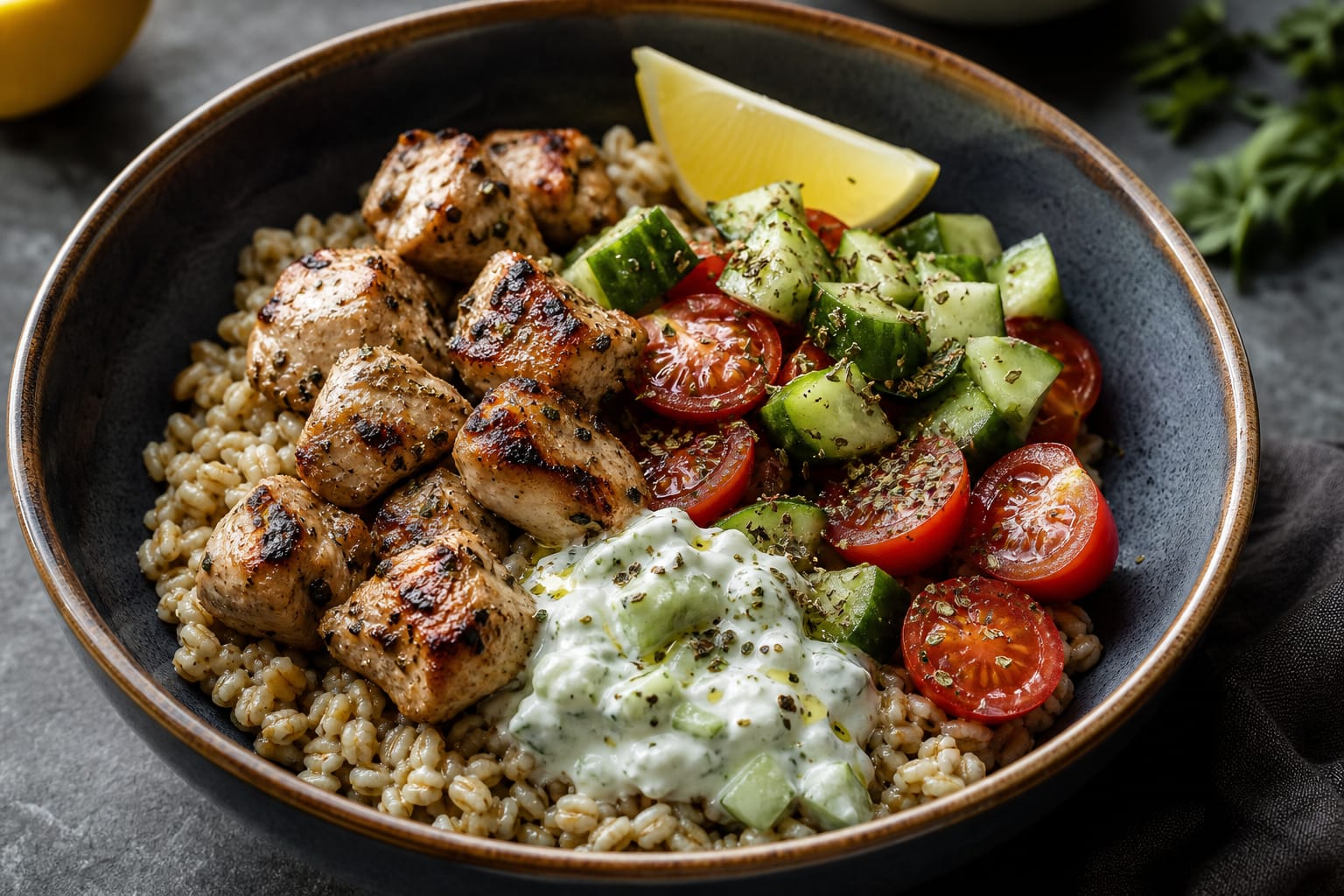
3. Chicken Souvlaki Barley Bowls
Ingredients:
- 1 pound boneless, skinless chicken breast, cut into 1-inch pieces
- 3 cups cooked barley
- 1 cucumber, chopped
- 2 cups cherry tomatoes, halved
- 1 tablespoon extra-virgin olive oil
- 1 teaspoon dried oregano
- 1 lemon, juiced
- 3/4 cup plain low-fat Greek yogurt
- 1/2 cup grated cucumber
- 1 tablespoon chopped dill
Directions:
Toss the chicken with olive oil, oregano, and half the lemon juice, then thread it onto skewers or place it in a grill basket and grill over medium-high heat for 8 to 10 minutes, turning twice, until the chicken reaches 165°F. Stir the yogurt, grated cucumber, dill, and remaining lemon juice together, then divide the hot cooked barley, chopped cucumber, and tomatoes among 4 bowls and add the chicken and yogurt-cucumber sauce. Makes 4 bowls.
Why It Works: Chewy barley holds up under juicy tomatoes and cool yogurt-cucumber sauce. Grilled chicken, oregano, and lemon give the bowl a familiar flavor profile that’s easy to bring back. That repeatable flavor profile is one reason Mediterranean diet recipes work so well in a weekly rotation.
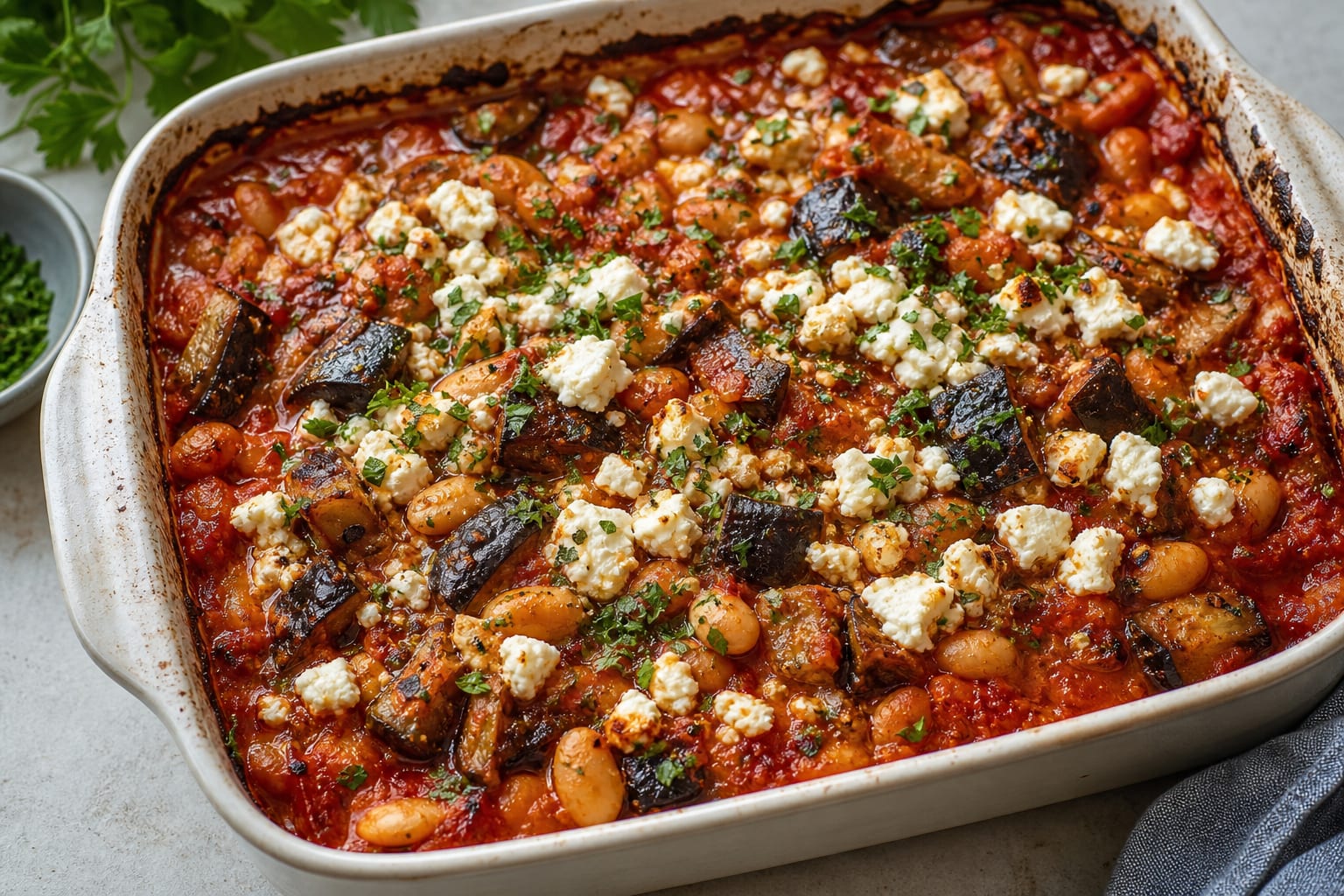
4. Roasted Eggplant Butter Bean Tomato Bake
Ingredients:
- 1 large eggplant, cut into 3/4-inch cubes
- 2 cans (15 ounces each) butter beans, drained to 9 ounces each and rinsed
- 1 can (14.5 ounces) crushed tomatoes
- 2 tablespoons extra-virgin olive oil
- 1 teaspoon ground cumin
- 1 teaspoon dried oregano
- 1/2 cup crumbled feta
- 1/4 cup chopped parsley
Directions:
Heat the oven to 425°F, toss the eggplant with olive oil and cumin in a 9-by-13-inch baking dish, and roast for 20 minutes, stirring once. Add the butter beans, crushed tomatoes, and oregano, stir until evenly combined, and bake for 18 to 20 minutes more, until the eggplant is very soft and the tomato sauce bubbles around the beans. Top with feta and parsley, and divide into 6 servings.
Why It Works: The eggplant softens into the tomato sauce while whole butter beans keep the bake substantial. Feta adds a salty finish to a spoonable casserole rather than another stuffed bread. High fiber recipes can still feel comforting; butter beans and eggplant make this bake substantial and spoonable.
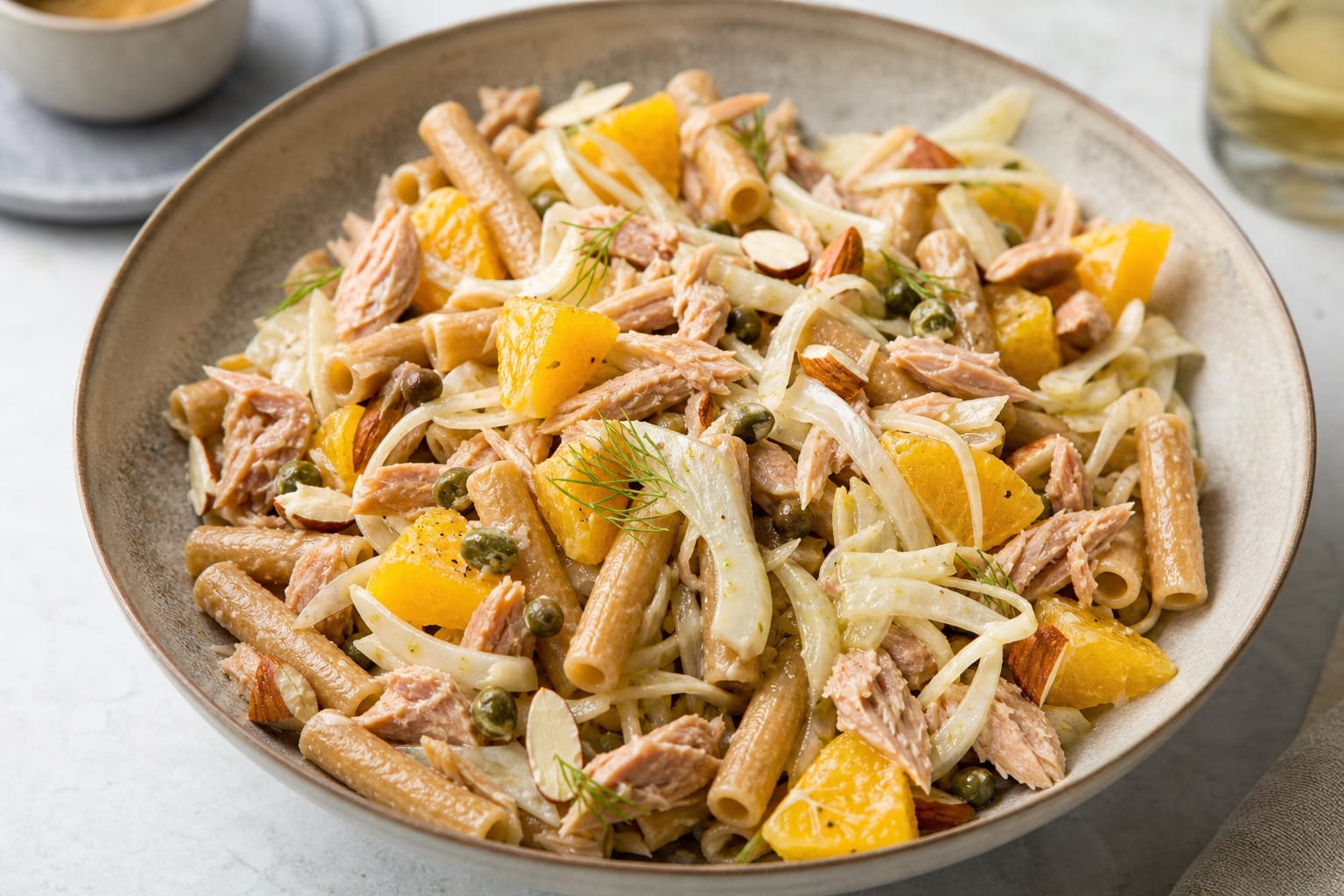
5. Sicilian Tuna, Orange, and Fennel Pasta
Ingredients:
- 12 ounces dry whole-wheat short pasta
- 2 cans (5 ounces each) ready-to-eat tuna in olive oil, drained to 4 ounces each
- 1 small fennel bulb, thinly sliced
- 2 oranges, peeled and cut into bite-size pieces
- 1/3 cup toasted almonds
- 2 tablespoons capers, drained
- 2 tablespoons extra-virgin olive oil
- 1 tablespoon red wine vinegar
Directions:
Bring a large pot of water to a boil and cook the pasta according to package directions, usually 9 to 11 minutes, until tender, then drain, rinse briefly under cool water, and let it drain well for 5 minutes. Combine the cooled cooked pasta, ready-to-eat tuna, fennel, oranges, almonds, and capers in a large bowl. Add the olive oil and vinegar, toss gently, and divide into 6 servings.
Why It Works: Orange, capers, and vinegar brighten the tuna. Cool pasta, crisp fennel, sweet citrus, and toasted almonds create enough contrast to keep each bite distinct. Tuna, fennel, citrus, and almonds also bring fresh variety to heart healthy recipes.
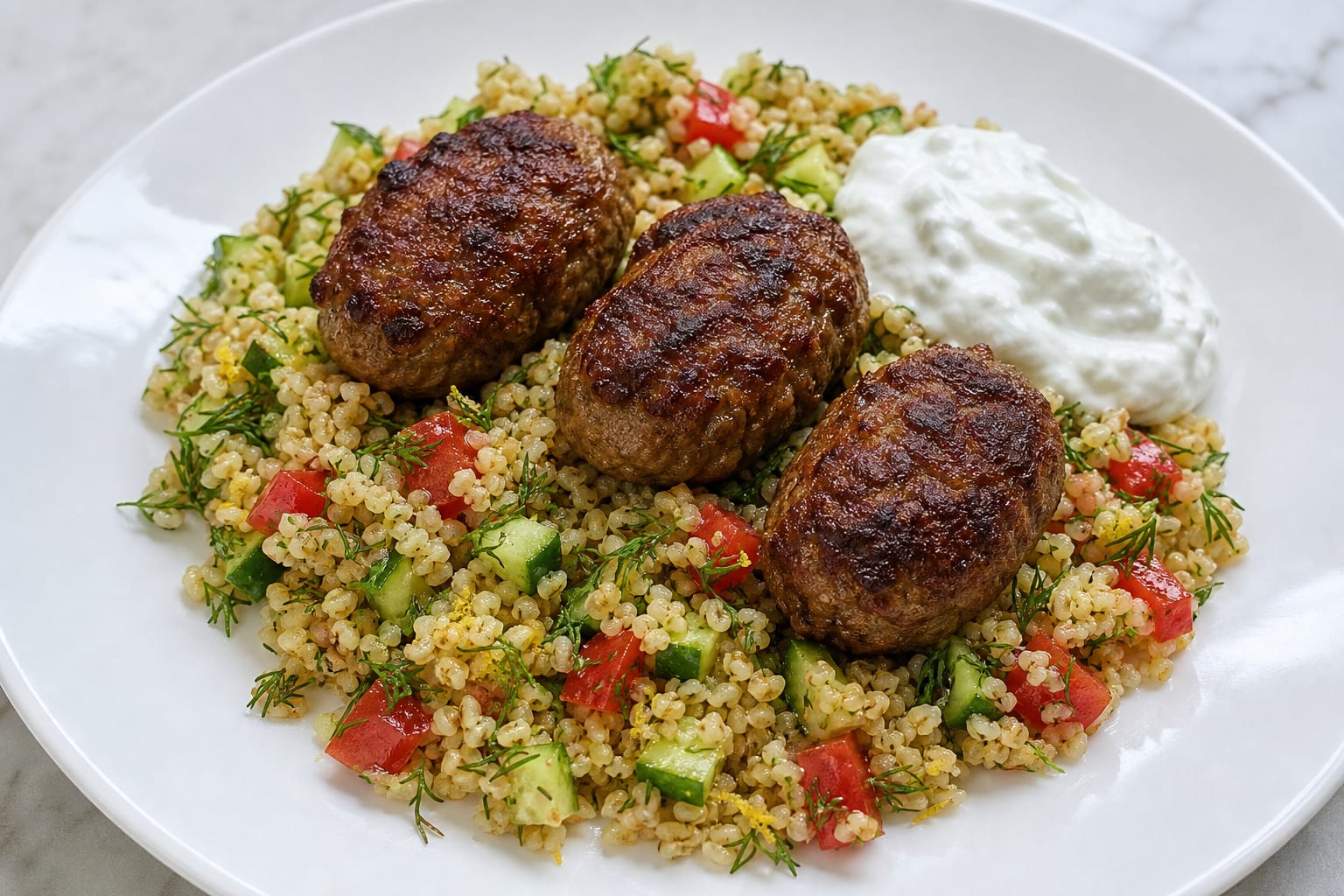
6. Turkey Kofta With Herbed Bulgur
Ingredients:
- 1 pound 93% lean ground turkey
- 1 teaspoon ground cumin
- 1 teaspoon ground coriander
- 1/2 teaspoon garlic powder
- 3 cups cooked bulgur
- 2 cups chopped cucumber
- 1 cup chopped tomatoes
- 1/2 cup plain low-fat Greek yogurt
- 1/4 cup chopped dill
- 1 tablespoon lemon juice
Directions:
Heat the broiler with a rack 6 inches from the heat, then mix the turkey, cumin, coriander, and garlic powder, shape into 12 short oval kofta, place on a foil-lined sheet pan, and broil for 8 to 10 minutes, turning once, until they reach 165°F. Stir the cucumber, tomatoes, dill, and lemon juice into the cooked bulgur, then divide among 4 plates and serve 3 kofta over each portion with yogurt. Makes 4 plates.
Why It Works: Warm spices give lean turkey a clear identity, and broiling builds color quickly. The chewy bulgur salad stays fresh under the warm kofta and cool yogurt. Mediterranean diet recipes stay more interesting when the form changes; here, warm kofta sits over chewy bulgur with cool yogurt.
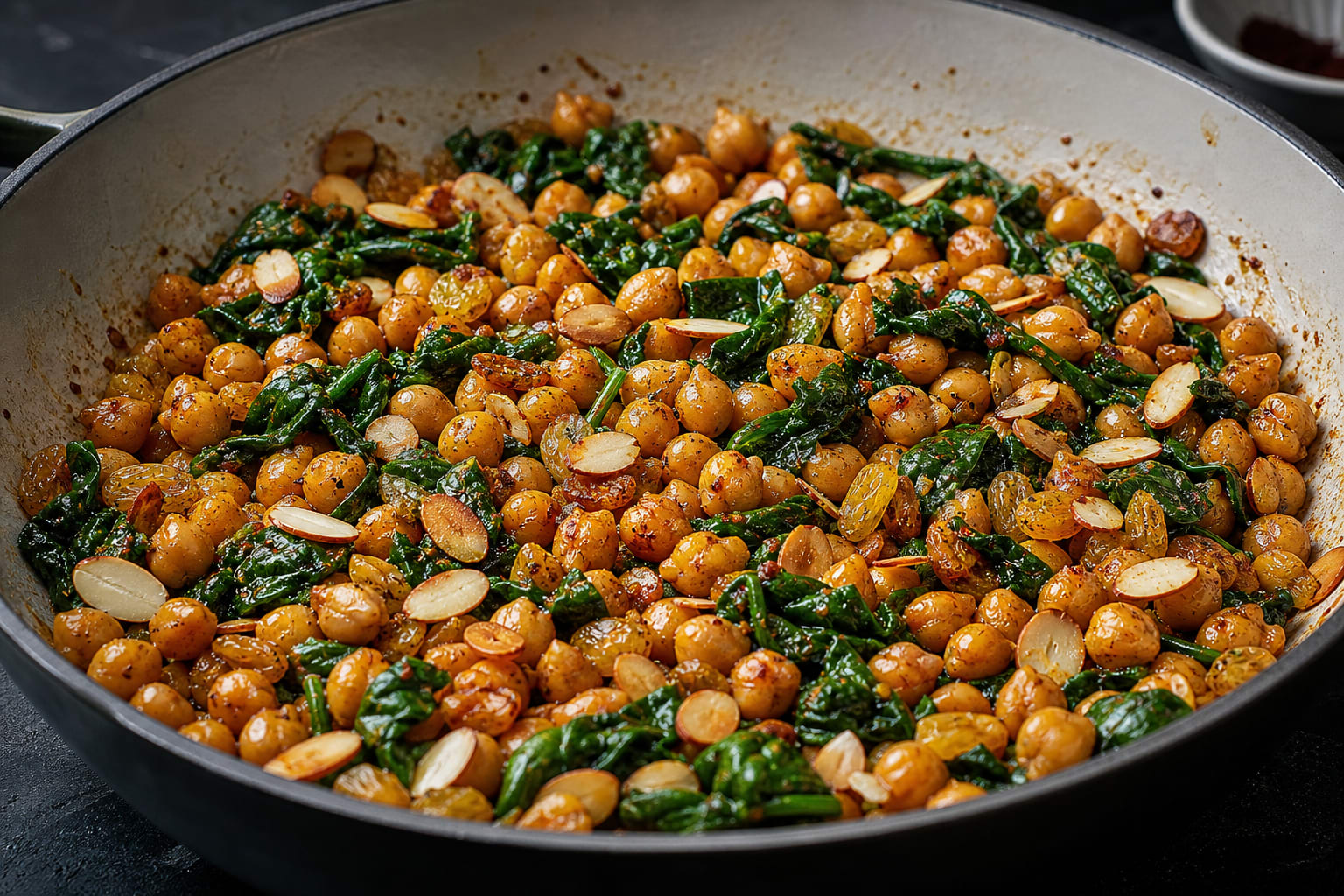
7. Catalan Spinach Chickpea Raisin Skillet
Ingredients:
- 2 cans (15 ounces each) chickpeas, drained and rinsed
- 5 ounces baby spinach
- 1/3 cup golden raisins
- 1/3 cup sliced almonds
- 2 garlic cloves, minced
- 1 teaspoon smoked paprika
- 1 tablespoon extra-virgin olive oil
- 1 tablespoon sherry vinegar
Directions:
Toast the almonds in a large skillet over medium heat for 3 minutes, slide them to the outer edge, then add the olive oil and garlic to the center and cook for 30 seconds. Stir in the chickpeas, raisins, smoked paprika, and 1/4 cup water, cook for 5 minutes, then fold in the spinach for 2 minutes, until wilted. Finish with sherry vinegar, mix in the toasted almonds, and divide into 4 servings.
Why It Works: Raisins and sherry vinegar give the smoky chickpeas a sweet-tart edge, while toasted almonds add crunch. Everything stays in the skillet from first toast to final wilt. Chickpeas, spinach, almonds, and olive oil keep healthy anti-inflammatory meals substantial without relying on meat.
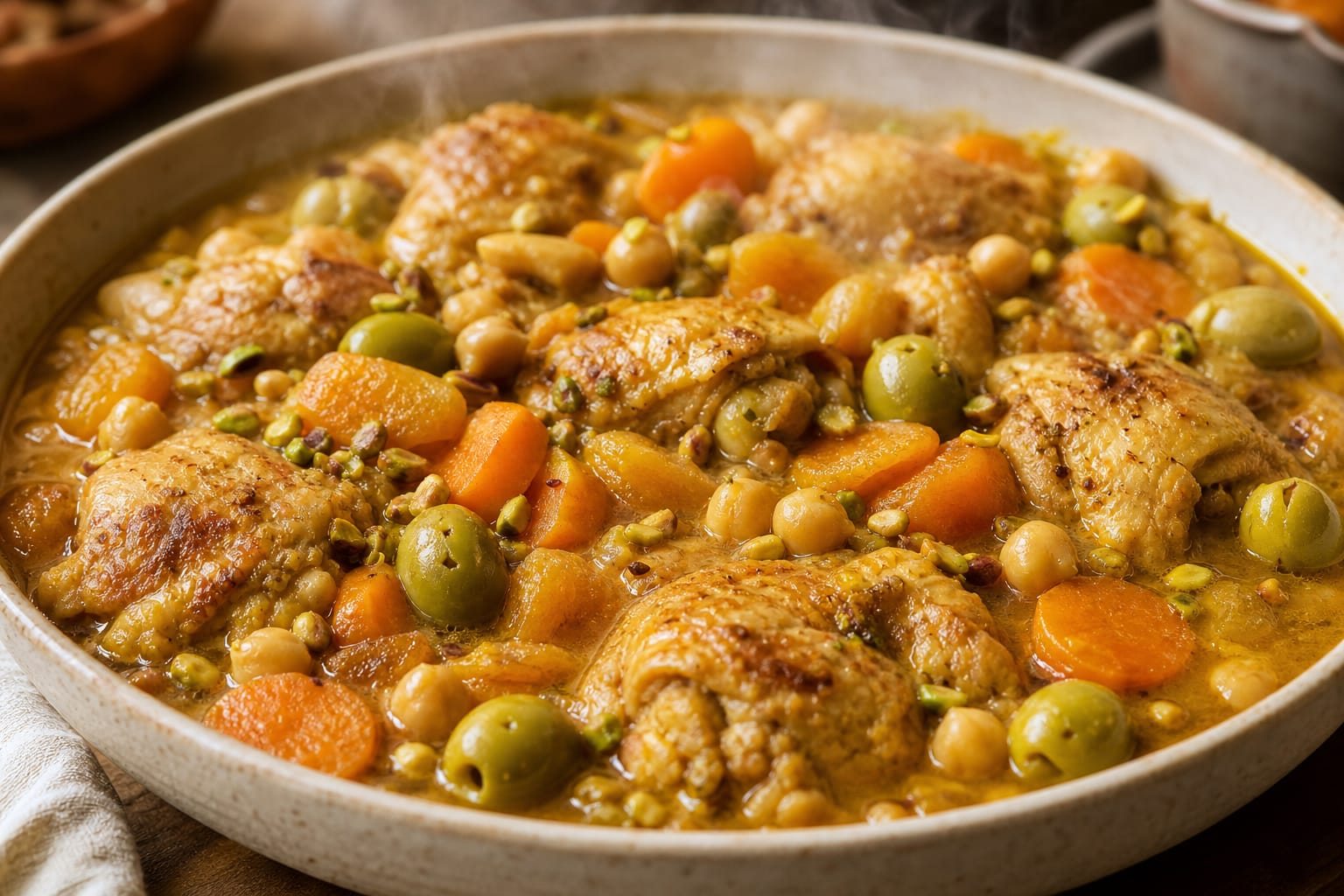
8. Moroccan Apricot Chicken and Carrot Braise
Ingredients:
- 1 1/2 pounds boneless, skinless chicken thighs, cut into 2-inch pieces
- 4 large carrots, cut into 1/2-inch coins
- 1 can (15 ounces) chickpeas, drained and rinsed
- 1/2 cup chopped dried apricots
- 1/3 cup pitted green olives
- 2 cups low-sodium chicken broth
- 1 tablespoon extra-virgin olive oil
- 1 teaspoon ground cumin
- 1/2 teaspoon ground cinnamon
- 1/3 cup shelled pistachios, chopped
Directions:
Heat the olive oil in a wide Dutch oven over medium-high heat, add the chicken, and cook for 6 to 8 minutes, turning once, until browned. Add the carrots, chickpeas, apricots, olives, broth, cumin, and cinnamon, bring to a boil in about 3 to 4 minutes, then cover, lower the heat, and simmer for 20 to 24 minutes, until the carrots are tender and the chicken reaches 165°F. If you want a thicker sauce, uncover after the covered simmer and simmer for 3 minutes more, then divide among 6 shallow bowls and finish with pistachios to make 6 servings.
Why It Works: A short braise makes the carrots tender while chickpeas give the broth body. Olives, apricots, and pistachios add salty, sweet, and crisp contrast.
Quick Reference
|
Recipe |
Prep |
Cook |
Protein |
Key Benefit |
|
Greek Baked Haddock With Olive Tomato Relish |
12 min |
14-17 min |
~27 g/serving |
One-dish fish with briny relish |
|
Creamy Polenta With Rosemary Mushrooms and Roasted Grapes |
12 min |
20-25 min |
~14 g/serving |
Creamy bowl with sweet-savory roast |
|
Chicken Souvlaki Barley Bowls |
15 min |
8-10 min |
~34 g/serving |
Grilled bowl with familiar flavors |
|
Roasted Eggplant Butter Bean Tomato Bake |
12 min |
38-40 min |
~10 g/serving |
Spoonable vegetable-bean casserole |
|
Sicilian Tuna, Orange, and Fennel Pasta |
20 min |
9-11 min, plus 5 min drain |
~22 g/serving |
Cool pasta with citrus crunch |
|
Turkey Kofta With Herbed Bulgur |
18 min |
8-10 min |
~29 g/serving |
Broiled kofta over chewy grain salad |
|
Catalan Spinach Chickpea Raisin Skillet |
8 min |
10-11 min |
~12 g/serving |
Sweet-tart pantry skillet |
|
Moroccan Apricot Chicken and Carrot Braise |
15 min |
29-36 min, plus optional 3 min reduction |
~29 g/serving |
Savory-sweet Dutch-oven braise |