7 Anti-Inflammatory Recipes for Beginners Who Don’t Know Where to Start
Aug 31, 2026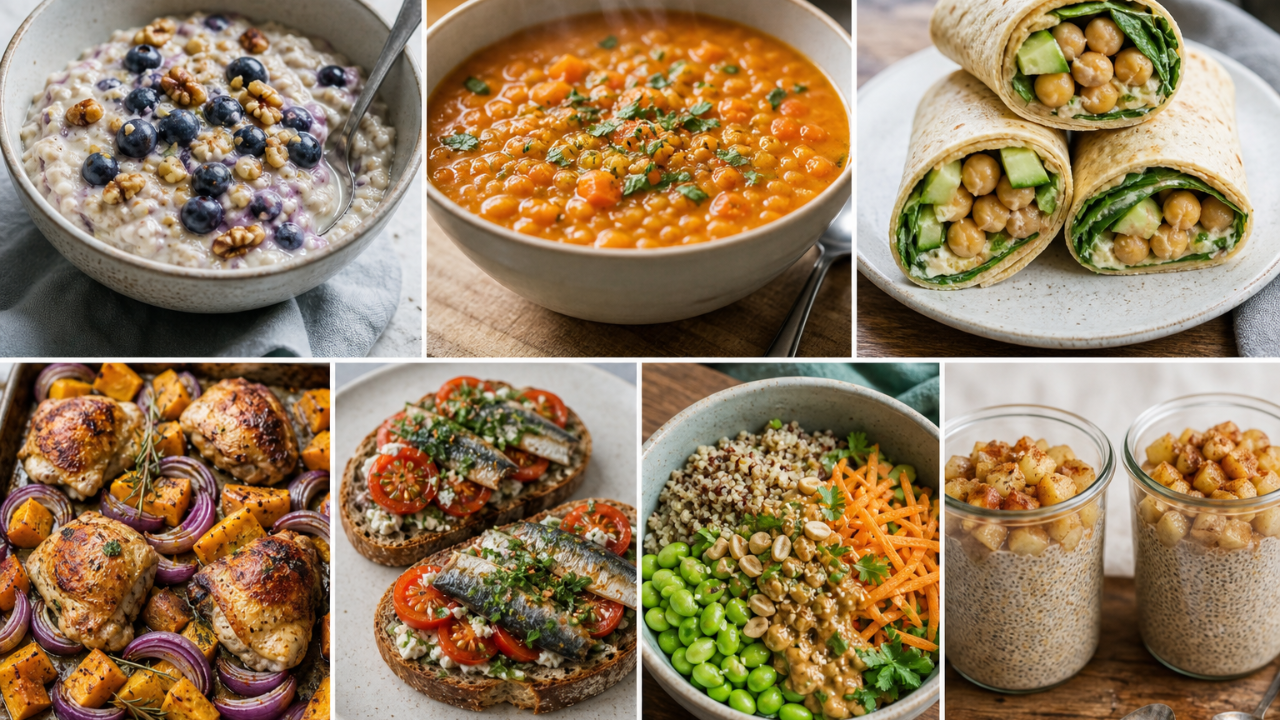
You save a long list of foods to eat, open the refrigerator, and still have no idea what to make first. The information sounds useful, but dinner is getting later while you choose between learning a whole new way to cook and falling back on the same meal.
Sound familiar?
Start with one method you already recognize. Good nutrition can support your health without turning your kitchen into a test, and a repeatable eating pattern can begin with a few dependable moves in the first week. These anti-inflammatory recipes show you what done looks like when you assemble a bowl, simmer lentils, roll a wrap, roast a tray, build toast, whisk a sauce, or chill a pudding.
Make the recipe whose method feels most familiar before you add another.
This is general wellness information based on current research, not medical advice. If you have specific health concerns, please consult with a healthcare provider.
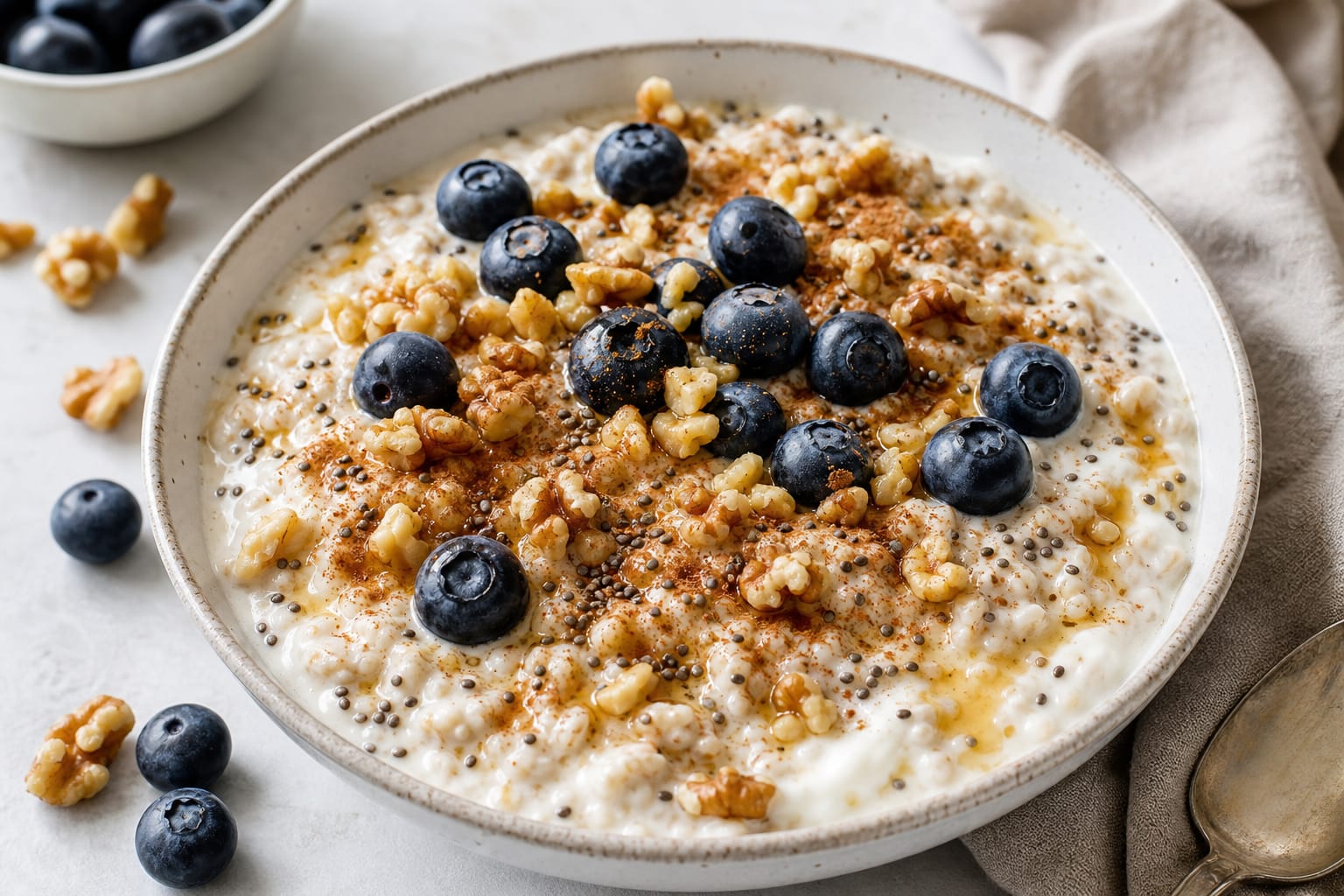
1. Blueberry Walnut Yogurt Oat Bowls
Ingredients:
- 2 cups plain low-fat Greek yogurt
- 1 cup quick-cooking oats
- 1/2 cup unsweetened fortified soy milk
- 1 cup blueberries
- 1/2 cup chopped walnuts
- 2 tablespoons chia seeds
- 1 teaspoon ground cinnamon
- 2 teaspoons maple syrup
Directions:
Stir the yogurt, quick oats, milk, cinnamon, and maple syrup together in a medium bowl. Divide between 2 serving bowls, cover, and refrigerate for 30 minutes so the oats hydrate and the mixture becomes thick and creamy. Top each bowl with blueberries, walnuts, and chia seeds to make 2 bowls.
Why It Works: Quick oats soften reliably in the yogurt and milk while you do something else. The method teaches a simple ratio you can repeat with different fruit and nuts. That dependable ratio is a comfortable first step into anti-inflammatory breakfasts.
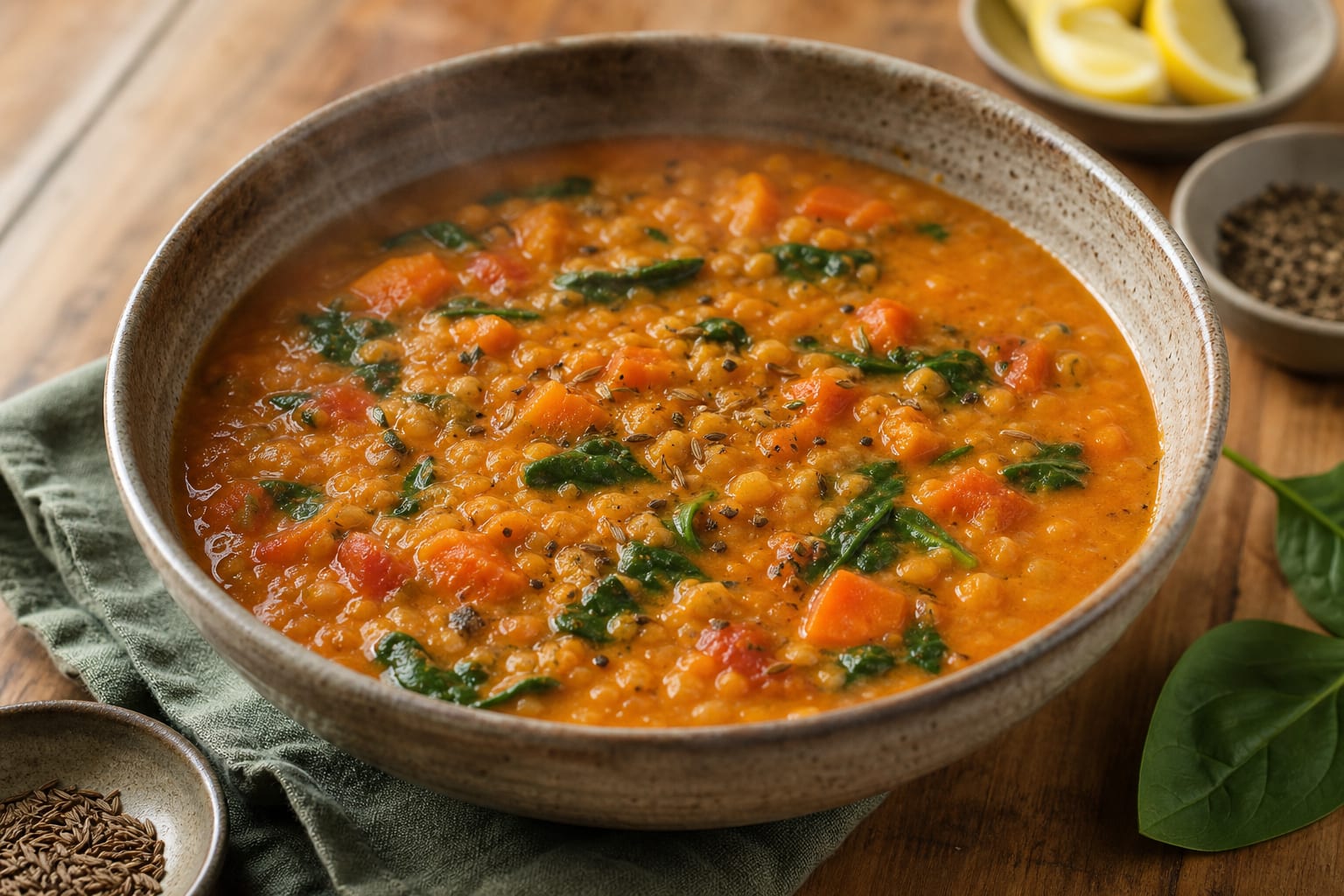
2. Red Lentil Carrot Soup
Ingredients:
- 1 tablespoon extra-virgin olive oil
- 1 yellow onion, diced
- 3 carrots, sliced
- 1 cup dry red lentils, rinsed
- 1 can (14.5 ounces) diced tomatoes
- 5 cups low-sodium vegetable broth
- 1 teaspoon ground cumin
- 2 cups baby spinach
- 1 tablespoon lemon juice
Directions:
Heat the olive oil in a large pot over medium heat, cook the onion and carrots for 6 minutes, then add the lentils, tomatoes, broth, and cumin, cover, and bring to a boil in about 4 to 6 minutes. Lower the heat and simmer uncovered for 20 to 22 minutes, stirring twice, until the lentils are very soft and the soup has thickened, then stir in the spinach for 2 minutes, turn off the heat, add the lemon juice, and add a splash of water if you want a thinner soup. Divide into 4 servings.
Why It Works: Red lentils soften without soaking and thicken the pot on their own. Their tender, broken-down texture gives a beginner a clear signal that the soup is done. If you're trying an inflammation diet for beginners, this forgiving one-pot soup is an easy place to start.
Before we get to Meal #3...
My clients frequently ask me “Which foods actually help with inflammation?”
Knowing the foods is only useful if you understand why they matter and how to use them consistently.
Because knowledge is power.
So I ranked 10 science-backed foods that can support a lower-inflammatory eating pattern, including why they matter and practical ways to use them.
I hope you find it helpful!
3. Tahini Chickpea Cucumber Wraps
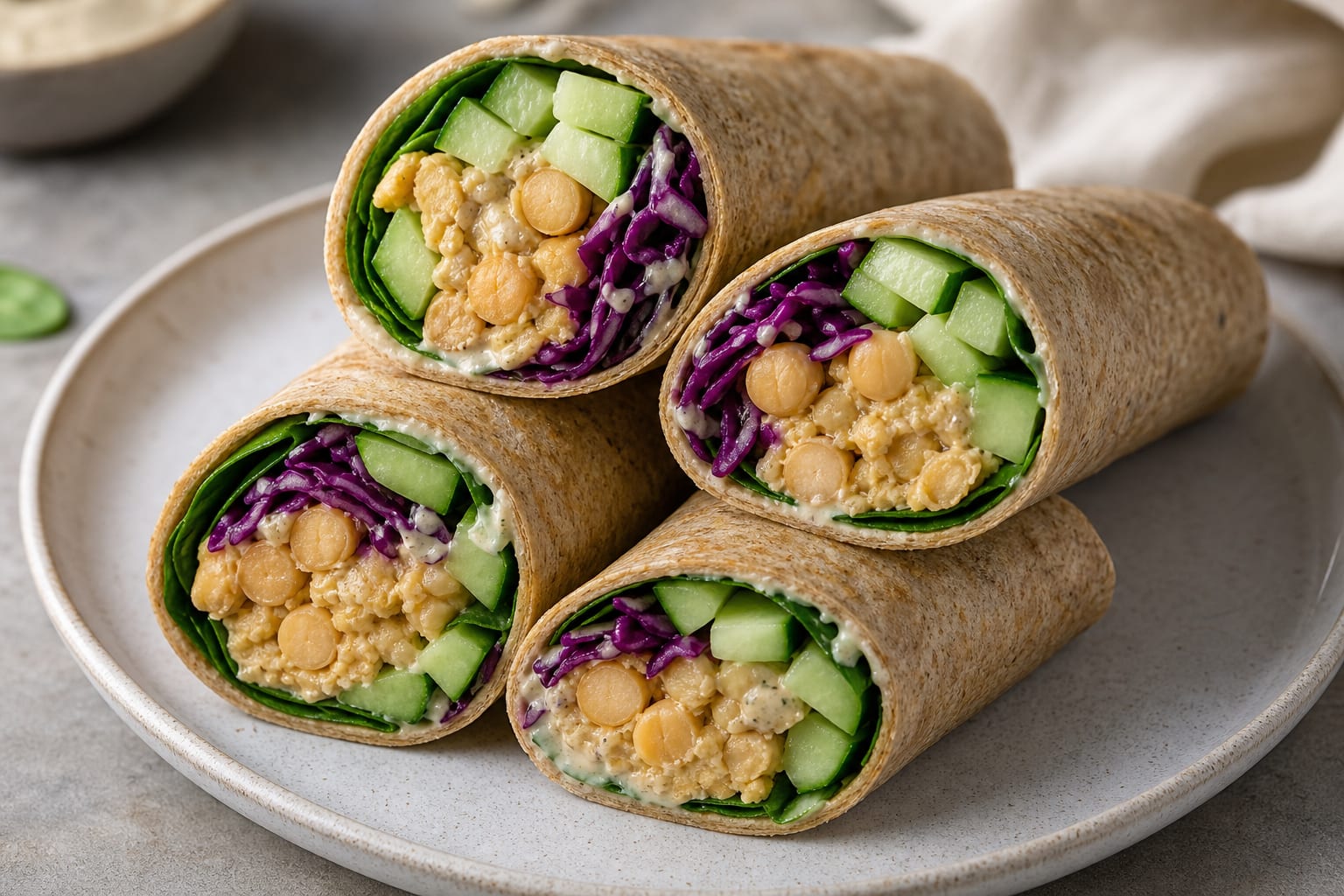
Ingredients:
- 4 whole-wheat tortillas (41 g each)
- 1 can (15 ounces) ready-to-eat chickpeas, drained and rinsed
- 1 cucumber, diced
- 1 cup shredded red cabbage
- 2 cups baby spinach
- 3 tablespoons tahini
- 2 tablespoons lemon juice
- 2 tablespoons water
Directions:
Mash half of the chickpeas with a fork in a medium bowl, stir in the remaining chickpeas, cucumber, and cabbage, then whisk the tahini, lemon juice, and water in a small cup, pour it over the filling, and toss. Lay one wrap flat, place about one-quarter of the spinach and filling in a strip across the lower third with a 2-inch border on each side, fold the sides inward, roll from the filled edge, place seam-side down, and repeat with the remaining wraps. Makes 4 wraps.
Why It Works: Mashing only half the chickpeas helps the filling hold together while preserving texture. Keeping the filling low on the wrap makes the first roll easier to close. For an anti-inflammatory lunch, this simple wrap is a clear starting point you can repeat.
4. Rosemary Chicken, Squash, and Red Onion Tray
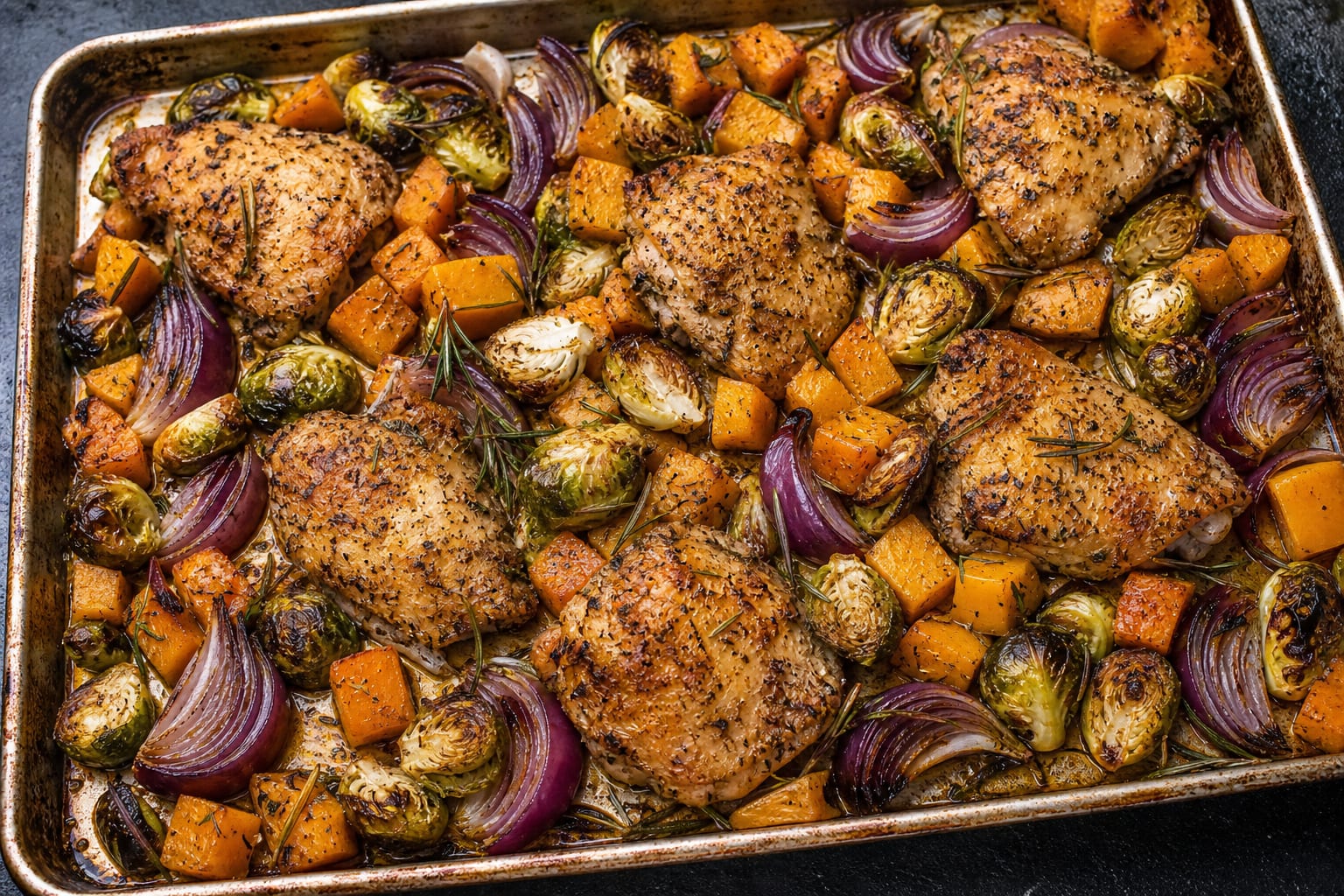
Ingredients:
- 1 pound boneless, skinless chicken breast, cut into 1-inch pieces
- 1 small butternut squash, peeled and cut into 3/4-inch cubes
- 1 red onion, cut into wedges
- 3 cups Brussels sprouts, halved
- 2 tablespoons extra-virgin olive oil
- 1 teaspoon dried rosemary
- 1/2 teaspoon garlic powder
Directions:
Heat the oven to 425°F, then place the chicken, squash, onion, and Brussels sprouts on a large rimmed sheet pan, add the olive oil, rosemary, and garlic powder, and toss until evenly coated. Spread everything into one layer with a little space between pieces so the vegetables roast instead of steam, then roast for 24 to 28 minutes, turning once after 15 minutes, until the squash is easily pierced with a fork and the chicken reaches 165°F. Divide into 4 servings.
Why It Works: Similar-size pieces help the chicken and vegetables finish together. The fork-tender squash and browned sprout edges give you 2 easy doneness cues. Clear visual cues are especially useful when you're learning low inflammation recipes.
5. Herby Sardine and Tomato Toasts
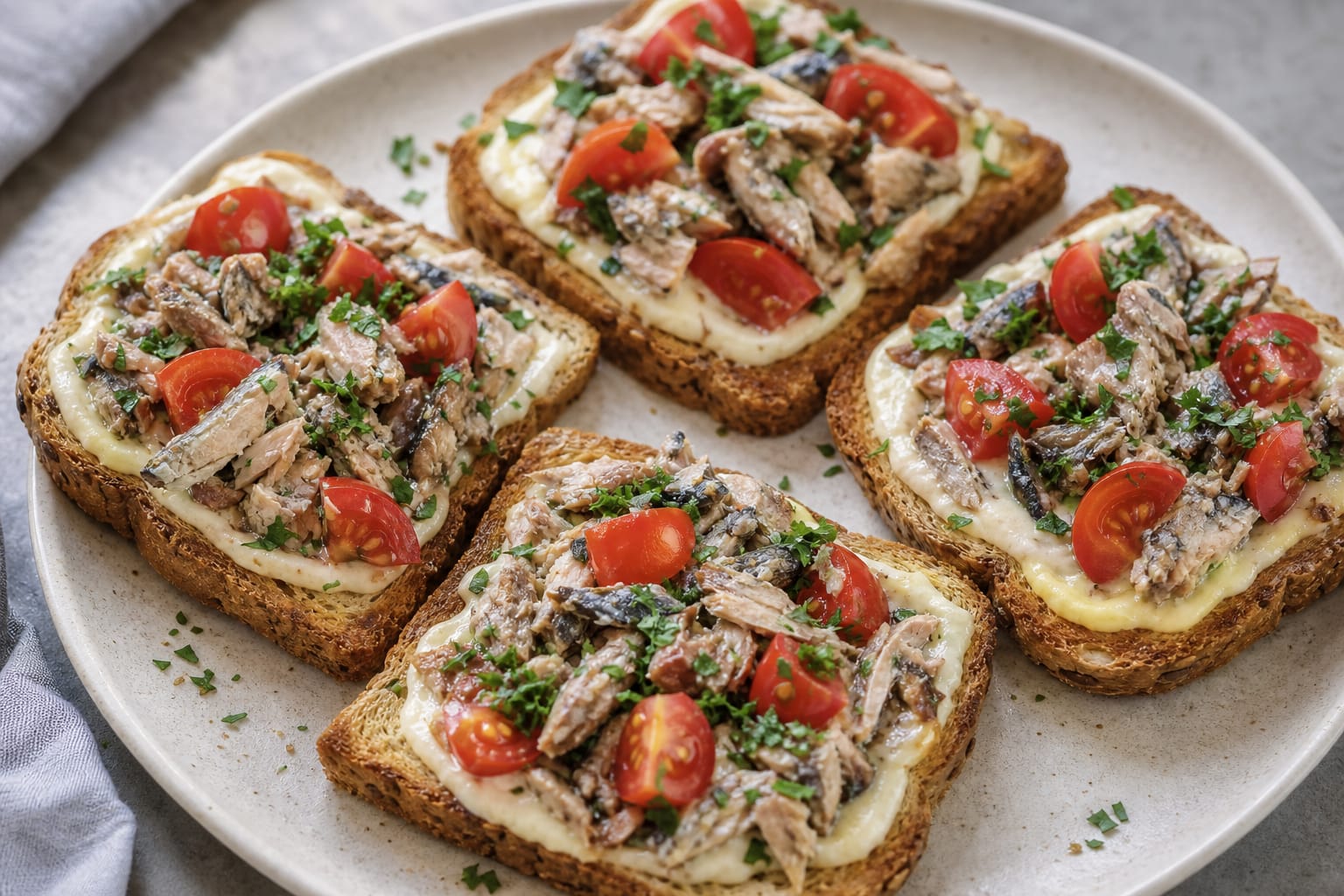
Ingredients:
- 1 can (4.4 ounces) ready-to-eat sardines in olive oil, drained
- 4 slices whole-grain bread
- 1 cup cherry tomatoes, quartered
- 1 tablespoon lemon juice
- 2 tablespoons chopped parsley
- 1/4 cup plain Greek yogurt
- 1 teaspoon Dijon mustard
Directions:
Toast the bread in a toaster on medium until golden and crisp, or cook it in a dry skillet for 2 to 3 minutes per side, then stir together the yogurt, Dijon, and lemon juice in a small bowl and spread the mixture over the toast. Flake the sardines on top, add the tomatoes, and finish with parsley. Serve 2 toasts per person for 2 servings.
Why It Works: The yogurt spread anchors the tomatoes and softens the sardines’ strong flavor. Golden, crisp bread is the simple visual cue that the base is ready. A toast with obvious doneness cues also suits an inflammation diet for beginners.
6. Peanut Ginger Edamame Quinoa Bowls
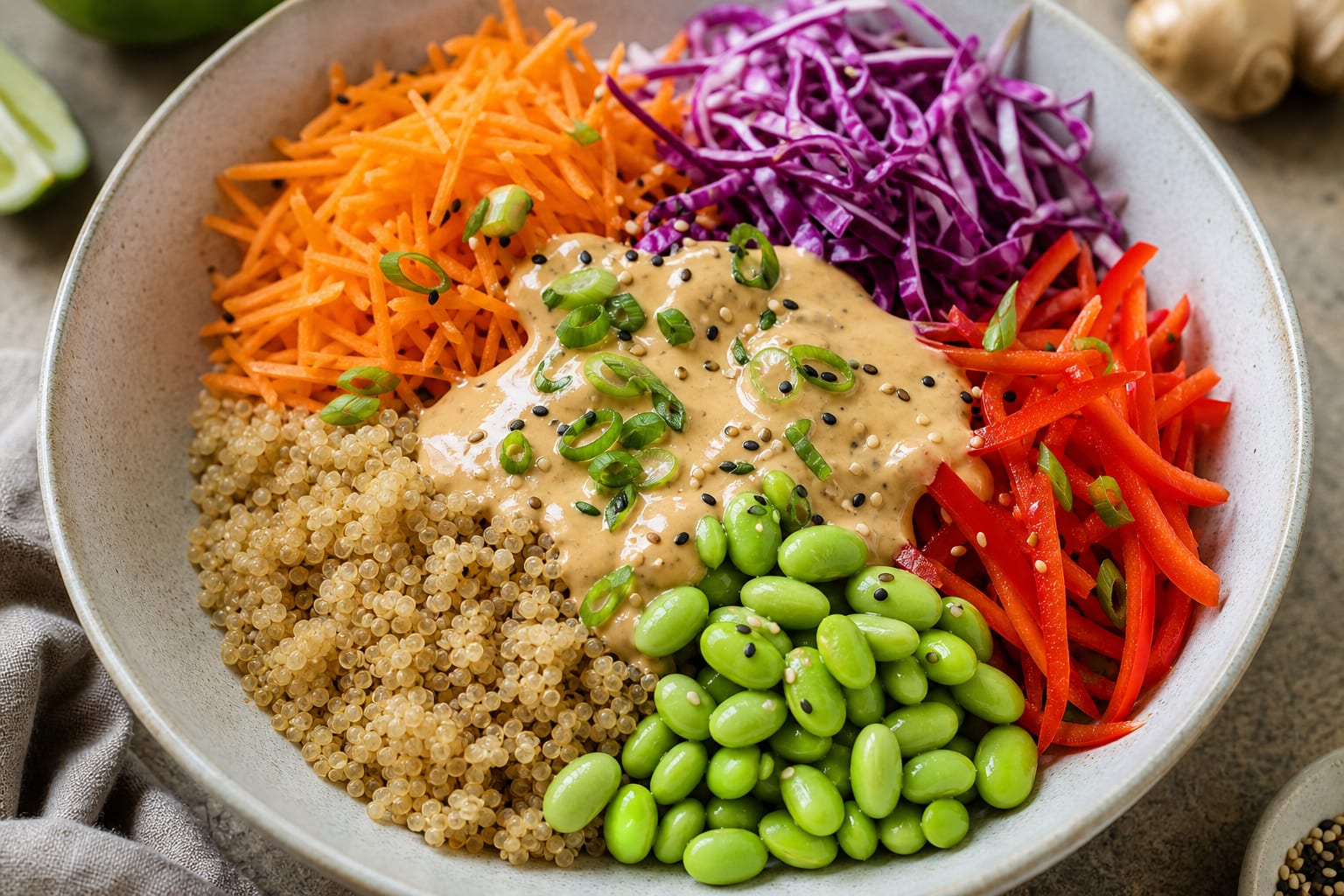
Ingredients:
- 3 cups cooked and cooled quinoa
- 2 cups frozen shelled edamame
- 2 cups shredded carrots
- 1 red bell pepper, sliced
- 2 cups shredded cabbage
- 3 tablespoons natural peanut butter
- 2 tablespoons lime juice
- 1 tablespoon low-sodium tamari
- 1 teaspoon grated fresh ginger
- 3 tablespoons warm water
Directions:
Cook the edamame according to the package directions, usually 4 to 5 minutes, then drain and rinse under cold water until cool and divide the cooked quinoa, cooked edamame, carrots, bell pepper, and cabbage among 4 bowls. Whisk the peanut butter, lime juice, tamari, ginger, and warm water until smooth, adding 1 more tablespoon water if needed. Spoon the sauce over the 4 bowls and toss just before eating.
Why It Works: Cooking and cooling the edamame removes guesswork about its ready-to-eat state. The smooth peanut-lime sauce ties cooked grain and crisp vegetables together. A reliable sauce ratio makes low inflammation recipes easier to adapt with another grain or vegetable.
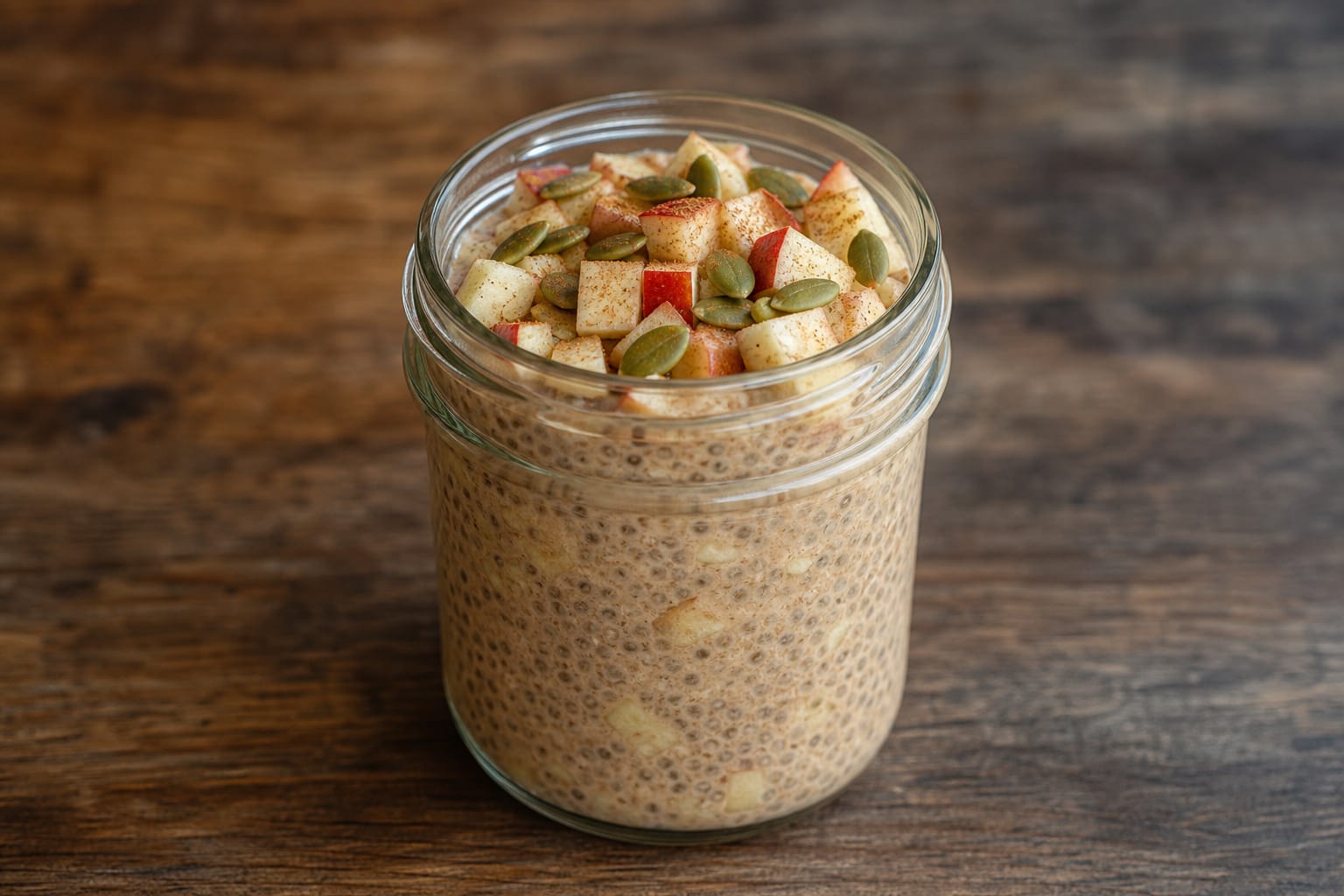
7. Cinnamon Apple Chia Pudding Jars
Ingredients:
- 2 cups unsweetened fortified soy milk
- 1/2 cup chia seeds
- 1 apple, finely diced
- 1/2 cup unsweetened applesauce
- 1 teaspoon ground cinnamon
- 1/2 teaspoon vanilla extract
- 1/4 cup pumpkin seeds
Directions:
Whisk the milk, chia seeds, applesauce, cinnamon, and vanilla in a large bowl, wait 5 minutes, and whisk again to break up any clumps. Divide the mixture among 4 clear glass jars, cover, and refrigerate for at least 4 hours or overnight, until the pudding is thick enough to hold a spoonful rather than pour. Top the 4 jars with diced apple and pumpkin seeds just before serving.
Why It Works: The second whisk keeps the seeds evenly suspended while the pudding sets. The spoonable texture is an easy final check before you add the crisp toppings. That visible texture cue makes anti-inflammatory breakfasts less intimidating for a new cook.
Quick Reference
|
Recipe |
Prep |
Cook |
Protein |
Key Benefit |
|
Blueberry Walnut Yogurt Oat Bowls |
8 min |
0 min, plus 30 min chill |
~38 g/serving |
Reliable soft-oat texture |
|
Red Lentil Carrot Soup |
10 min |
32-36 min |
~14 g/serving |
Visible lentil doneness cue |
|
Tahini Chickpea Cucumber Wraps |
12 min |
0 min |
~12 g/serving |
Beginner-friendly wrap placement |
|
Rosemary Chicken, Squash, and Red Onion Tray |
15 min |
24-28 min |
~29 g/serving |
Even sizing and clear doneness cues |
|
Herby Sardine and Tomato Toasts |
10 min |
3-6 min |
~25 g/serving |
Crisp base with balanced topping |
|
Peanut Ginger Edamame Quinoa Bowls |
15 min |
4-5 min |
~17 g/serving |
Safely cooked edamame and one sauce |
|
Cinnamon Apple Chia Pudding Jars |
10 min |
0 min, plus 4 hr chill |
~10 g/serving |
Second-whisk spoonable texture |