7 Anti-Inflammatory Recipes Built Around Protein and Fiber
Sep 23, 2026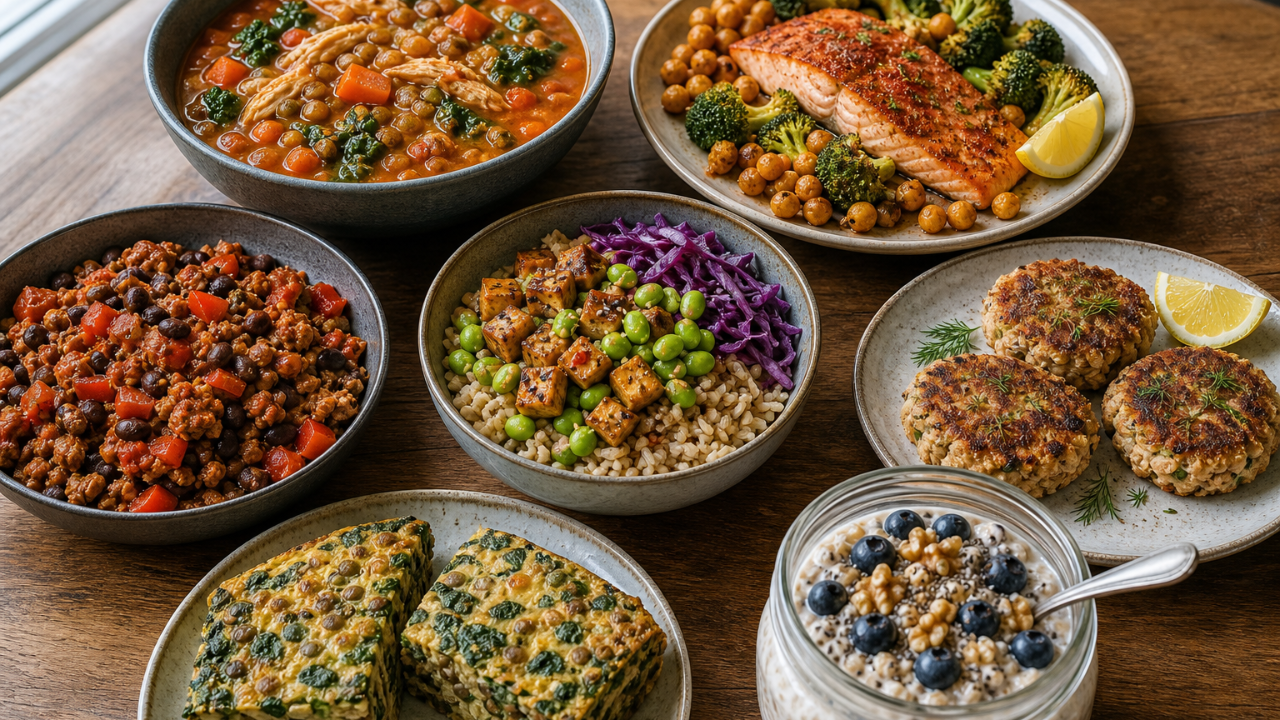
You build dinner around a chicken breast or a scoop of beans, then realize the rest of the plate is mostly sauce and starch. Protein and fiber were both on the plan, but one usually disappears when the week gets busy.
These anti-inflammatory recipes deliberately pair a measured protein anchor with legumes, vegetables, oats, or sturdy whole grains. The combinations make both protein and fiber substantive parts of the serving without pretending every plate has the same macro total. Nutrition can support your health through an overall eating pattern, and this structure gives you a repeatable way to check the plate before you cook.
Pick one recipe and identify both its protein anchor and its main fiber source before shopping.
This is general wellness information based on current research, not medical advice. If you have specific health concerns, please consult with a healthcare provider.
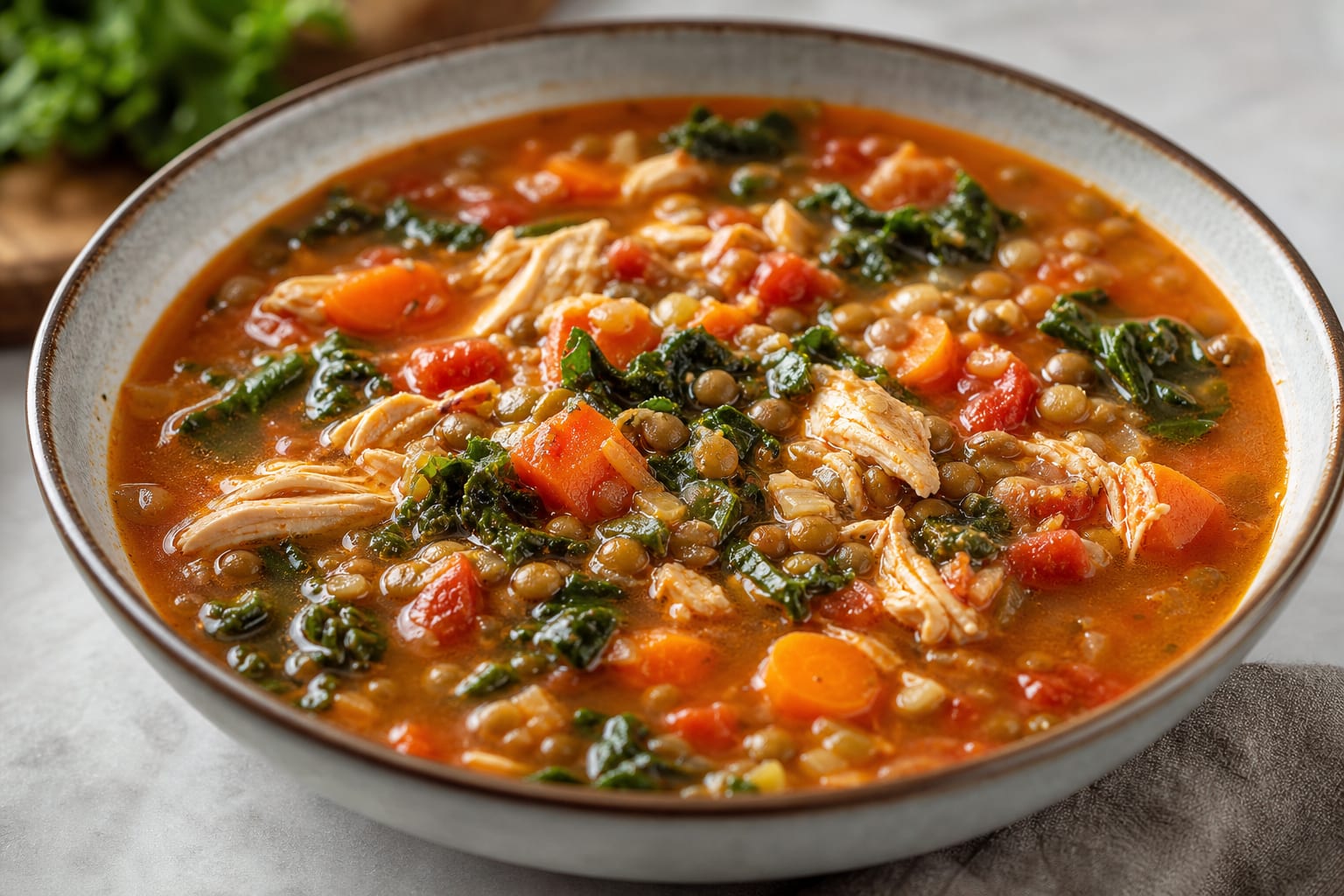
1. Chicken Lentil Vegetable Soup
Cook Time: 30 minutes
Ingredients:
- 24 ounces raw boneless skinless chicken breast, diced (680 g)
- 3 cups cooked unsalted lentils, drained (594 g)
- 2 cups chopped carrots
- 2 cups chopped kale
- 2 cups no-salt-added crushed tomatoes
- 3 cups water
- 1 tablespoon extra-virgin olive oil
Directions:
Brown chicken in oil for 8 minutes, add lentils, carrots, kale, tomatoes, and water, then simmer for 22 minutes more, making 30 minutes total cooking, until the chicken reaches 165°F and carrots are tender. Divide the soup into 4 servings. Cool in shallow containers, cover after cooling, and refrigerate within 2 hours at 40°F or below for up to 3 days counted from the lentil cooking time or the carrot-and-kale preparation time, whichever occurred first; reheat to 165°F.
Why It Works: Chicken is the measured protein anchor, while three cups of lentils plus carrots and kale keep the plant side substantial. The lentils also thicken the tomato broth as the soup rests.
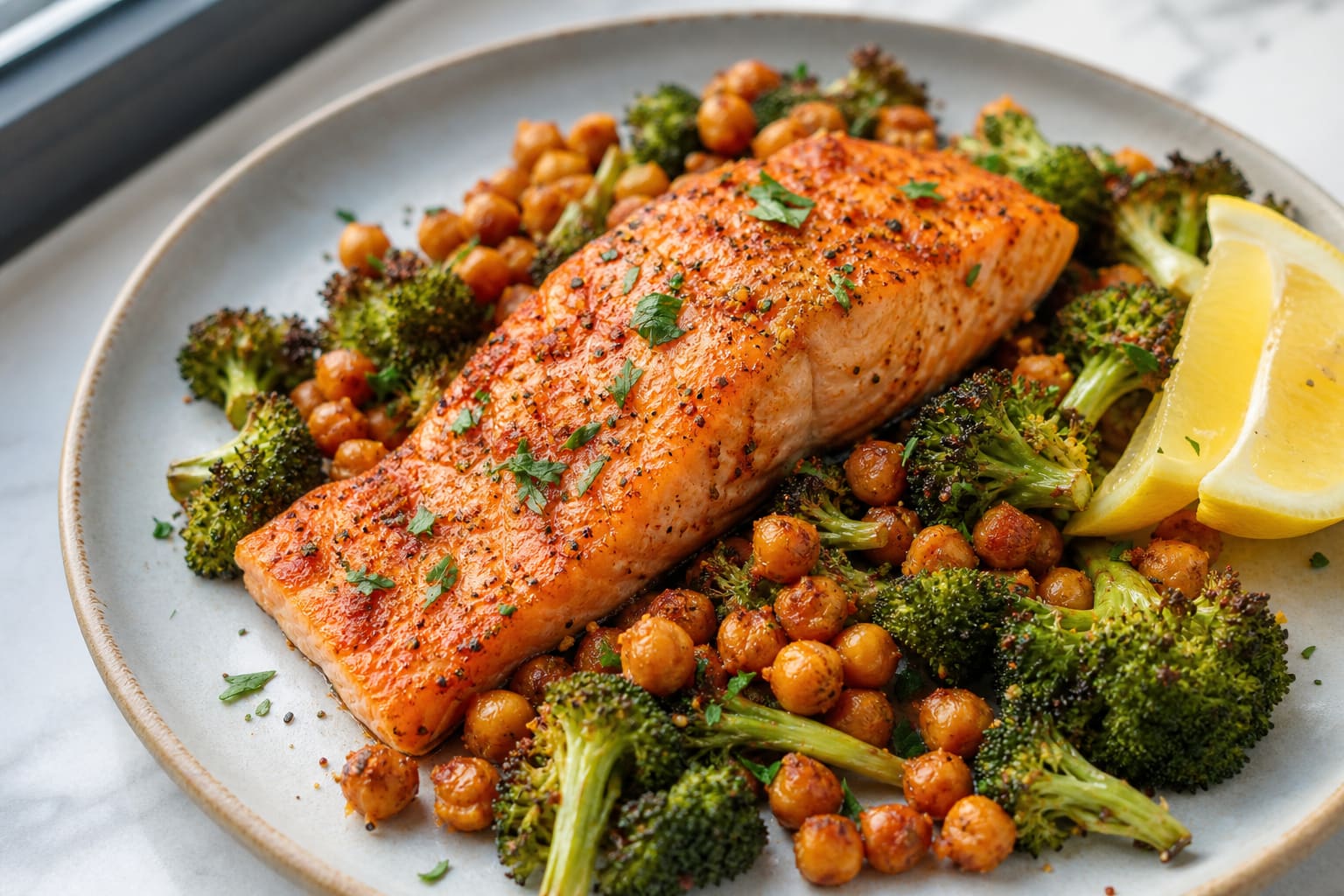
2. Salmon Chickpea Broccoli Tray
Cook Time: 25 minutes
Ingredients:
- 4 raw Atlantic salmon fillets, skin removed, 5 ounces each (568 g)
- 3 cups canned chickpeas, drained and rinsed (492 g)
- 4 cups broccoli florets
- 2 tablespoons extra-virgin olive oil
- 3 tablespoons fresh lemon juice
- 1 teaspoon smoked paprika
Directions:
Divide the chickpeas, broccoli, oil, and paprika evenly between two 13-by-18-inch rimmed sheet pans in uncrowded single layers and roast at 425°F for 10 minutes; add 2 salmon fillets to each pan with space around every fillet, then roast 15 minutes more, swapping racks and rotating after 8 minutes, making 25 minutes total until each fish center reaches 145°F. Finish both pans with lemon and divide one fillet plus one-fourth of the complete chickpea-and-broccoli load into each of 4 servings. Cool in shallow containers, cover after cooling, and refrigerate within 2 hours at 40°F or below for up to 2 days counted from the chickpea-can opening or broccoli preparation time, whichever occurred first; reheat cooked leftovers to 165°F.
Why It Works: A full salmon fillet supplies the protein floor, and nearly 3/4 cup chickpeas per person gives the tray a real legume component. Broccoli fills the remaining space without hiding either anchor.
Before we get to Meal #3...
My clients frequently ask me “Which foods actually help with inflammation?”
Knowing the foods is only useful if you understand why they matter and how to use them consistently.
Because knowledge is power.
So I ranked 10 science-backed foods that can support a lower-inflammatory eating pattern, including why they matter and practical ways to use them.
I hope you find it helpful!
3. Turkey Black Bean Pepper Skillet
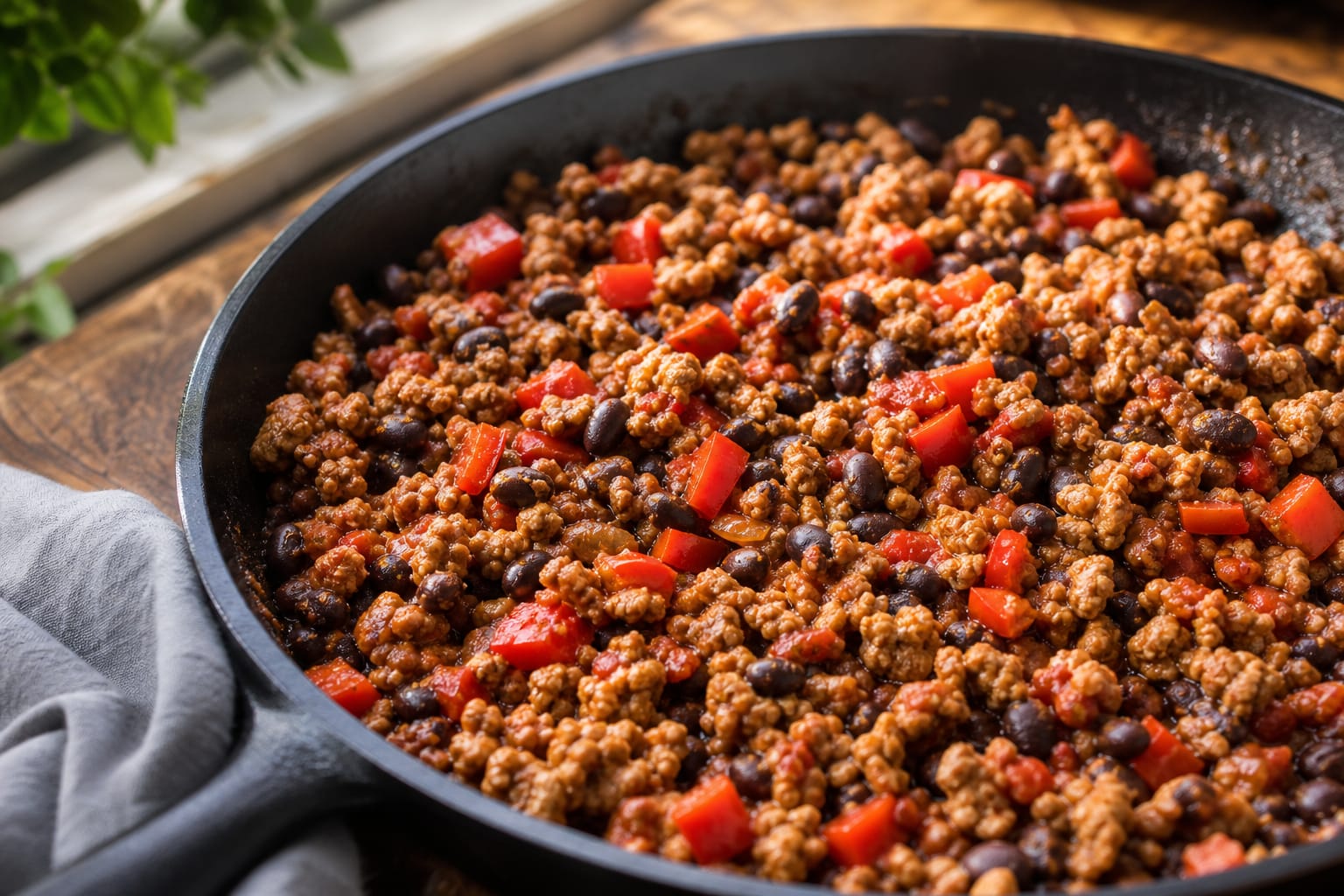
Cook Time: 24 minutes
Ingredients:
- 24 ounces raw 93% lean ground turkey (680 g)
- 3 cups cooked black beans, drained
- 3 cups sliced red bell peppers
- 2 cups no-salt-added crushed tomatoes
- 1 tablespoon extra-virgin olive oil
- 2 teaspoons ground cumin
Directions:
Brown ground turkey in oil with cumin for 10 minutes, add black beans, peppers, and tomatoes, then cover for 14 minutes more, making 24 minutes total cooking, until the turkey reaches 165°F. Divide the skillet into 4 servings. Cool in shallow containers, cover after cooling, and refrigerate within 2 hours at 40°F or below for up to 3 days counted from the black-bean cooking time or pepper preparation time, whichever occurred first; reheat to 165°F.
Why It Works: Turkey and black beans share the center of the skillet instead of treating beans as a garnish. Three cups of peppers add another visible plant component and keep the tomato mixture from feeling dense.
4. Ginger Tofu Edamame Brown Rice
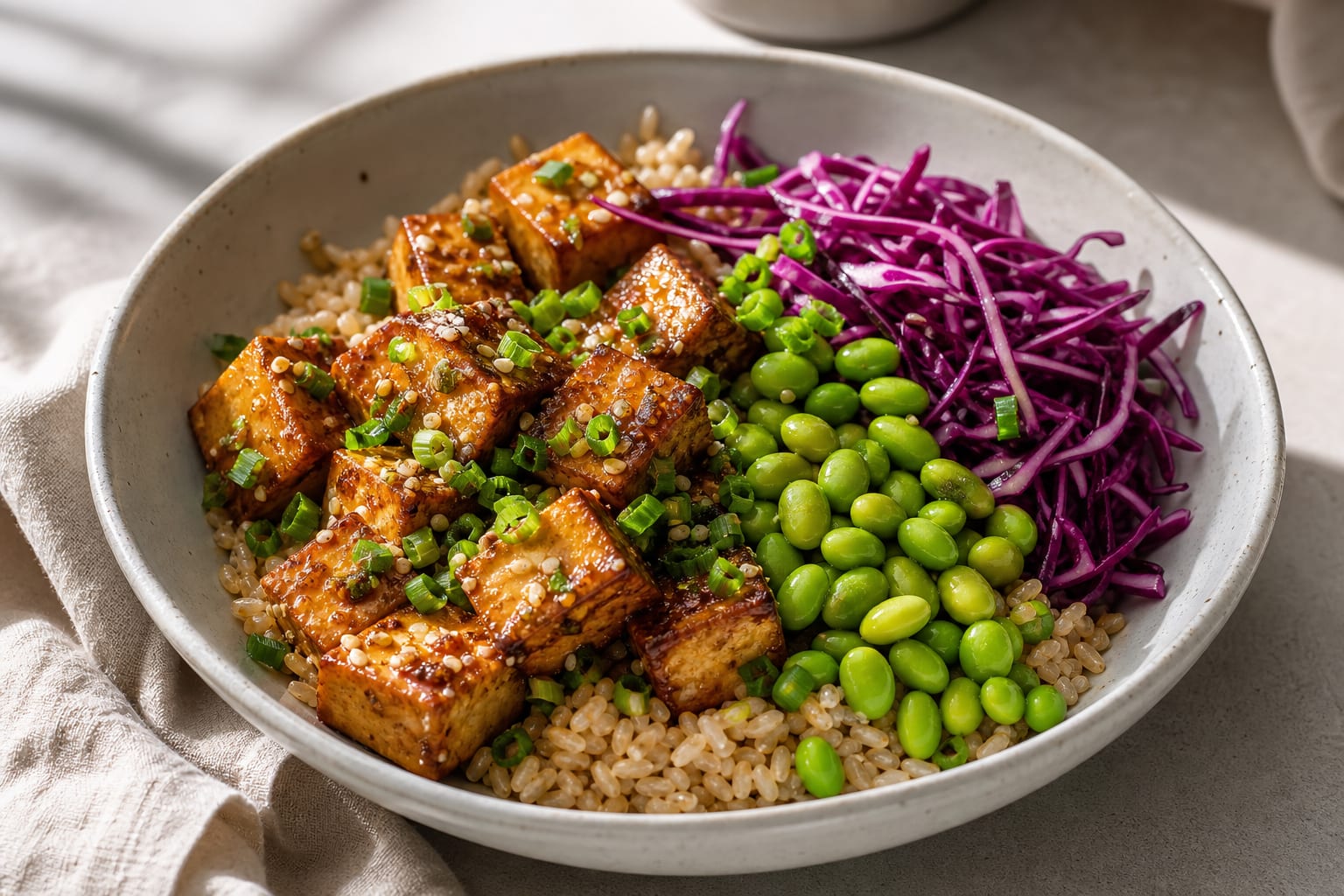
Cook Time: 18 minutes
Ingredients:
- 24 ounces firm tofu prepared with calcium sulfate, drained and patted dry (680 g)
- 2 cups cooked shelled edamame
- 3 cups cooked brown rice
- 4 cups shredded red cabbage
- 2 tablespoons reduced-sodium soy sauce
- 1 tablespoon toasted sesame oil
- 1 tablespoon grated fresh ginger
Directions:
Brown tofu in sesame oil for 10 minutes, add edamame, ginger, and soy sauce for 8 minutes more, making 18 minutes total cooking, until the tofu and edamame are steaming hot; divide the hot tofu mixture and hot cooked brown rice separately among 4 shallow hot-food containers, and divide the raw cabbage among 4 separate minimum 2-cup cold containers, making 4 servings. Cool the hot tofu mixture and hot rice separately and refrigerate them within 2 hours, then cover after cooling, pair one tofu container, one rice container, and one cabbage container for each serving, and hold every component continuously at 40°F or below for up to 3 days counted from the edamame or rice cooking time or the cabbage preparation time, whichever occurred first. Reheat only the paired tofu mixture and rice to 165°F, then add the paired cold cabbage after reheating.
Why It Works: Tofu and edamame provide two distinct plant-protein textures, while brown rice, edamame, and cabbage keep the fiber sources visible. Keeping cabbage cold preserves the contrast after reheating.
5. Tuna White Bean Oat Cakes
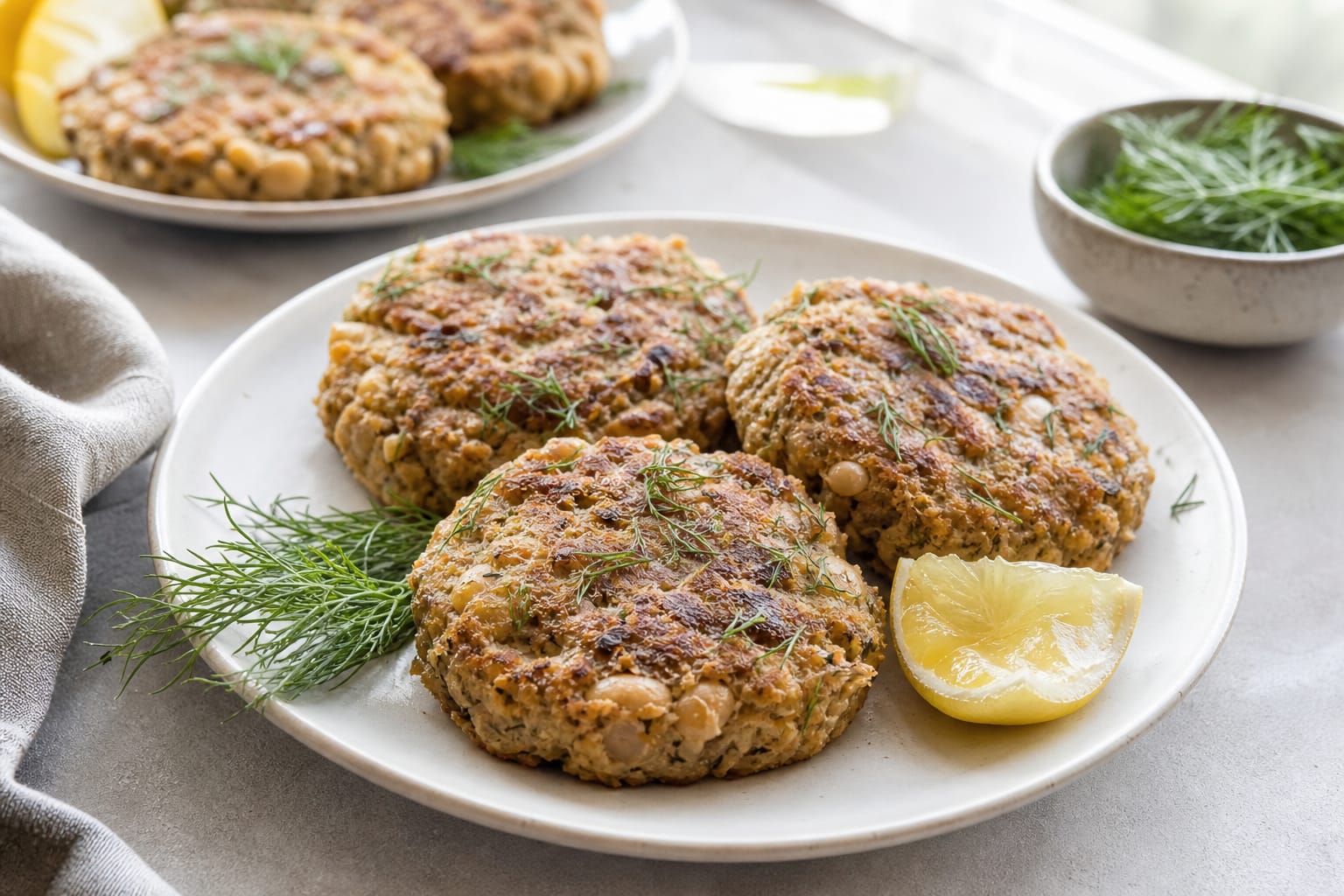
Cook Time: 24 minutes
Ingredients:
- 20 ounces canned light tuna in water, drained solids (567 g)
- 3 cups cooked unsalted white beans, drained (537 g)
- 1 cup dry rolled oats (80 g)
- 2 large eggs
- 2 tablespoons extra-virgin olive oil
- 2 tablespoons chopped fresh dill
- 2 tablespoons fresh lemon juice
Directions:
Mash half the beans, then mix all beans with tuna, oats, eggs, dill, and lemon and shape 12 cakes about 3 1/2 inches wide and 3/4 inch thick. Brush with oil and bake at 425°F for 24 minutes total cooking, turning once, until every center reaches 165°F; divide 3 cakes into each of 4 servings. Cool in shallow containers, cover after cooling, and refrigerate within 2 hours at 40°F or below for up to 2 days counted from the white-bean cooking time, tuna-can opening, oat preparation, or egg-opening time, whichever occurred first; reheat to 165°F.
Why It Works: Half-mashed white beans and oats hold this high fiber recipe together through reheating, while whole beans preserve texture in every tuna cake. Dill and lemon keep the dense mixture bright.
6. Egg Lentil Spinach Bake
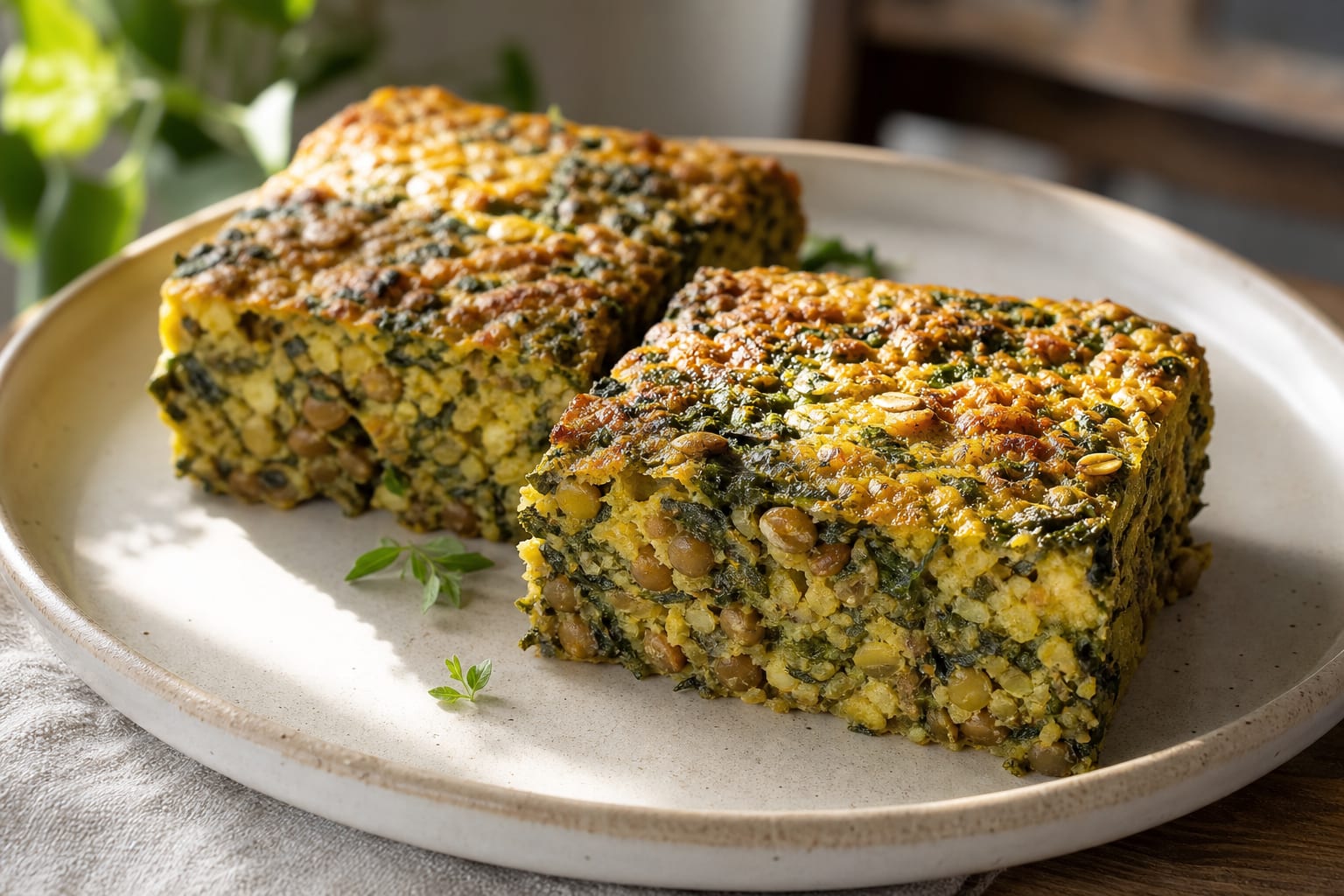
Cook Time: 32 minutes
Ingredients:
- 10 large raw eggs, shells removed (500 g)
- 3 cups cooked unsalted lentils, drained (594 g)
- 4 cups chopped spinach
- 1 cup dry rolled oats (80 g)
- 1 cup plain lowfat Greek yogurt
- 1 tablespoon extra-virgin olive oil
- 1 teaspoon smoked paprika
Directions:
Whisk eggs, yogurt, oats, and paprika, fold in lentils and spinach, and pour into an oiled 9-by-13-inch dish. Bake at 350°F for 32 minutes total cooking until the center reaches 160°F, then cut into 8 equal rectangles and divide 2 rectangles into each of 4 servings. Cool in shallow containers, cover after cooling, and refrigerate within 2 hours at 40°F or below for up to 3 days counted from the lentil cooking time, yogurt opening, oat preparation, or spinach preparation time, whichever occurred first; reheat to 165°F.
Why It Works: Eggs give the bake a measured protein anchor, while three cups of lentils, oats, and spinach make fiber-rich foods part of every cut. A shallow rectangular bake keeps those ingredients distributed rather than settled in the middle.
7. Greek Yogurt Walnut Berry Oats
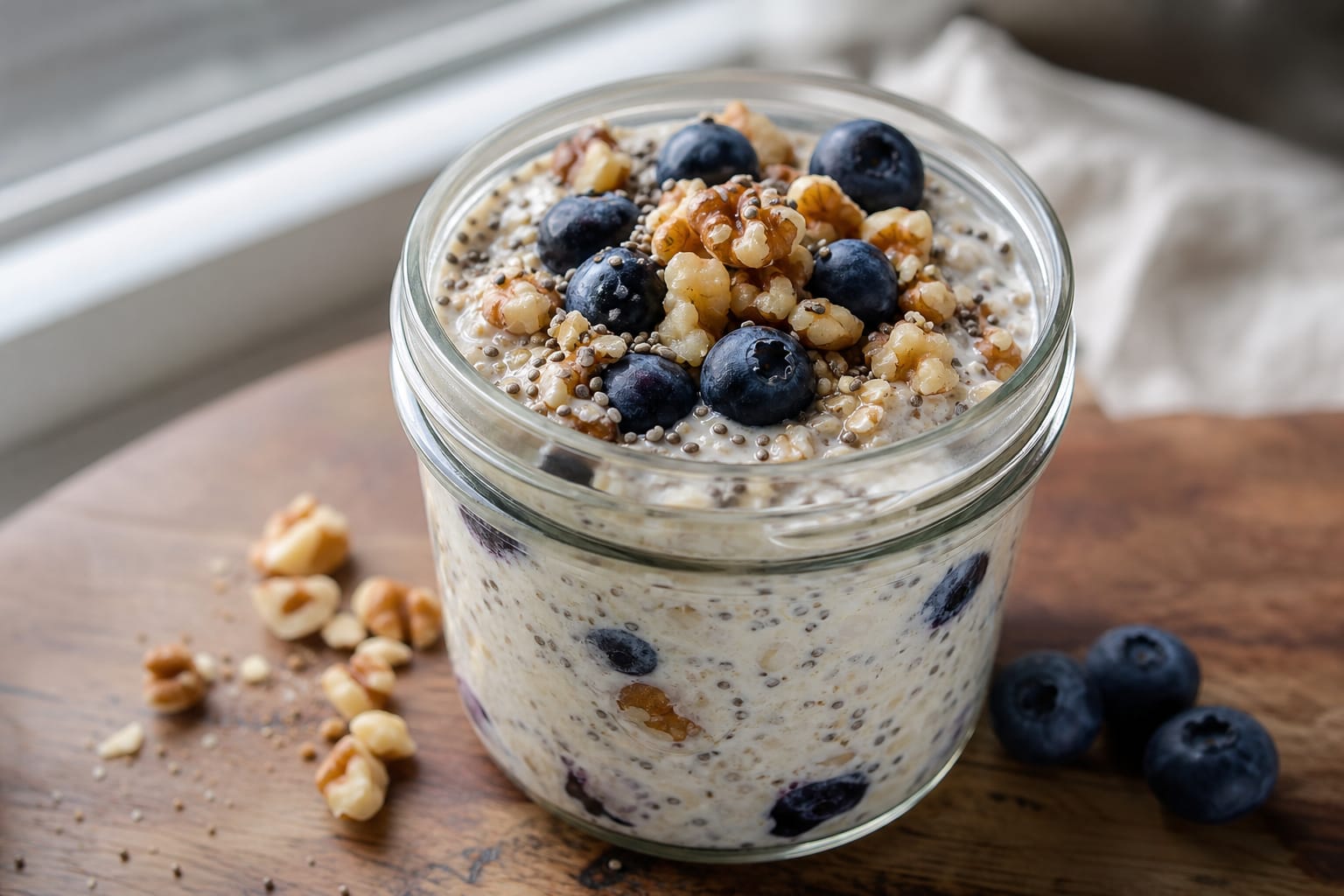
Cook Time: 0 minutes (no-cook)
Ingredients:
- 4 cups plain lowfat Greek yogurt (908 g)
- 2 cups dry rolled oats (160 g)
- 2 cups blueberries
- 1 cup chopped raw walnuts (112 g)
- 2 tablespoons chia seeds
- 1 teaspoon ground cinnamon
Directions:
Stir oats, chia, and cinnamon into Greek yogurt, then fold in half the blueberries and divide the no-cook mixture among 4 minimum 3-cup jars to make 4 servings. Top each serving with one-fourth of the remaining berries and walnuts, cover, and serve chilled. Refrigerate immediately at 40°F or below for up to 3 days counted from the yogurt opening, oat preparation, walnut preparation, or blueberry preparation time, whichever occurred first; don't leave a jar at room temperature longer than 2 hours.
Why It Works: One cup of Greek yogurt per serving provides the protein anchor. Oats, berries, walnuts, and chia make the fiber side visible in the base and topping instead of relying on a token sprinkle.
Quick Reference
|
Recipe |
Prep |
Cook |
Protein |
Key Benefit |
|
Chicken Lentil Vegetable Soup |
18 min |
30 min |
~38 g/serving |
Chicken plus a full lentil base |
|
Salmon Chickpea Broccoli Tray |
18 min |
25 min |
~28 g/serving |
Fish, legumes and vegetables on one tray |
|
Turkey Black Bean Pepper Skillet |
15 min |
24 min |
~31 g/serving |
Meat and beans share the skillet |
|
Ginger Tofu Edamame Brown Rice |
18 min |
18 min |
~29 g/serving |
Two plant proteins with three fiber sources |
|
Tuna White Bean Oat Cakes |
22 min |
24 min |
~27 g/serving |
Beans and oats form the cake itself |
|
Egg Lentil Spinach Bake |
15 min |
32 min |
~15 g/serving |
Legumes run through every portion |
|
Greek Yogurt Walnut Berry Oats |
12 min |
0 min |
~22 g/serving |
Cold meal with measured anchors |