7 Anti-Inflammatory Dips and Spreads for Healthy Snacking
Sep 18, 2026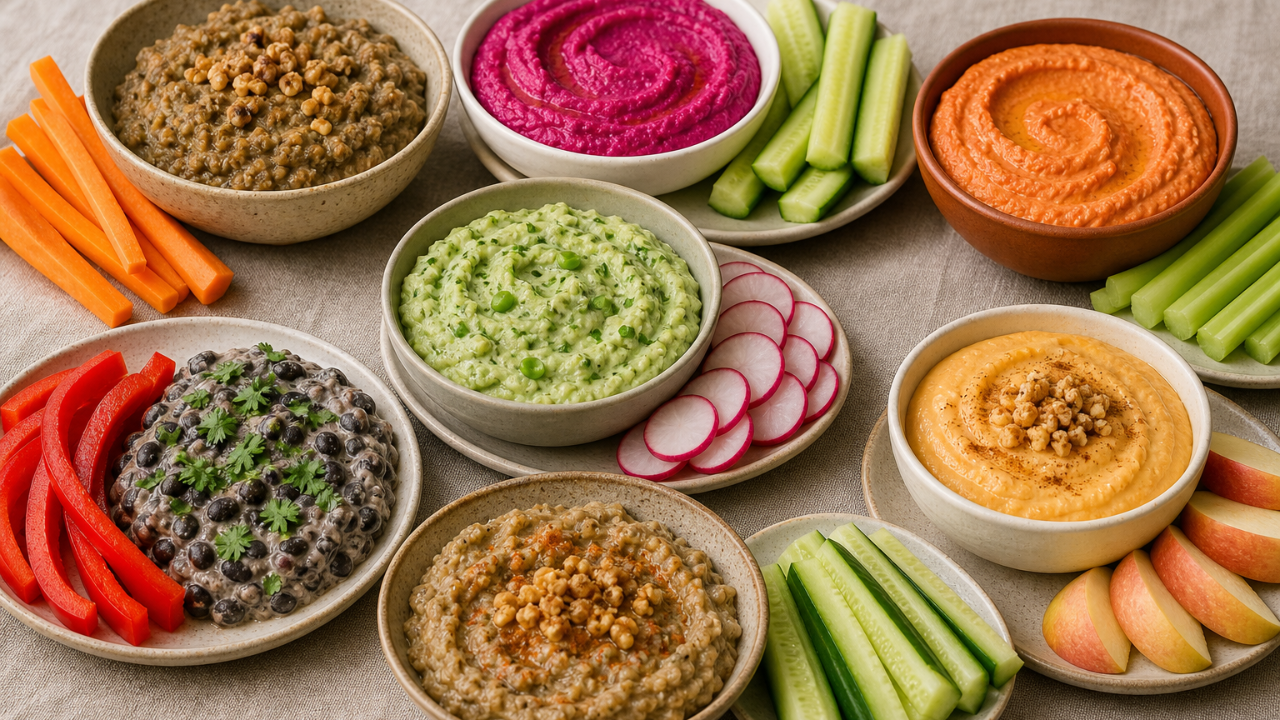
You’ve washed the vegetables and set them beside your desk, but by the afternoon they’re still sitting there. A good dip gives you a reason to eat them, especially when plain carrot sticks feel like another food you’re supposed to want.
Good nutrition can support health when an eating pattern includes foods you’ll happily make again. These anti-inflammatory recipes turn lentils, yogurt, chickpeas, tofu, beans, eggplant, and pumpkin into seven different dips or spreads. Each makes 4 servings with a matching dipper, and the table gives conservative protein estimates. Choose a coarse spread when you want texture or a smooth dip when you want something creamy.
Pick one dip and add its vegetables to your grocery list.
This is general wellness information based on current research, not medical advice. If you have specific health concerns, please consult with a healthcare provider.
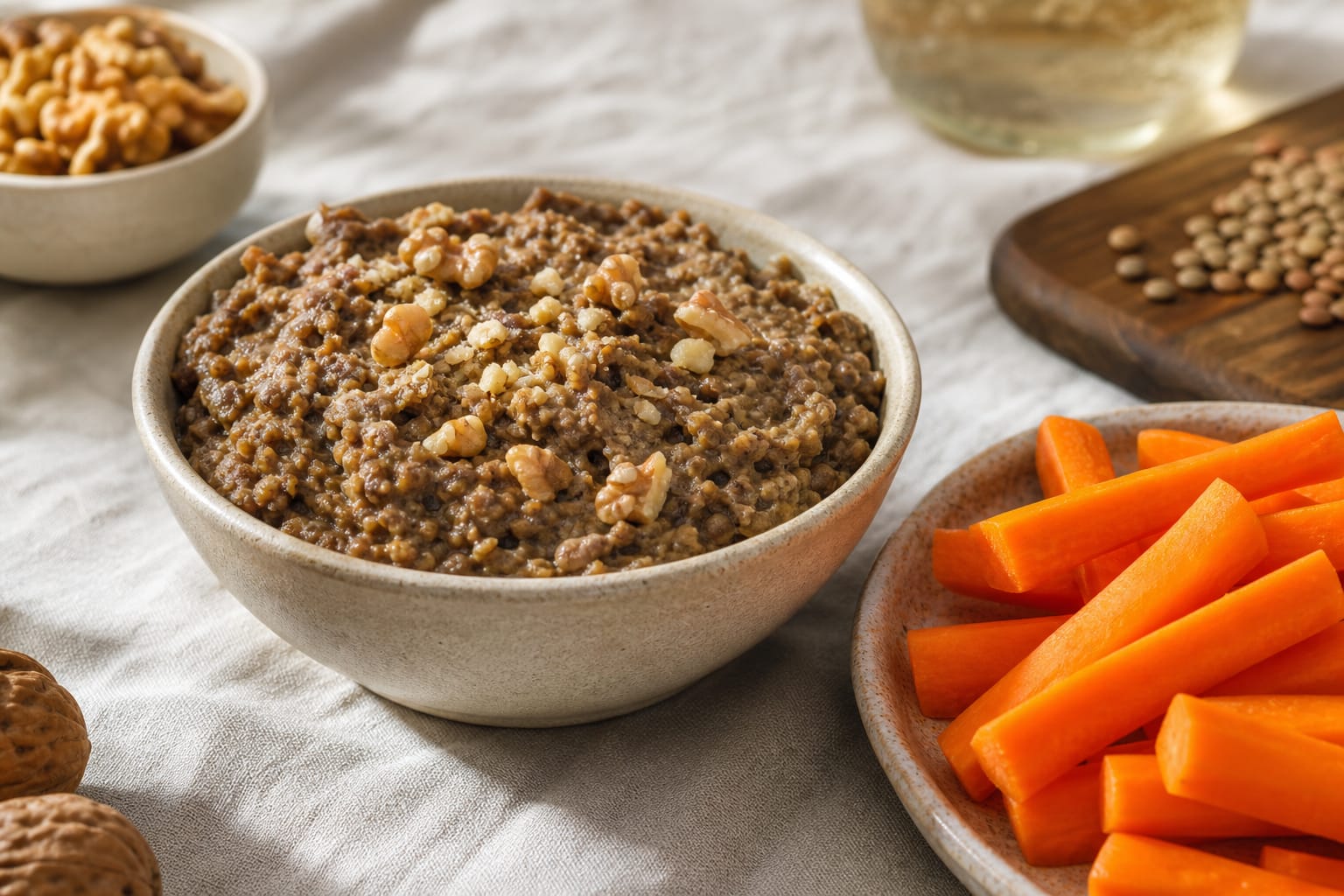
1. Lemon Lentil Walnut Spread
Cook Time: 0 minutes (no-cook)
Ingredients:
- 2 cups cooked unsalted lentils, drained and cooled (396 g)
- 1/2 cup chopped raw walnuts (56 g)
- 2 tablespoons lemon juice
- 1 tablespoon extra-virgin olive oil
- 1/2 teaspoon ground cumin
- 2 tablespoons water
- 2 cups carrot sticks
Directions:
Process the lentils, walnuts, lemon juice, oil, cumin, and water into a coarse spread. Divide the spread and carrot sticks into 4 servings with 0 minutes total cooking; refrigerate and eat within the lentils’ original 4-day refrigerated window.
Why It Works: Lentils and walnuts give anti-inflammatory snacks a savory, substantial scoop that holds on a carrot stick. Stop blending while some texture remains. Lemon brightens the earthy lentils without a long ingredient list.
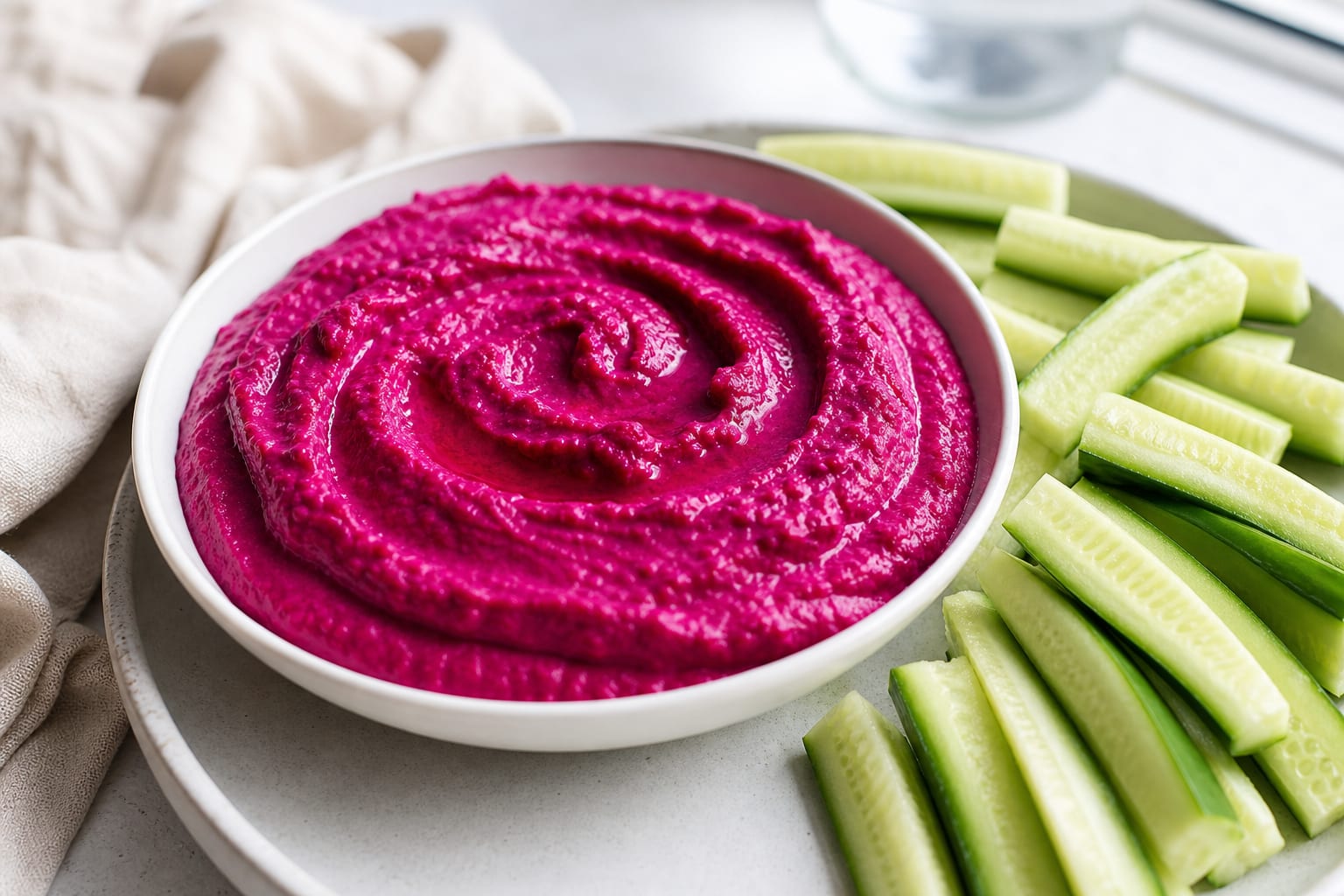
2. Roasted Beet Yogurt Dip
Cook Time: 35 minutes
Ingredients:
- 2 medium raw beets, peeled and cut into 1/2-inch cubes
- 2 cups plain lowfat Greek yogurt (454 g)
- 1 tablespoon extra-virgin olive oil
- 1 tablespoon lemon juice
- 1 teaspoon ground coriander
- 2 cups cucumber sticks
Directions:
Toss the beets with oil and coriander, then roast at 400°F for 35 minutes total cooking until easily pierced. Cool 15 minutes, blend with yogurt and lemon, and divide with the cucumber into 4 servings. Refrigerate covered for up to 3 days.
Why It Works: Roasting brings out the beets’ sweetness, and yogurt keeps the dip tangy. Colorful vegetables make an anti-inflammatory diet easier to enjoy when their flavor comes through. Cooling the beets first keeps the yogurt thick.
Before we get to Meal #3...
My clients frequently ask me “Which foods actually help with inflammation?”
Knowing the foods is only useful if you understand why they matter and how to use them consistently.
Because knowledge is power.
So I ranked 10 science-backed foods that can support a lower-inflammatory eating pattern, including why they matter and practical ways to use them.
I hope you find it helpful!
3. Roasted Pepper Chickpea Hummus
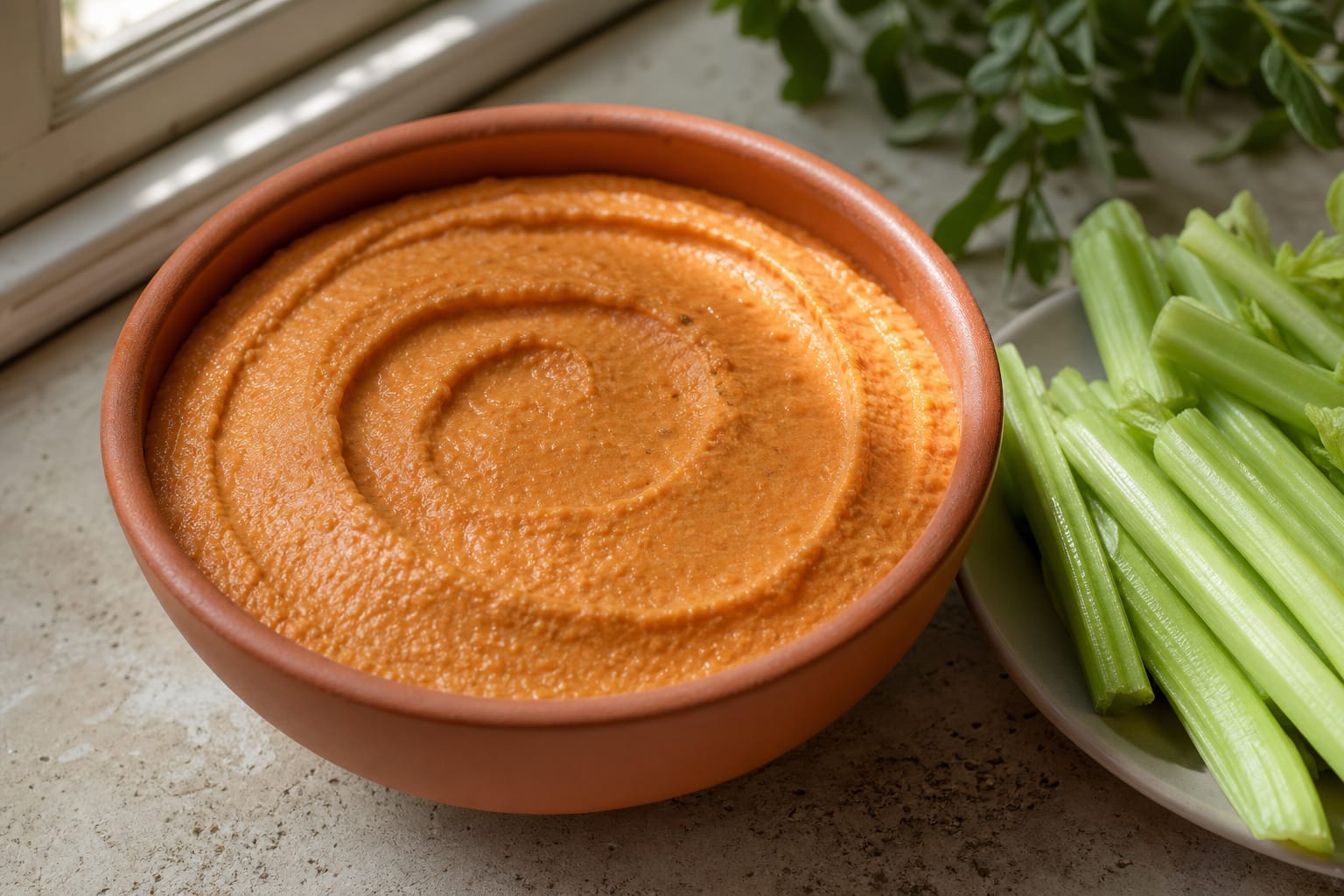
Cook Time: 0 minutes (no-cook)
Ingredients:
- 2 cups canned chickpeas, drained and rinsed (328 g)
- 1 cup jarred roasted red peppers, drained
- 2 tablespoons tahini
- 2 tablespoons lemon juice
- 1 small garlic clove, peeled
- 2 tablespoons water
- 2 cups celery sticks
Directions:
Blend the chickpeas, roasted peppers, tahini, lemon juice, garlic, and water until creamy, scraping down once. Spoon into 4 portions with equal celery sticks for 4 servings with 0 minutes total cooking; keep covered in the refrigerator for up to 3 days.
Why It Works: Chickpeas give mediterranean diet recipes a creamy base, and drained peppers add sweetness without thinning this batch too much. Tahini rounds out the lemon and garlic. Celery keeps the dip-and-dipper combination crisp.
4. Basil Pea Tofu Dip
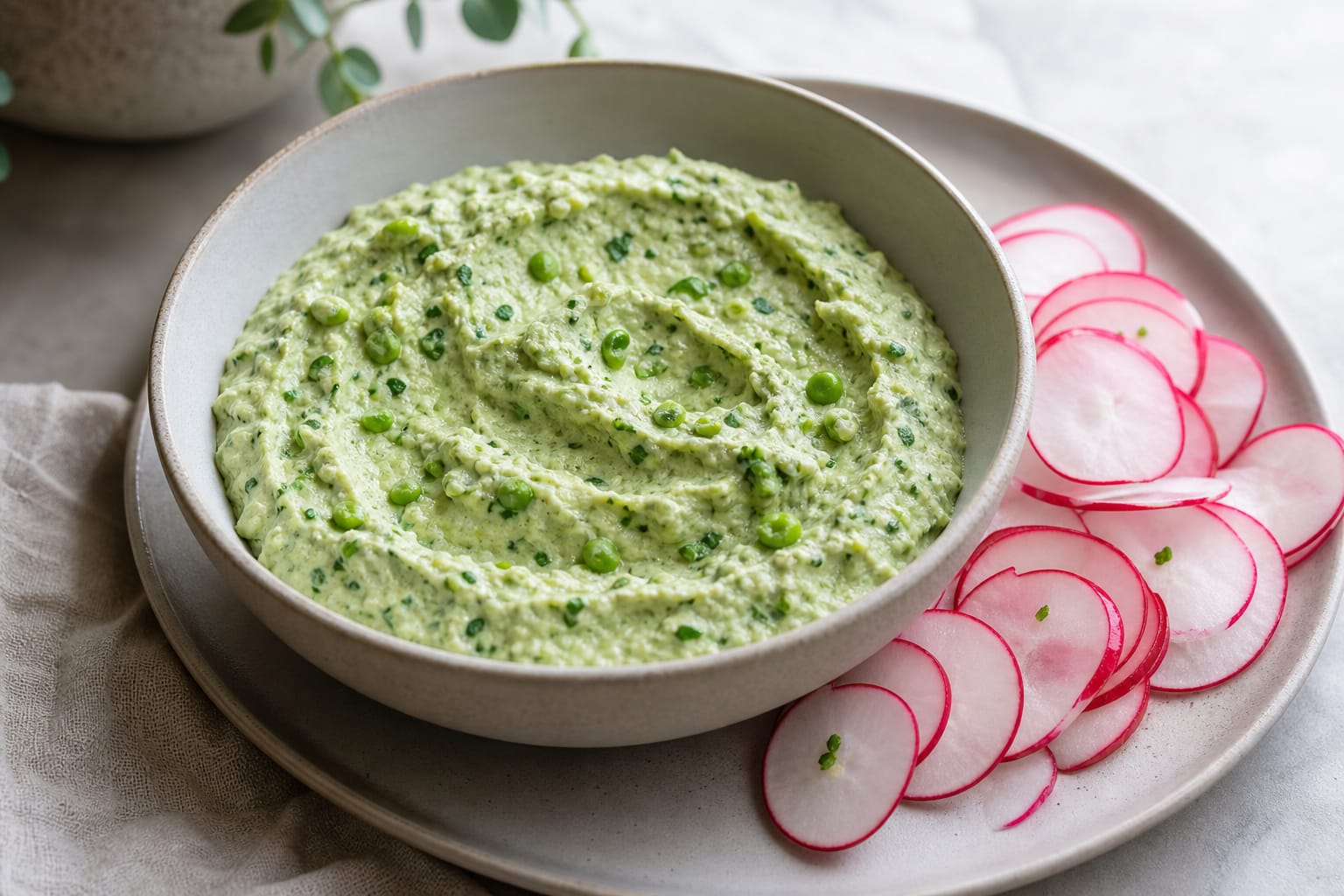
Cook Time: 4 minutes
Ingredients:
- 10 ounces firm tofu prepared with calcium sulfate, drained (283 g)
- 1 1/2 cups frozen green peas
- 1/2 cup water
- 1/2 cup fresh basil leaves
- 2 tablespoons lemon juice
- 1 tablespoon extra-virgin olive oil
- 2 cups sliced radishes
Directions:
Microwave the peas with water in a covered microwave-safe bowl for 4 minutes total cooking until steaming, then drain and cool 10 minutes. Blend peas, tofu, basil, lemon, and oil into a thick dip. Divide with the radishes into 4 servings and refrigerate leftovers promptly for up to 3 days.
Why It Works: Peas bring sweetness, basil adds a fresh aroma, and tofu makes the spread thick enough to scoop. You can change the texture by changing how long you blend. Leave a few pea pieces for a chunkier dip.
5. Lime Black Bean Yogurt Dip
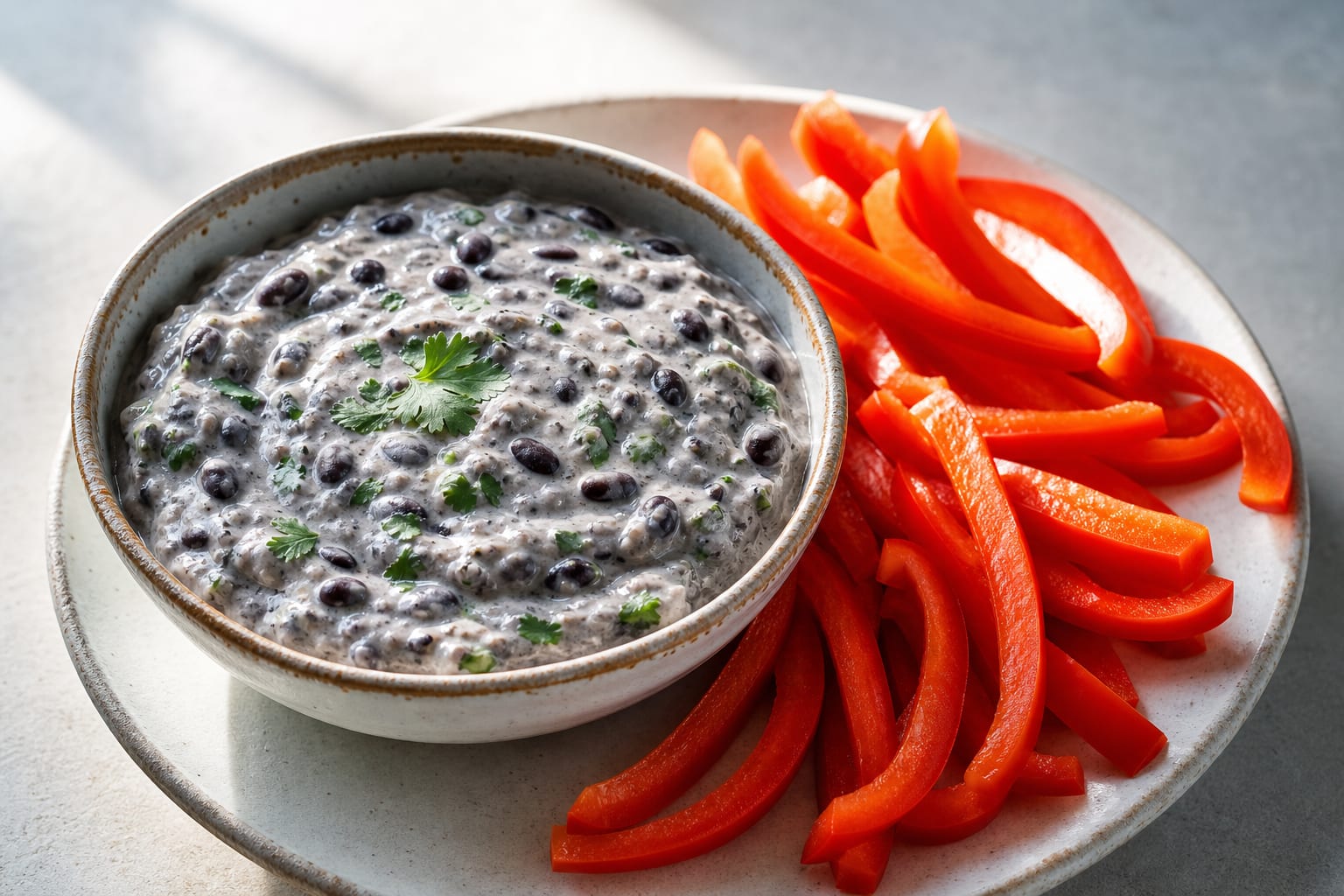
Cook Time: 0 minutes (no-cook)
Ingredients:
- 2 cups canned black beans, drained and rinsed
- 1 cup plain lowfat Greek yogurt (227 g)
- 2 tablespoons lime juice
- 1/4 cup chopped cilantro
- 1/2 teaspoon ground cumin
- 2 large red bell peppers, cut into strips
Directions:
Mash the beans with yogurt, lime juice, cilantro, and cumin, leaving a few beans whole. Divide the dip and pepper strips into 4 servings with 0 minutes total cooking; cover and refrigerate for up to 3 days.
Why It Works: Hand-mashing keeps these anti-inflammatory snacks simple when you don’t want to wash the blender. Yogurt softens the lime’s sharpness, and the whole beans give the dip some bite. Bell pepper strips are firm enough to lift a generous scoop.
6. Roasted Eggplant Walnut Spread
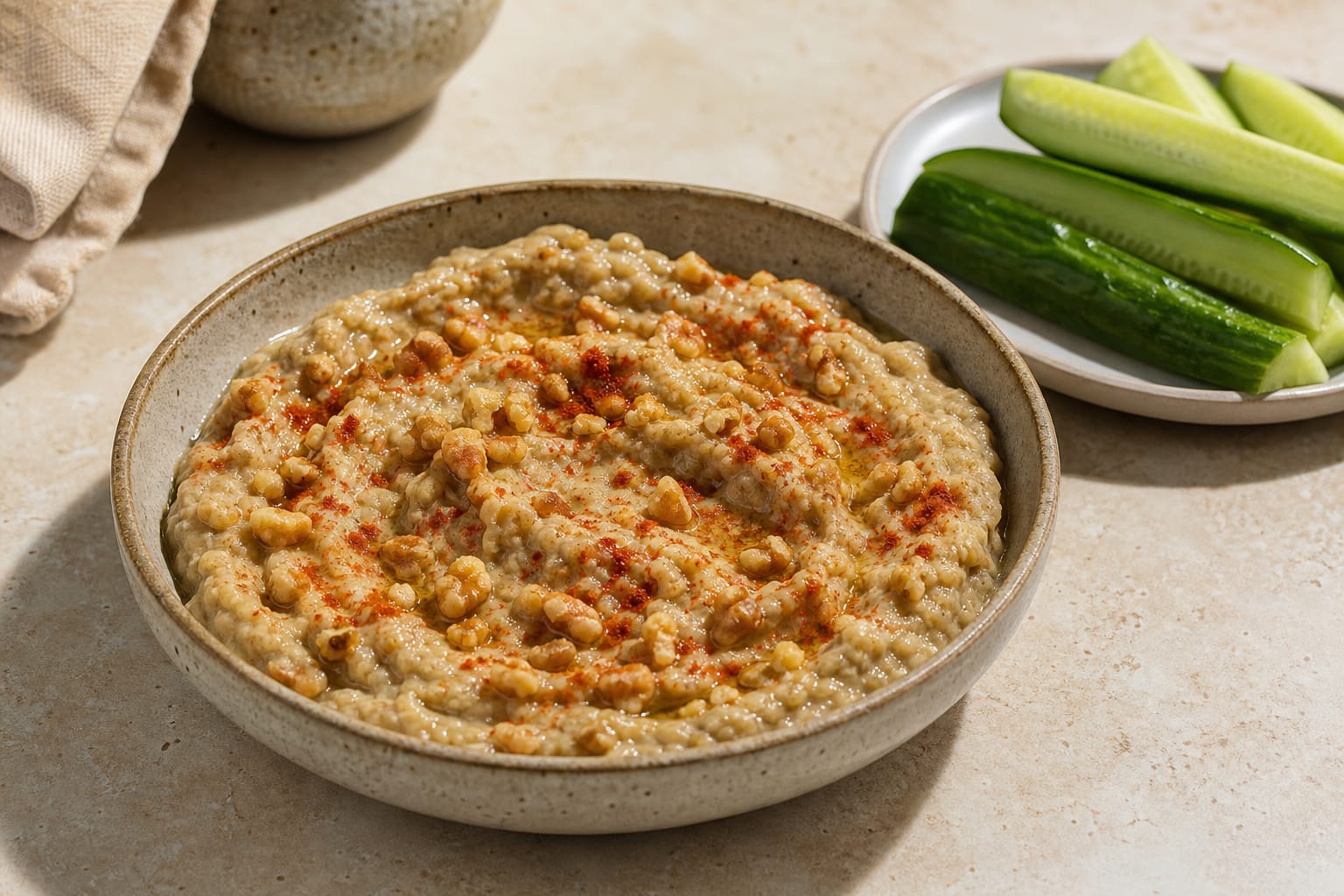
Cook Time: 35 minutes
Ingredients:
- 1 large eggplant, about 1 pound, halved lengthwise
- 1/2 cup chopped raw walnuts (56 g)
- 2 tablespoons tahini
- 2 tablespoons lemon juice
- 1 tablespoon extra-virgin olive oil
- 1/2 teaspoon smoked paprika
- 2 cups cucumber spears
Directions:
Brush the eggplant with oil and roast cut-side down at 425°F for 35 minutes total cooking until collapsed. Cool 15 minutes, scoop the flesh from the skin, and mash with walnuts, tahini, lemon, and paprika. Divide with cucumber into 4 servings, then refrigerate leftovers promptly for up to 3 days.
Why It Works: Soft roasted eggplant takes on the sesame and smoky paprika flavors as you mash. In mediterranean diet recipes, a spread can carry the vegetables as well as accompany them. Walnuts keep this version pleasantly coarse.
7. Pumpkin Cinnamon Yogurt Dip
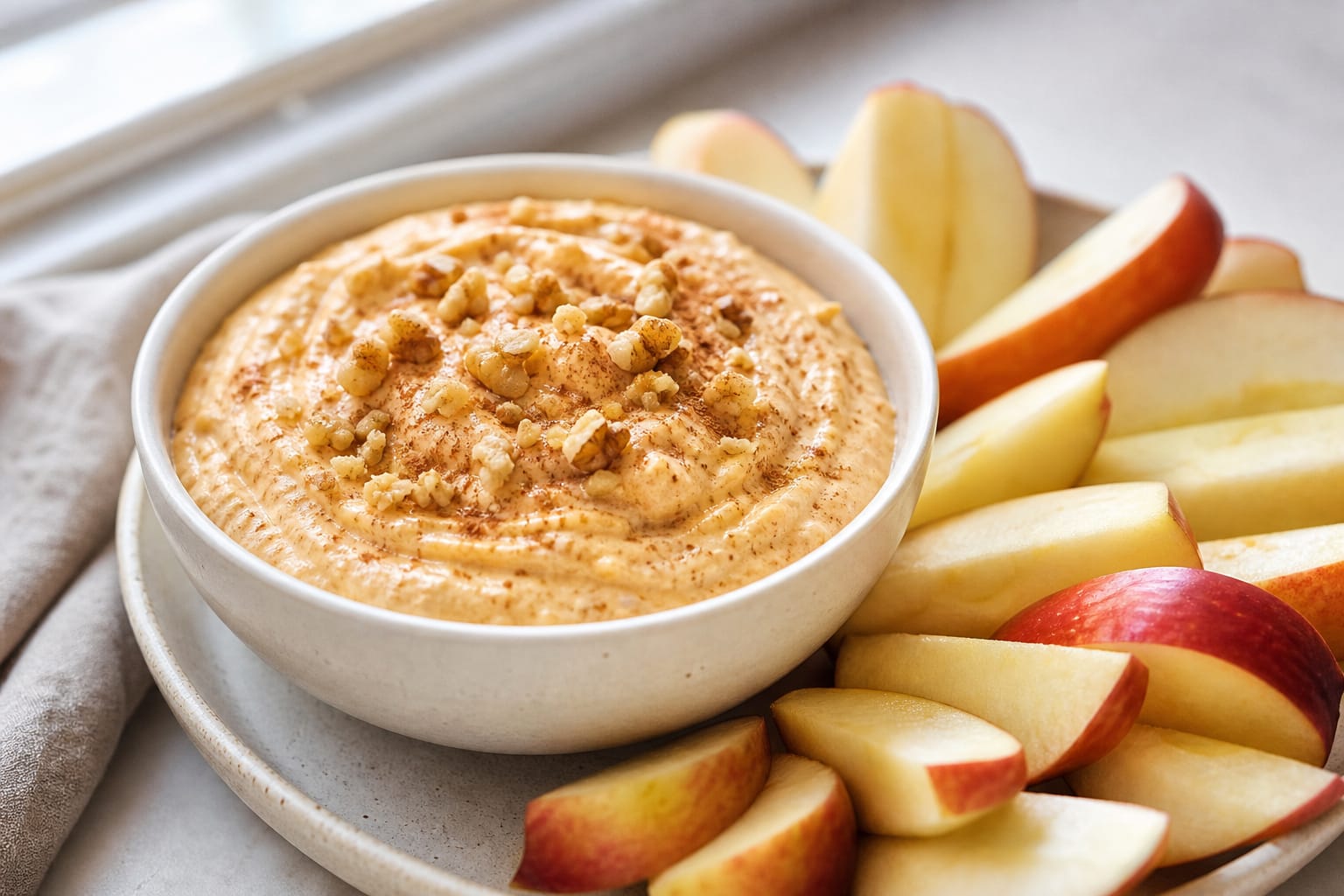
Cook Time: 0 minutes (no-cook)
Ingredients:
- 1 cup plain canned pumpkin puree
- 2 cups plain lowfat Greek yogurt (454 g)
- 1/4 cup finely chopped raw walnuts (28 g)
- 1 teaspoon ground cinnamon
- 1 tablespoon pure maple syrup
- 2 medium apples, cored and sliced
Directions:
Whisk pumpkin, yogurt, cinnamon, and maple syrup, then fold in the walnuts. Divide with the apple slices into 4 servings with 0 minutes total cooking; serve right away or refrigerate the dip separately for up to 3 days.
Why It Works: Pumpkin gives anti-inflammatory recipes a thick, spoonable texture without needing cream cheese. Tart apple slices balance the lightly sweet dip. The familiar fruit-and-yogurt pairing makes an anti-inflammatory diet easier to keep varied beyond savory snacks.
Quick Reference
|
Recipe |
Prep |
Cook |
Protein |
Key Benefit |
|
Lemon Lentil Walnut Spread |
10 min |
0 min |
~11 g/serving |
A coarse, hearty spread |
|
Roasted Beet Yogurt Dip |
30 min |
35 min |
~11 g/serving |
Bright color, gentle sweetness |
|
Roasted Pepper Chickpea Hummus |
10 min |
0 min |
~5 g/serving |
Creamy peppers and chickpeas |
|
Basil Pea Tofu Dip |
22 min |
4 min |
~12 g/serving |
Fresh basil, thick green dip |
|
Lime Black Bean Yogurt Dip |
10 min |
0 min |
~5 g/serving |
No blender needed |
|
Roasted Eggplant Walnut Spread |
30 min |
35 min |
~2 g/serving |
Soft eggplant, walnut texture |
|
Pumpkin Cinnamon Yogurt Dip |
10 min |
0 min |
~12 g/serving |
A lightly sweet dip |