6 Spring Anti-Inflammatory Dinners With Fresh Herbs and Vegetables
Oct 12, 2026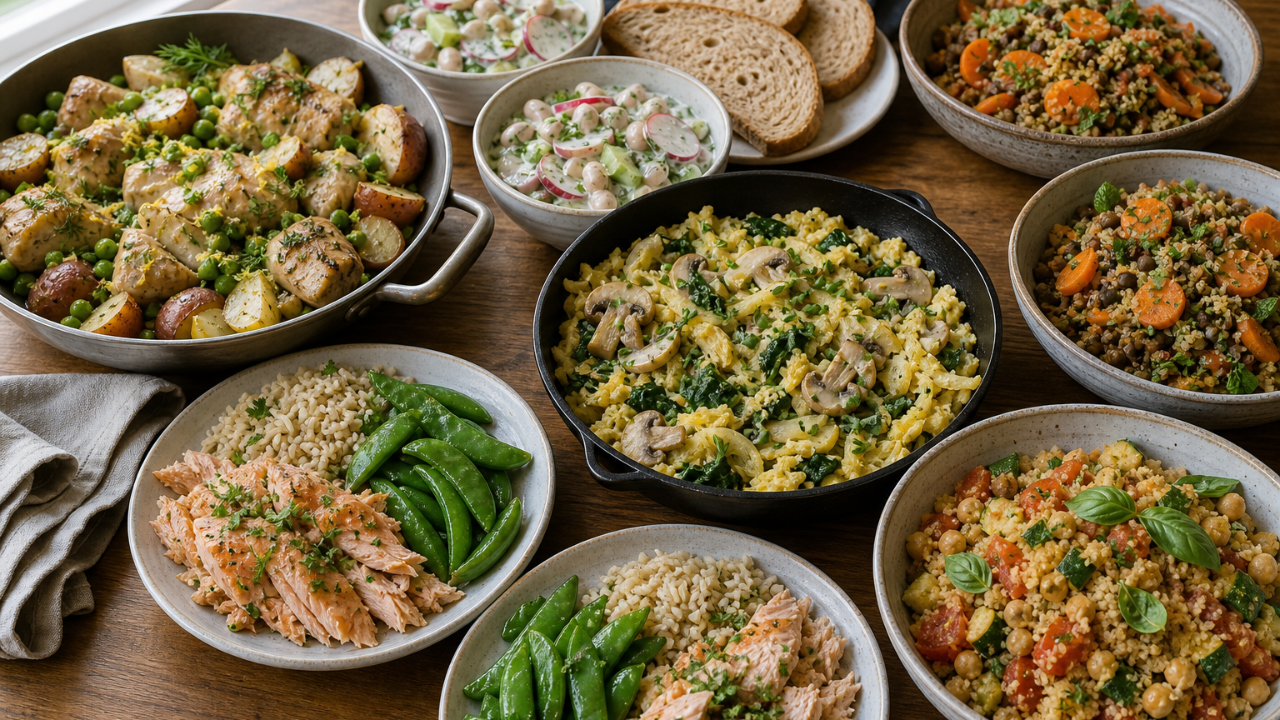
You bought the peas and herbs because you wanted a fresh start with dinner, but now they're sitting behind yesterday's leftovers. Tonight you're choosing between using them while they're still good and ordering something while another bunch wilts.
Fresh herbs make nutritious ingredients easier to enjoy often, especially when the same vegetables start feeling repetitive. These anti-inflammatory dinners build on a repeatable eating pattern with vegetables, beans or fish, and olive oil, then use dill, mint, or parsley to give each plate its own direction.
Pick the dinner that uses the herbs in your fridge, and put those ingredients on the counter before you start.
This is general wellness information based on current research, not medical advice. If you have specific health concerns, please consult with a healthcare provider.
Cooked beans, grains, chicken, and fish below are measured after cooking, so have them ready before you start the listed prep time. Keep those components refrigerated and use leftovers within 3 to 4 days.
1. Dill Chicken with Peas and Potatoes

Cook Time: 20 minutes
Ingredients:
- 240 g cooked roasted chicken breast, skin and bones removed, diced
- 360 g raw red potatoes with skin, cut into 1 cm cubes
- 160 g fresh raw shelled green peas
- 6 g fresh dill fronds, chopped
- 2 teaspoons olive oil (9 g)
- 120 g water
- 30 g freshly squeezed lemon juice
Directions:
Put the potatoes, oil, and water in a covered 12-inch skillet and cook over medium heat for 12 minutes, stirring twice. Add the chicken and peas, cover, and cook for 8 more minutes, for 20 minutes total cooking, until the potatoes are tender and the chicken reaches 165°F, then fold in the dill and lemon juice with the pan juices. Makes 2 servings.
Why It Works: Peas bring fiber to the plate, while the cooked chicken keeps the stovetop work short. Stirring the herbs in at the end lets a small bunch season the entire meal.
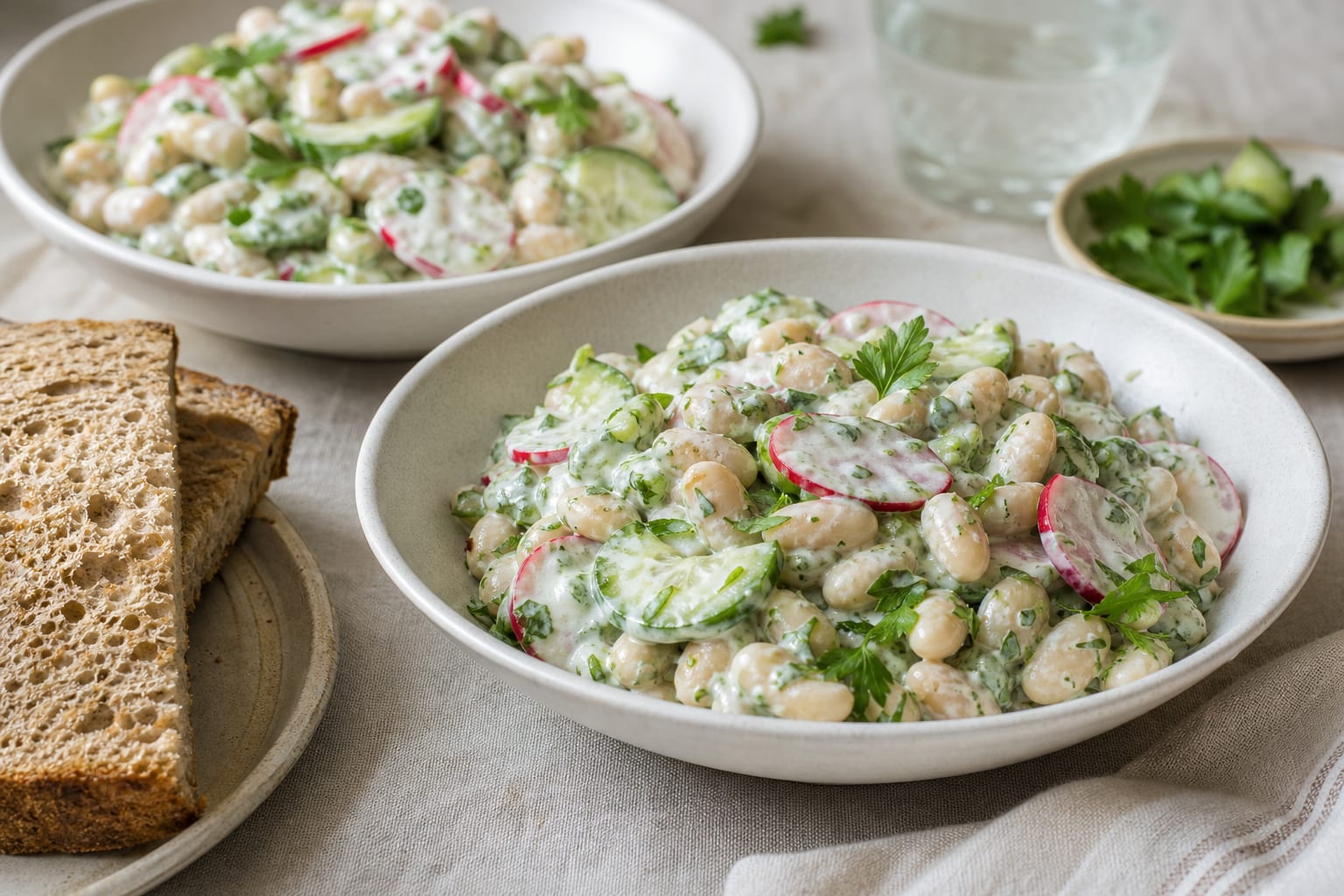
2. White Bean Radish Salad with Herb Yogurt
Cook Time: 0 minutes (no-cook)
Ingredients:
- 360 g cooked boiled white beans, unsalted and drained, chilled
- 200 g raw cucumber with peel, diced
- 120 g raw red radishes, thinly sliced
- 12 g fresh parsley leaves, chopped
- 160 g plain nonfat Greek yogurt
- 100 g ready-to-eat whole-wheat bread, 4 small slices
- 30 g freshly squeezed lemon juice
- 2 teaspoons olive oil (9 g)
Directions:
Stir the yogurt, lemon juice, oil, and parsley in a mixing bowl, then fold in the beans, cucumber, and radishes. Divide the salad between 2 plates and serve each with 2 slices of bread, keeping the yogurt mixture chilled until serving. Makes 2 servings.
Why It Works: The beans and bread make this high fiber recipe substantial enough for an evening meal. Yogurt turns the herbs into a dressing without needing a blender.
Before we get to Meal #3...
My clients frequently ask me “Which foods actually help with inflammation?”
Knowing the foods is only useful if you understand why they matter and how to use them consistently.
Because knowledge is power.
So I ranked 10 science-backed foods that can support a lower-inflammatory eating pattern, including why they matter and practical ways to use them.
I hope you find it helpful!
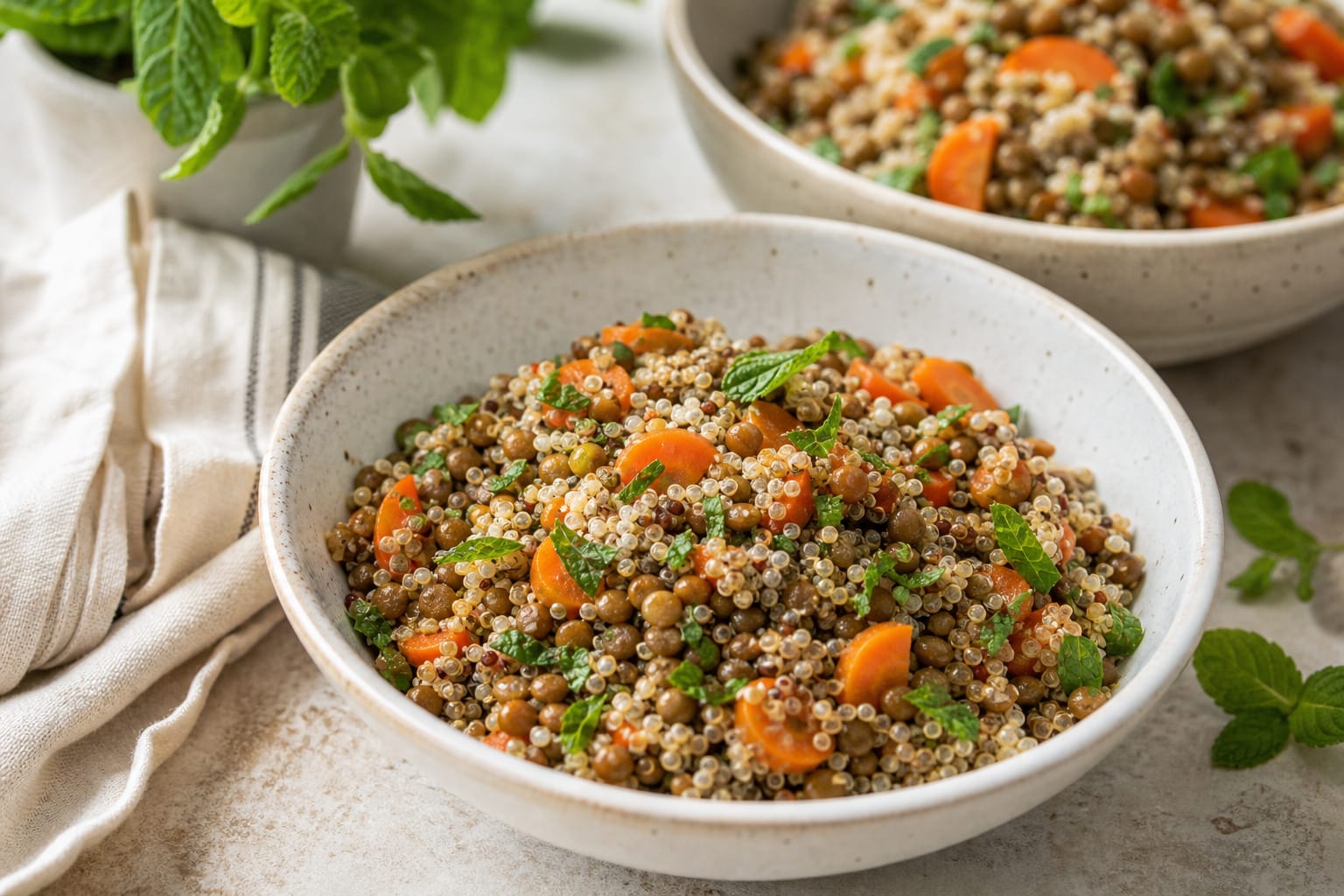
3. Minted Lentil and Carrot Quinoa
Cook Time: 14 minutes
Ingredients:
- 396 g cooked boiled lentils, unsalted and drained
- 240 g raw carrots, scrubbed and cut into thin half-moons
- 300 g cooked quinoa
- 8 g fresh spearmint leaves, chopped
- 1 tablespoon olive oil (13.5 g)
- 30 g freshly squeezed lemon juice
- 90 g water
Directions:
Cover the carrots, oil, and water in a wide saucepan and cook over medium heat for 8 minutes, stirring halfway through. Fold in the lentils and quinoa and stir for 6 more minutes, for 14 minutes total cooking, until the mixture reaches 165°F, then add the mint and lemon without draining the pan. Makes 2 servings.
Why It Works: Cooked lentils give the vegetables a filling base, and quinoa absorbs the remaining carrot juices. Mint changes the finish enough to make another lentil dinner appealing.
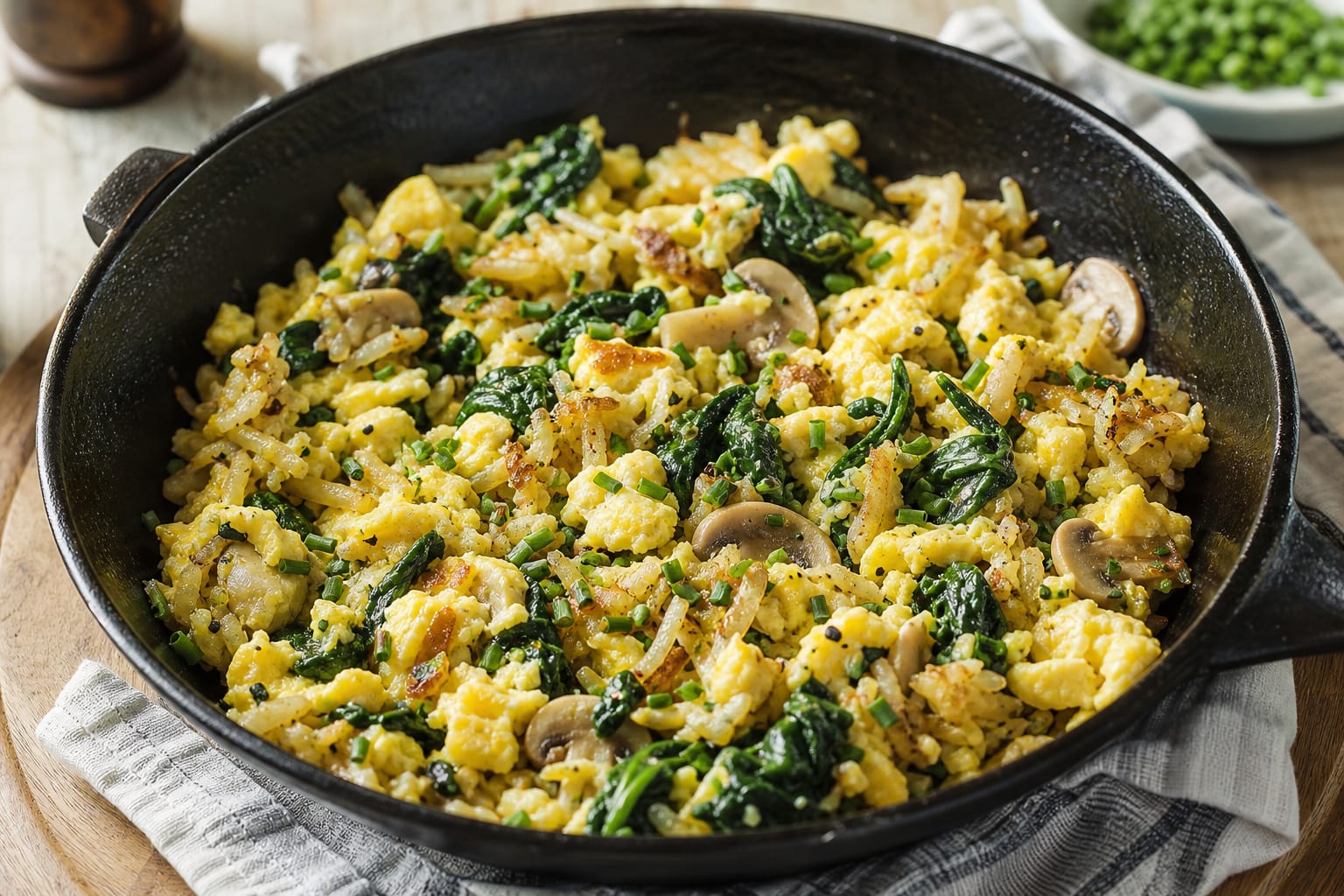
4. Chive Mushroom and Potato Egg Skillet
Cook Time: 18 minutes
Ingredients:
- 4 large raw eggs, shells removed (200 g edible egg), beaten
- 240 g raw red potatoes with skin, coarsely grated
- 200 g raw white mushrooms, sliced
- 90 g raw baby spinach, washed
- 6 g fresh chives, snipped
- 2 teaspoons olive oil (9 g)
- 60 g water
Directions:
Cook the grated potatoes, mushrooms, oil, and water in a covered nonstick skillet over medium heat for 10 minutes, stirring several times. Add the spinach and eggs, stir gently for 8 more minutes, for 18 minutes total cooking, until the eggs are fully set and reach 160°F, then scatter the chives over the top. Makes 2 servings.
Why It Works: Grating the potatoes lets them cook through in the skillet without a separate boiling step. Eggs supply protein, and the mushrooms spread through the potatoes instead of becoming a small side portion.
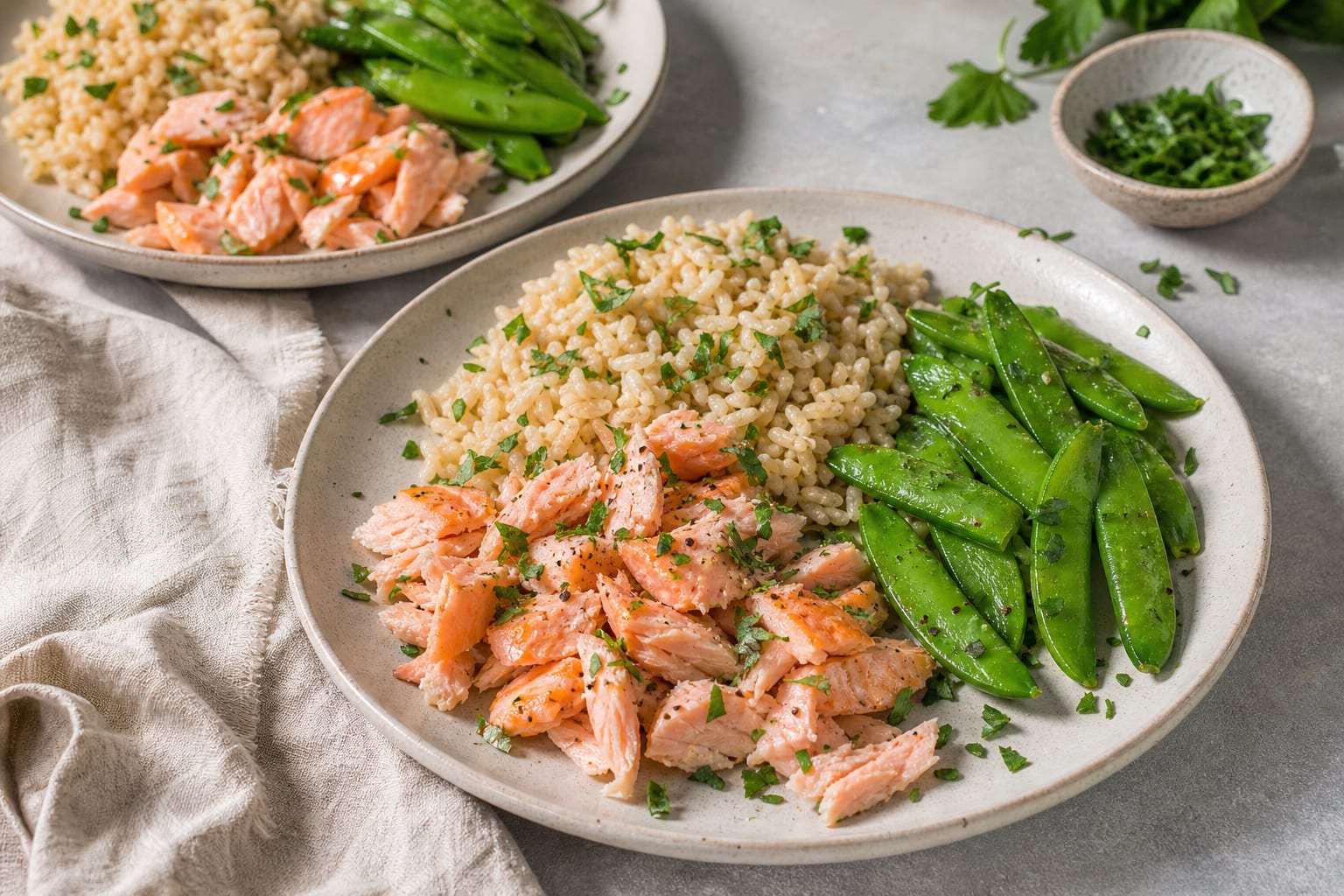
5. Parsley Trout with Snap Peas and Rice
Cook Time: 12 minutes
Ingredients:
- 240 g cooked farmed rainbow trout, baked, skin and bones removed, flaked
- 240 g raw sugar snap peas, strings removed
- 300 g cooked long-grain brown rice
- 12 g fresh parsley leaves, roughly chopped
- 30 g freshly squeezed lemon juice
- 2 teaspoons olive oil (9 g)
- 90 g water
Directions:
Put the snap peas, oil, and water in a covered wide skillet and cook over medium heat for 5 minutes. Add the trout and rice, cover for 7 more minutes, for 12 minutes total cooking, until the fish and rice reach 165°F, then gently stir in the parsley and lemon with the cooking liquid. Makes 2 servings.
Why It Works: Using fish already baked turns leftovers into a different dinner with fresh vegetables. The covered skillet warms the rice while keeping the trout from drying out.
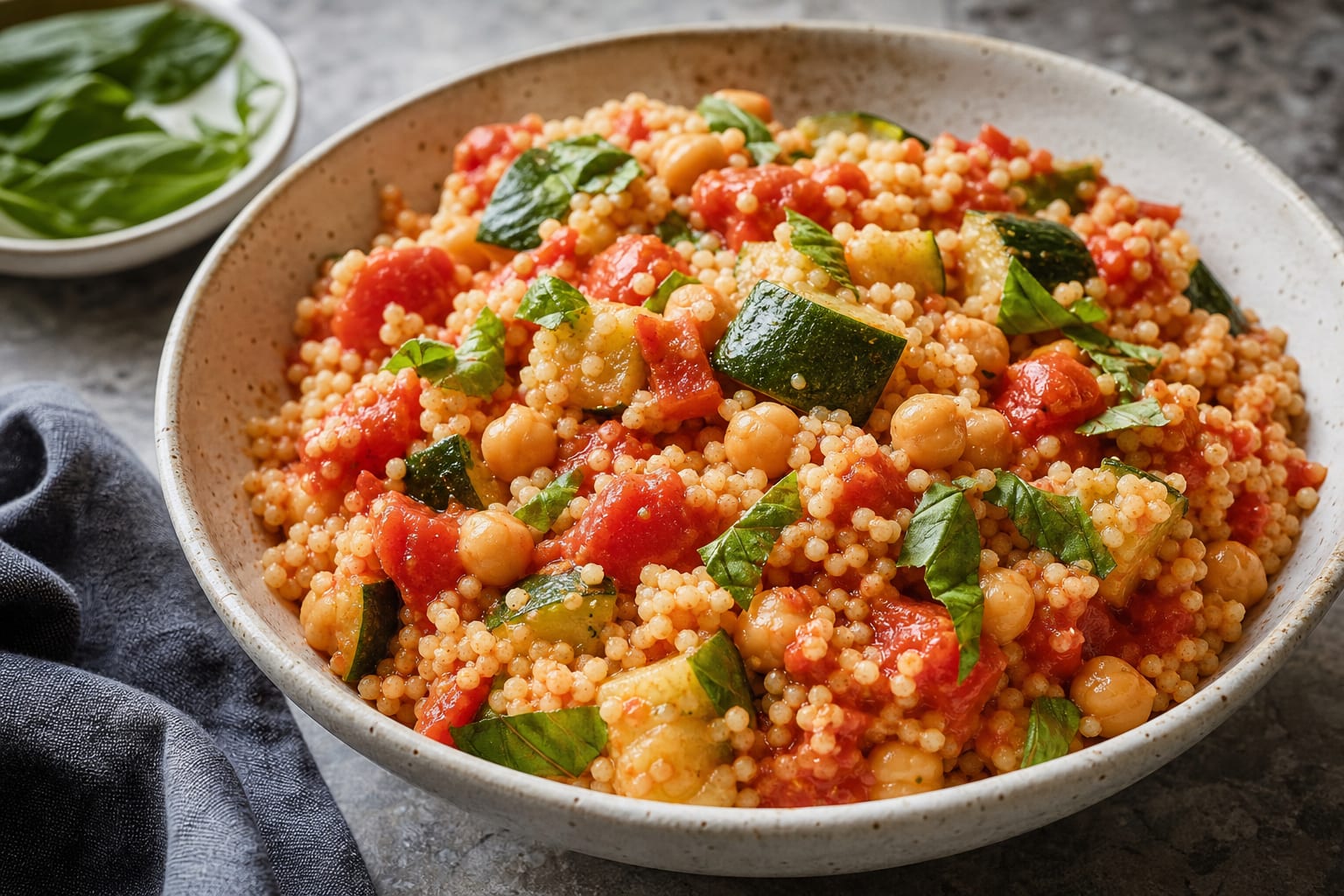
6. Basil Chickpea and Zucchini Couscous
Cook Time: 15 minutes
Ingredients:
- 320 g canned chickpeas, drained and rinsed weight
- 240 g raw ripe tomatoes, diced
- 200 g raw zucchini with skin, diced
- 300 g cooked couscous
- 12 g fresh basil leaves, torn
- 1 tablespoon olive oil (13.5 g)
- 60 g water
Directions:
Simmer the tomatoes, zucchini, oil, and water in a covered saucepan over medium heat for 9 minutes, stirring occasionally. Mix in the chickpeas and couscous for 6 more minutes, for 15 minutes total cooking, until the couscous reaches 165°F, then fold in the basil and divide the sauce evenly. Makes 2 servings.
Why It Works: Tomatoes supply the cooking liquid and become the sauce, so another jar can stay in the pantry. The chickpeas make the couscous more filling without a separate protein to cook.
Quick Reference
|
Recipe |
Prep |
Cook |
Protein |
Key Benefit |
|
Dill Chicken with Peas and Potatoes |
12 min |
20 min |
~45 g/serving |
Cooked chicken shortens spring dinner prep |
|
White Bean Radish Salad with Herb Yogurt |
12 min |
0 min |
~33 g/serving |
Beans and bread provide dinner fiber |
|
Minted Lentil and Carrot Quinoa |
10 min |
14 min |
~26 g/serving |
Lentils add fiber to a reheatable base |
|
Chive Mushroom and Potato Egg Skillet |
12 min |
18 min |
~19 g/serving |
One skillet handles potatoes and protein |
|
Parsley Trout with Snap Peas and Rice |
8 min |
12 min |
~36 g/serving |
Leftover trout becomes a vegetable-rich dinner |
|
Basil Chickpea and Zucchini Couscous |
10 min |
15 min |
~19 g/serving |
Chickpeas add protein to a one-pot dinner |