6 Mediterranean Breakfast Recipes With Anti-Inflammatory Ingredients
Sep 10, 2026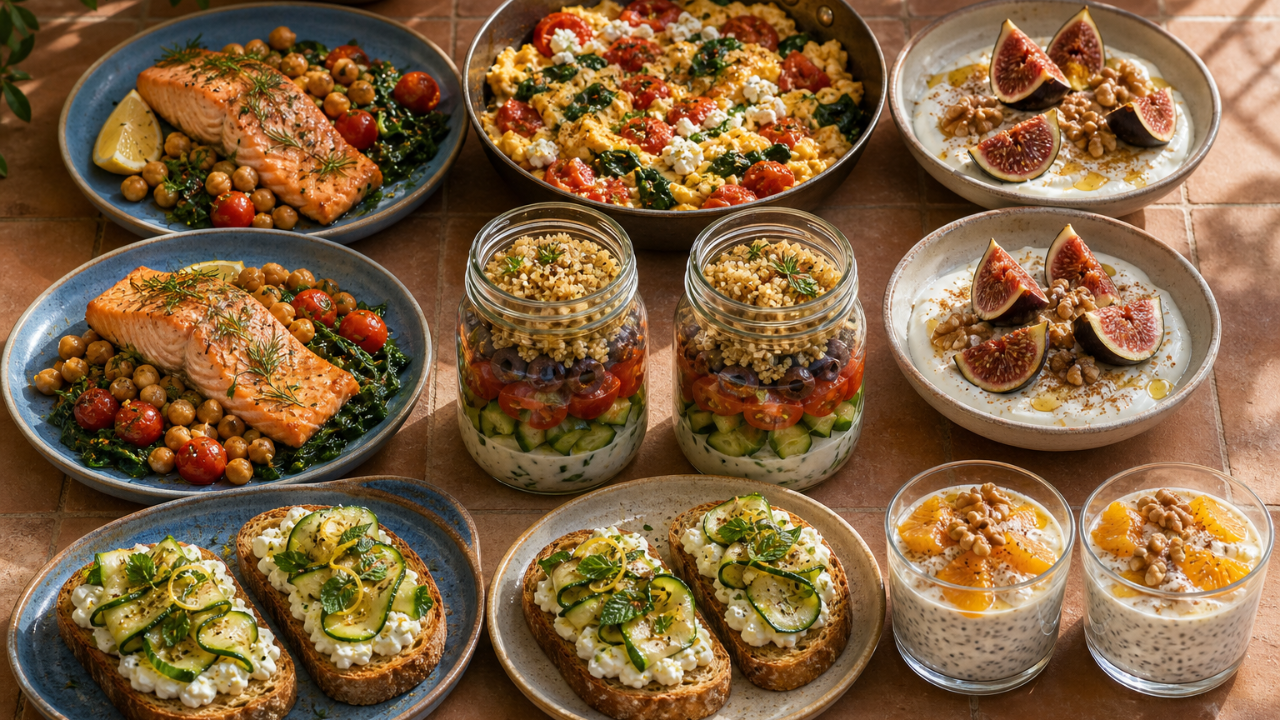
You’re at the kitchen counter deciding between another plain piece of toast and a breakfast that actually feels worth sitting down for. The Mediterranean idea sounds useful, but you still need ingredients that work together before the morning gets busy.
Good nutrition can support your health through an overall eating pattern built from colorful produce, satisfying protein, herbs, and olive oil. For anti-inflammatory recipes built as Mediterranean breakfasts, this collection pairs salmon with chickpeas, eggs with feta, and yogurt with fruit, nuts, or grains in six distinct forms.
Pick one recipe and put its main protein and produce item on your shopping list today.
This is general wellness information based on current research, not medical advice. If you have specific health concerns, please consult with a healthcare provider.
1. Lemon Dill Salmon Chickpea Breakfast Plate

Cook Time: 9 minutes
Ingredients:
- 8 ounces raw Atlantic salmon fillet (227 g)
- 1 cup cooked chickpeas, rinsed and drained
- 1 cup raw cherry tomatoes, halved
- 2 cups raw baby spinach
- 2 teaspoons extra-virgin olive oil
- 1 tablespoon fresh lemon juice
- 1 tablespoon chopped fresh dill
- 1/4 teaspoon fine salt
Directions:
Warm 1 teaspoon oil in a covered skillet over medium heat, add salmon and salt, and cook for 5 minutes before turning it and adding chickpeas, tomatoes, and spinach. Cover and cook for 4 more minutes, for 9 minutes total cooking, until the salmon reaches 145°F and flakes easily, then finish with the remaining oil, lemon, and dill and divide evenly to make 2 servings.
Why It Works: A covered skillet suits anti-inflammatory breakfasts served as salmon plates because it keeps the fillet moist while the spinach wilts beside it. Chickpeas catch the lemon and dill, so the plate tastes connected rather than assembled from separate parts.
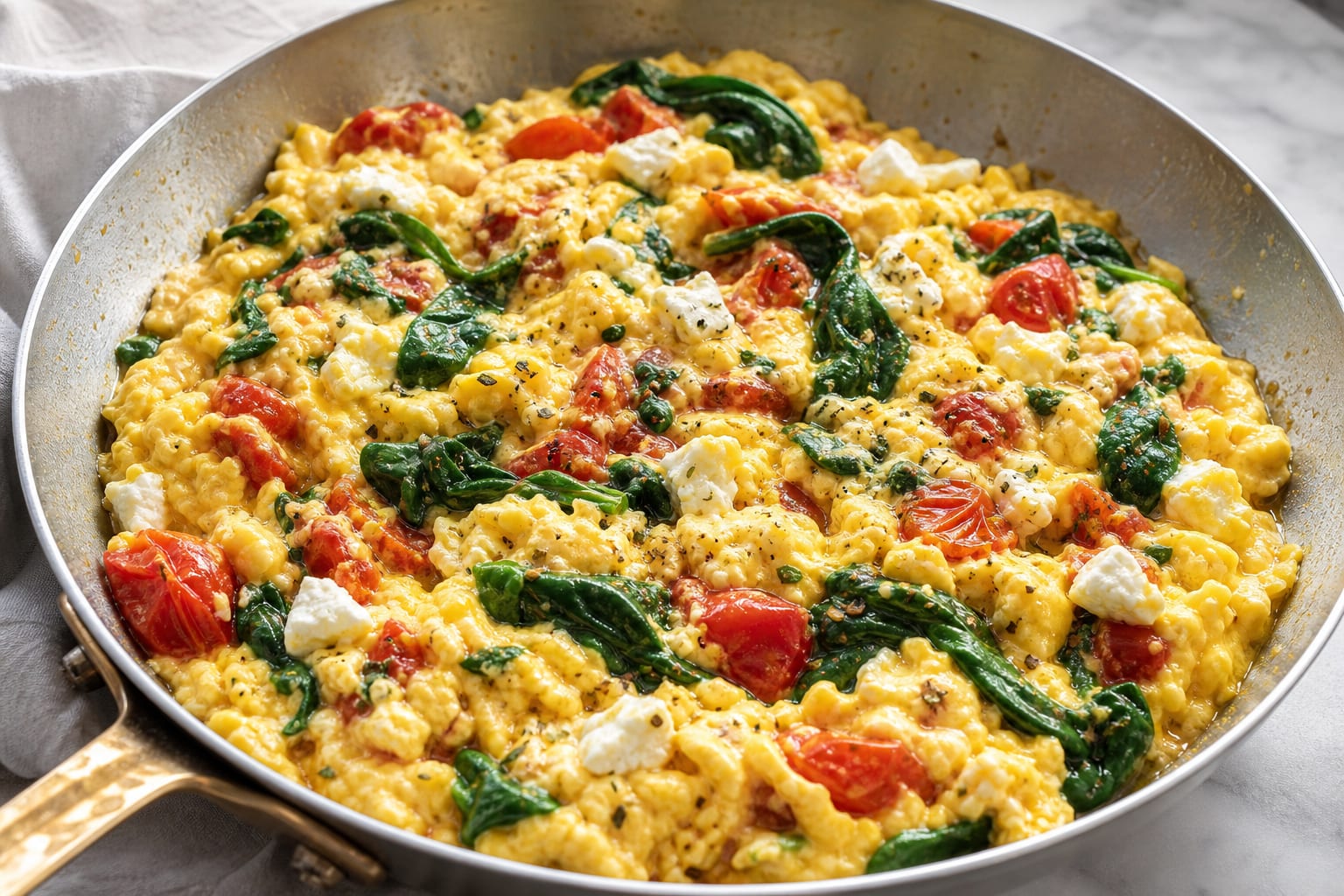
2. Tomato Spinach Feta Egg Skillet
Cook Time: 8 minutes
Ingredients:
- 4 large raw eggs (200 g without shells)
- 1 cup raw cherry tomatoes, quartered
- 2 cups raw baby spinach
- 1/4 cup crumbled feta cheese
- 2 teaspoons extra-virgin olive oil
- 1 teaspoon dried oregano
- 1/8 teaspoon ground black pepper
Directions:
Heat the oil in a nonstick skillet over medium heat and soften the tomatoes for 3 minutes, then add the spinach and stir for 1 minute. Pour in the eggs whisked with oregano and pepper, scatter feta over the top, and stir for 4 more minutes, for 8 minutes total cooking, until the eggs reach 160°F with no liquid remaining, then divide to make 2 servings.
Why It Works: In mediterranean diet recipes served as egg skillets, soften the tomatoes before adding spinach so both vegetables settle into the curds. Scattering feta over the eggs leaves salty pockets beneath the oregano.
Before we get to Meal #3...
My clients frequently ask me “Which foods actually help with inflammation?”
Knowing the foods is only useful if you understand why they matter and how to use them consistently.
Because knowledge is power.
So I ranked 10 science-backed foods that can support a lower-inflammatory eating pattern, including why they matter and practical ways to use them.
I hope you find it helpful!
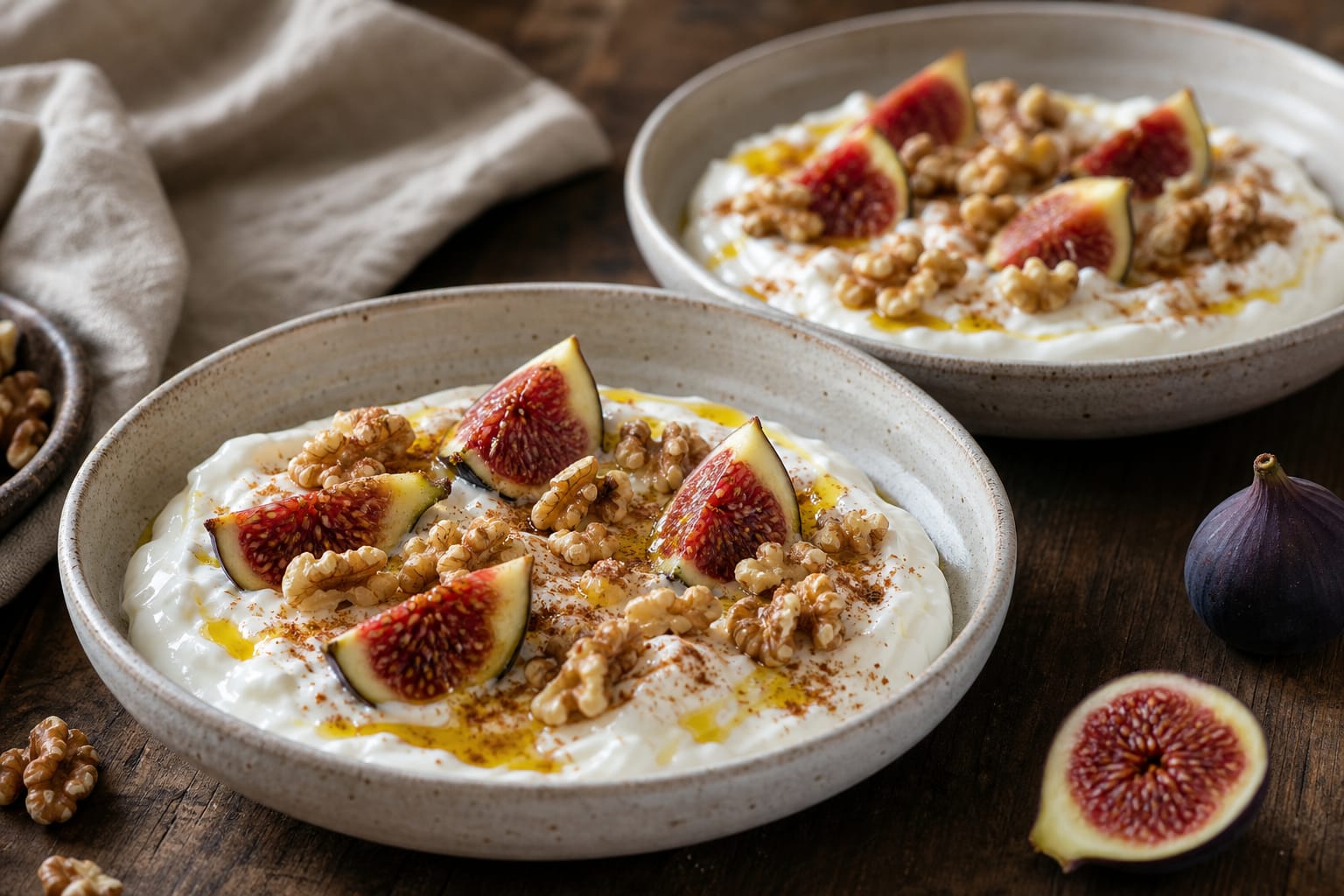
3. Fresh Fig Walnut Greek Yogurt Bowl
Cook Time: 0 minutes (no-cook)
Ingredients:
- 2 cups plain lowfat Greek yogurt (454 g)
- 6 medium fresh figs, quartered
- 1/4 cup chopped raw walnuts (28 g)
- 2 teaspoons extra-virgin olive oil
- 1/2 teaspoon ground cinnamon
Directions:
Divide the yogurt between 2 shallow bowls and arrange 12 fig quarters over each creamy surface. Add the walnuts, olive oil, and cinnamon evenly, using 0 minutes total cooking to make 2 servings of 1 bowl each.
Why It Works: Quarter fresh figs for healthy anti-inflammatory meals in yogurt-bowl form so their jammy centers sweeten every spoonful without syrup. A measured olive oil finish makes the cinnamon smell fuller, and walnuts give the soft bowl a crisp edge.
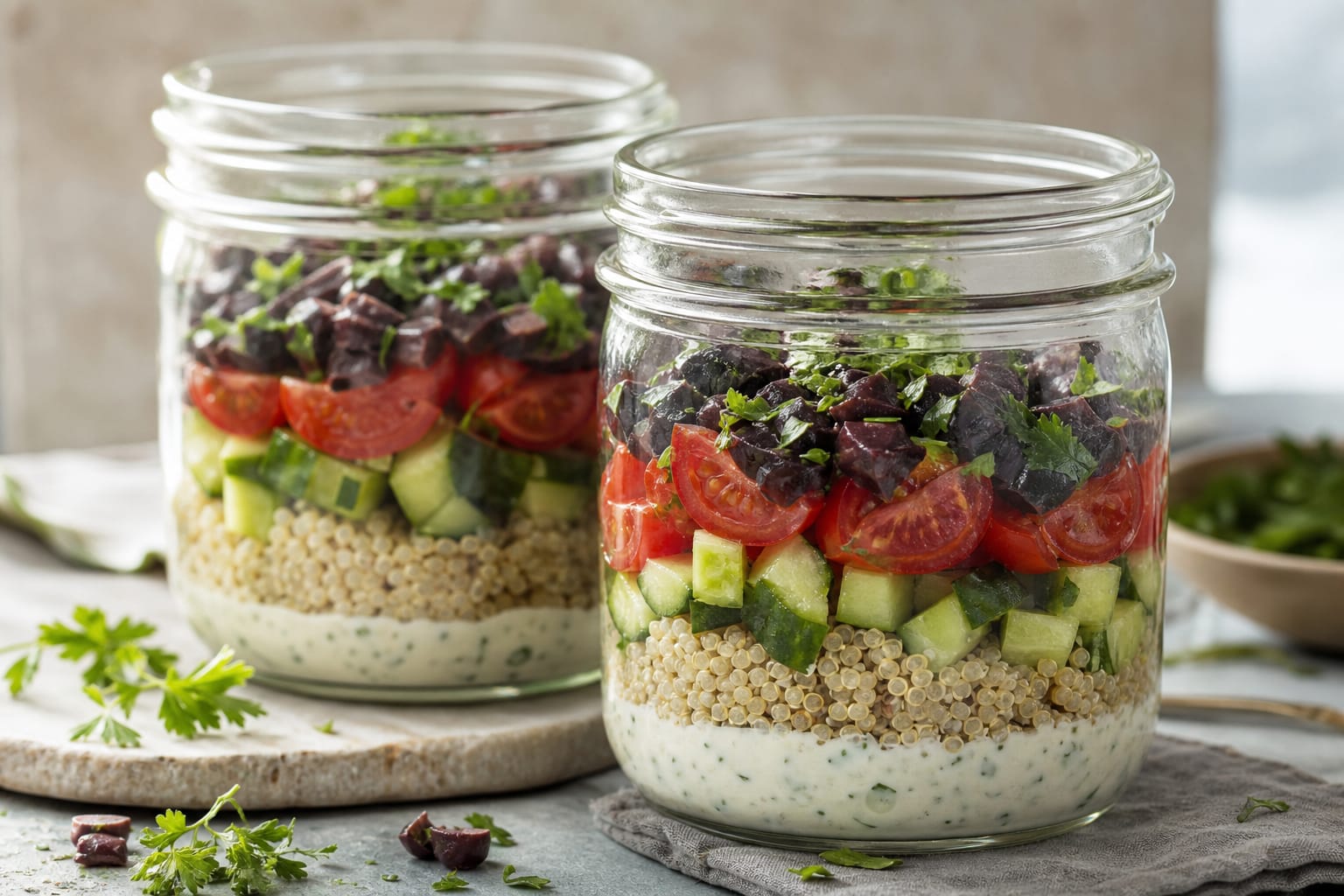
4. Cucumber Olive Savory Quinoa Jar
Cook Time: 0 minutes (no-cook)
Ingredients:
- 2 cups cooked quinoa (370 g)
- 1 cup raw cucumber, diced
- 1 cup raw cherry tomatoes, quartered
- 1/4 cup pitted Kalamata olives, chopped
- 1/2 cup plain lowfat Greek yogurt (113 g)
- 1 tablespoon fresh lemon juice
- 1 tablespoon chopped fresh parsley
- 2 teaspoons extra-virgin olive oil
Directions:
Whisk the yogurt, lemon, parsley, and olive oil and spoon it into the bottoms of 2 wide-mouth glass jars, then layer in quinoa, cucumber, tomatoes, and olives. Seal and shake each jar just before eating, using 0 minutes total cooking to make 2 servings of 1 jar each.
Why It Works: When preparing anti-inflammatory recipes in portable breakfast jars, layer firm quinoa above the lemon yogurt so the grains support the juicy cucumber and tomatoes. Keeping the dressing at the bottom protects the cucumber’s snap until you shake the jar.
5. Zucchini Mint Cottage Cheese Toasts

Cook Time: 7 minutes
Ingredients:
- 1 1/2 cups lowfat cottage cheese (340 g)
- 4 slices whole-grain bread
- 1 1/2 cups raw zucchini, thinly sliced
- 2 teaspoons extra-virgin olive oil
- 1 tablespoon chopped fresh mint
- 1 teaspoon fresh lemon zest
- 1/8 teaspoon fine salt
Directions:
Toast all 4 bread slices in a four-slot toaster on medium for 4 minutes while the zucchini softens with oil and salt in a skillet over medium heat for 7 minutes total cooking. Spread the cottage cheese over the crisp toast, add the fully softened zucchini, mint, and lemon zest, and serve 2 toasts per plate to make 2 servings.
Why It Works: For toast-based mediterranean diet recipes, use olive oil-softened zucchini and fresh mint to create a bright savory topping. Lemon zest cuts through the rich cottage cheese without adding a wet sauce.
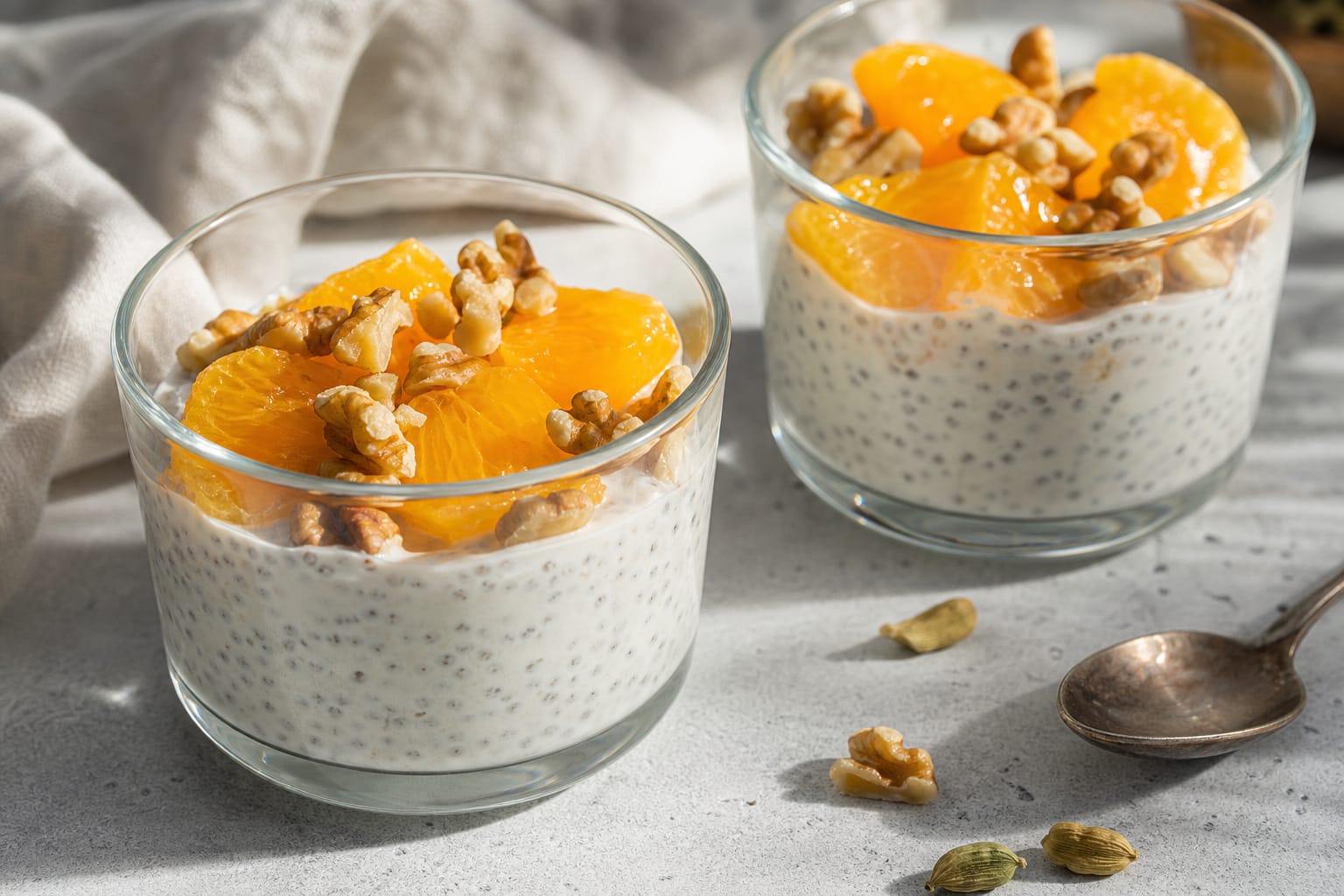
6. Orange Cardamom Chia Yogurt Cups
Cook Time: 0 minutes (no-cook)
Ingredients:
- 1 1/2 cups plain lowfat Greek yogurt (340 g)
- 2 medium oranges, peeled and cut into segments
- 2 tablespoons dry chia seeds (20 g)
- 1/4 cup chopped raw walnuts (28 g)
- 1/4 cup water
- 1/4 teaspoon ground cardamom
Directions:
Whisk the yogurt, chia, water, and cardamom, divide the mixture between 2 clear glass cups, and let it stand for 10 minutes. Top each cup with orange segments and walnuts, using 0 minutes total cooking to make 2 servings of 1 cup each.
Why It Works: For anti-inflammatory breakfasts layered in clear cups, pair orange with cardamom to keep the flavor bright instead of overly sweet. Chia thickens the yogurt enough to support neat orange layers. Add walnuts last to chia cups for healthy anti-inflammatory meals with contrasting textures, keeping them crisp above the soft yogurt.
Quick Reference
|
Recipe |
Prep |
Cook |
Protein |
Key Benefit |
|
Lemon Dill Salmon Chickpea Breakfast Plate |
10 min |
9 min |
~23 g/serving |
Flaky fish with lemony greens |
|
Tomato Spinach Feta Egg Skillet |
8 min |
8 min |
~12 g/serving |
Tender eggs with savory feta |
|
Fresh Fig Walnut Greek Yogurt Bowl |
7 min |
0 min |
~24 g/serving |
Jammy figs over tangy yogurt |
|
Cucumber Olive Savory Quinoa Jar |
10 min |
0 min |
~13 g/serving |
Layered grains with crisp vegetables |
|
Zucchini Mint Cottage Cheese Toasts |
10 min |
7 min |
~17 g/serving |
Creamy toast with tender zucchini |
|
Orange Cardamom Chia Yogurt Cups |
8 min + 10 min standing |
0 min |
~20 g/serving |
Bright citrus over thick yogurt |