6 Low-Inflammation Recipes That Make Healthy Eating Easier
Sep 01, 2026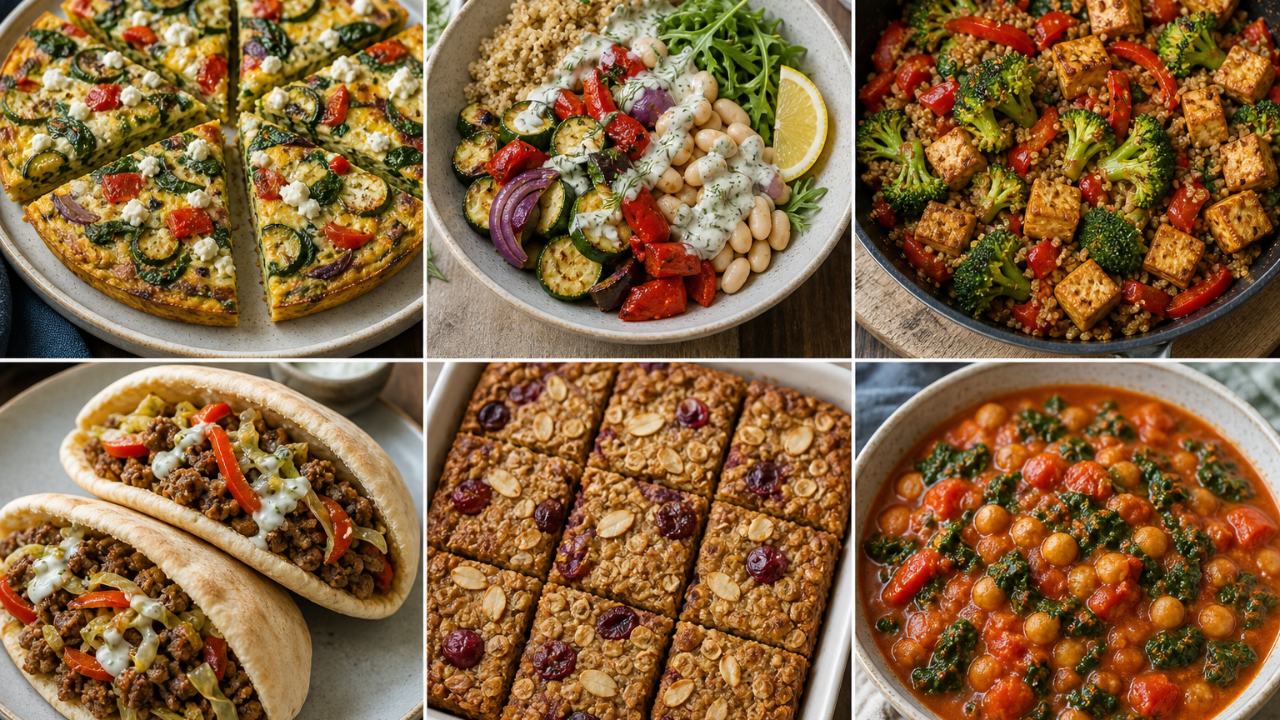
You buy vegetables and a few healthy proteins with good intentions, then watch half of them sit untouched because every meal seems to require a new plan. By midweek, you’re choosing between wasting the groceries and ordering something easier.
Here’s what I remind each of my clients:
Nutrition is one of the most powerful inputs for health, and the eating pattern becomes easier to repeat when part of tomorrow’s meal is already done. These low inflammation recipes use 3 connected building blocks: one roasted pepper-zucchini base goes into a frittata and a quinoa bowl, one batch of cooked quinoa becomes that bowl and a tofu skillet, and one lemon-dill yogurt dressing finishes the bowl and stuffed pitas.
Start with the roasted vegetables, label the portion for recipe 2, and let that one step reduce tomorrow’s work.
This is general wellness information based on current research, not medical advice. If you have specific health concerns, please consult with a healthcare provider.
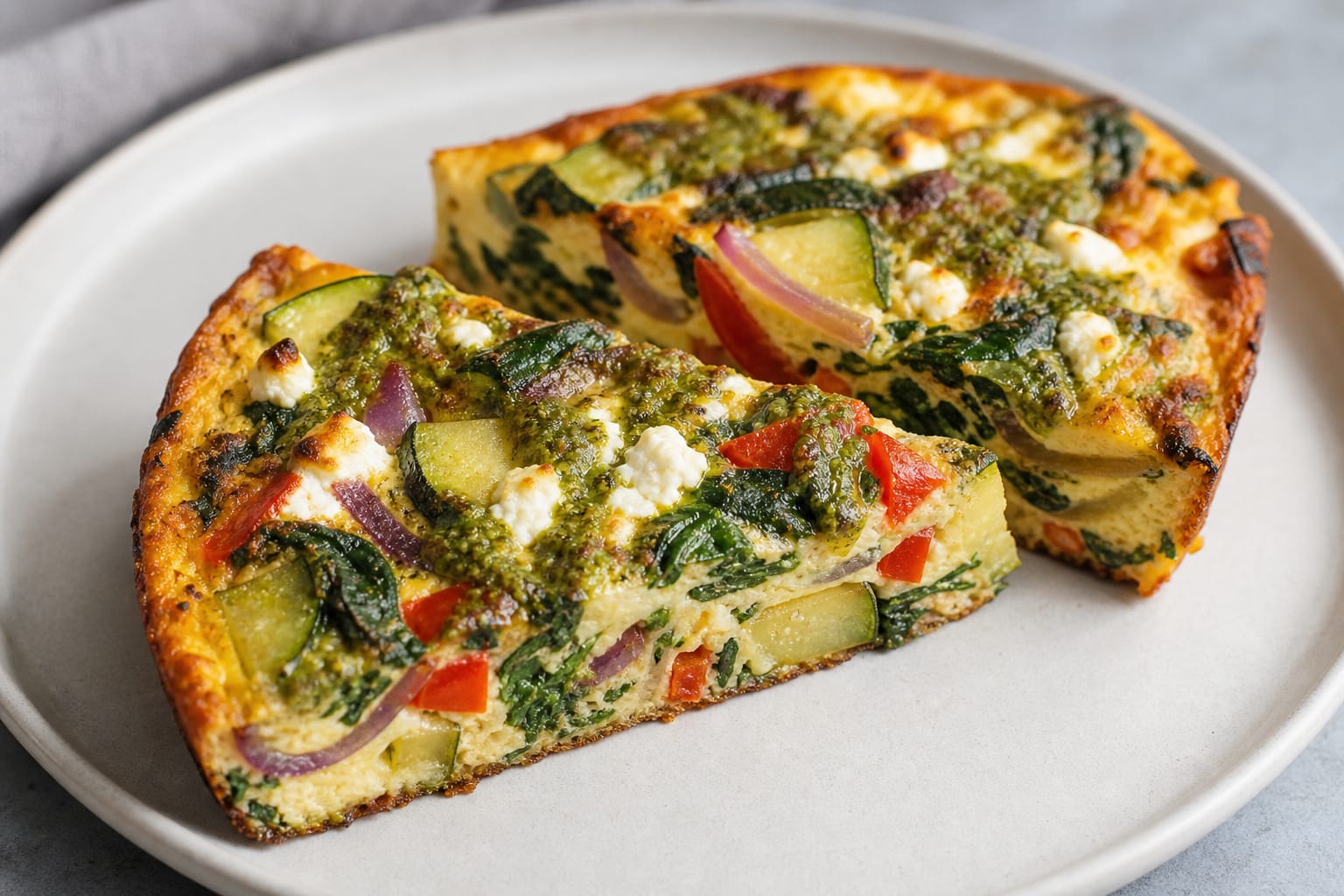
1. Roasted Vegetable Pesto Frittata
Ingredients:
- 2 medium zucchini, cut into 3/4-inch pieces
- 2 red bell peppers, cut into 1-inch pieces
- 1 large red onion, cut into 1-inch wedges
- 2 tablespoons extra-virgin olive oil
- 8 large eggs
- 2 cups baby spinach
- 1/3 cup refrigerated ready-to-serve basil pesto
- 1/3 cup crumbled feta
Directions:
Heat the oven to 425°F, divide the zucchini, peppers, and onion between 2 large rimmed sheet pans, drizzle with 1 tablespoon olive oil, spread into single layers, and roast for 22 to 25 minutes, switching pan positions halfway through, until browned at the edges but not mushy. Divide the roasted batch evenly, use one half, about 3 cups, for this frittata, and cool and refrigerate the other half, about 3 cups, in a covered container for up to 4 days labeled for recipe 2, then lower the oven to 375°F and heat the remaining olive oil in a 10-inch oven-safe skillet over medium heat. Cook the frittata half of the vegetables and the spinach for 2 minutes, beat the eggs with a fork in a measuring jug, pour them in, dot with pesto and feta, cook without stirring for 3 minutes, bake for 12 to 15 minutes until the center no longer jiggles, rest for 5 minutes, and cut into 6 wedges to make 6 servings.
Why It Works: For anti-inflammatory breakfasts you can make ahead, roast the vegetables once and fold half into the eggs with pesto and feta. The vegetables stay browned and distinct in the set frittata, while the reserved half is ready for a grain bowl. With half the vegetables already roasted, tomorrow's low inflammation recipes start with the hardest step done.
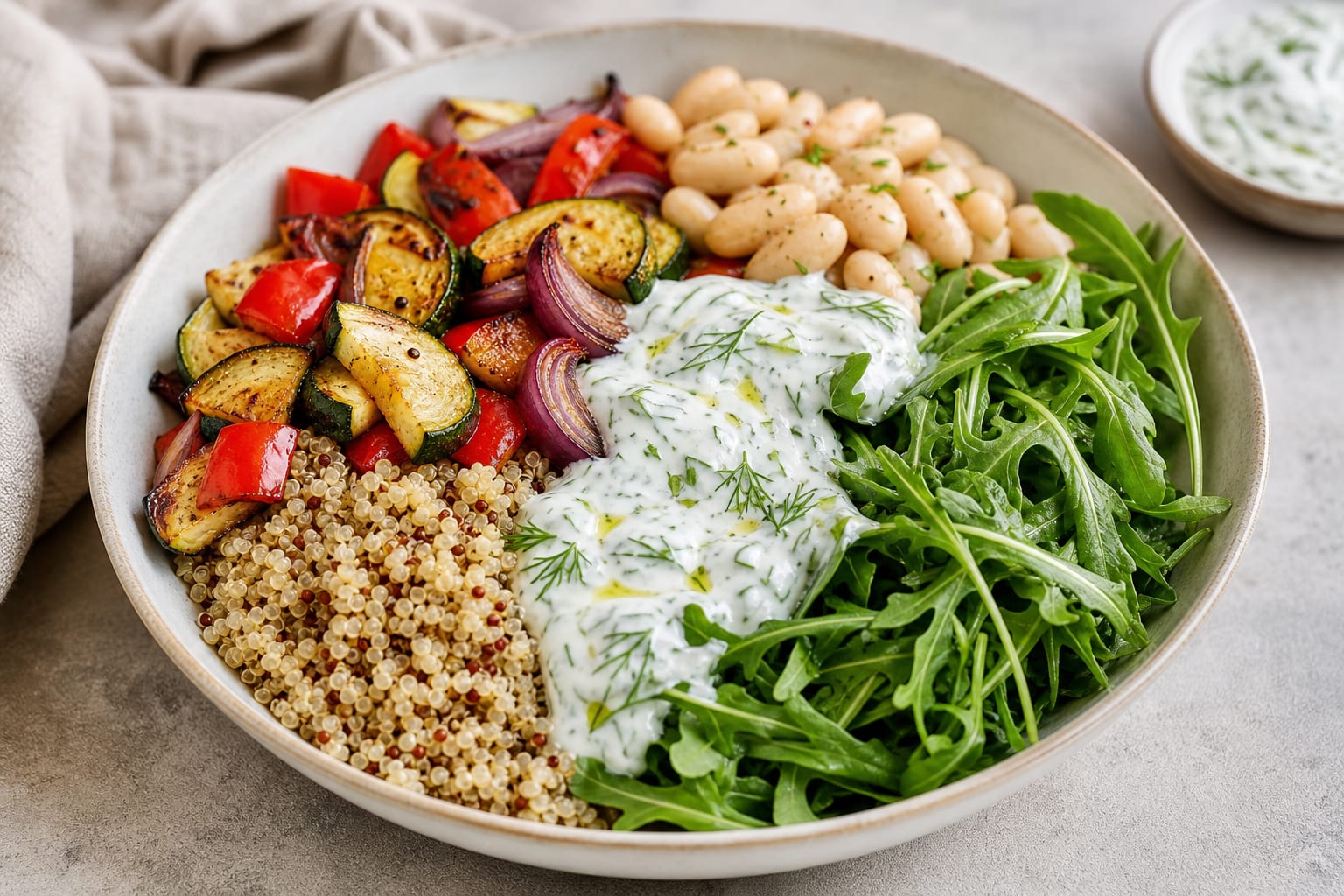
2. Lemon Dill Quinoa Roasted Vegetable Bowls
Ingredients:
- 2 cups dry quinoa, rinsed (cook as one batch; use half here and reserve half for recipe 3)
- 4 cups water
- The reserved half of the roasted pepper-zucchini base from recipe 1 (about 3 cups)
- 1 can (15 ounces) cannellini beans, drained and rinsed
- 4 cups baby arugula
- 1 cup plain low-fat Greek yogurt
- 1/4 cup lemon juice
- 1/4 cup chopped dill
- 2 tablespoons extra-virgin olive oil
- 1 teaspoon Dijon mustard
Directions:
Combine the quinoa and water in a saucepan, bring to a boil, cover, lower the heat, and simmer for 15 minutes, then remove from the heat, rest covered for 5 minutes, fluff, divide evenly by weight, and use one half, about 3 cups, for these bowls. Cool the other half, about 3 cups, and refrigerate it in a covered container for up to 4 days labeled for recipe 3, then stir the yogurt, lemon juice, dill, olive oil, and Dijon in a lidded jar, divide the dressing evenly by volume, and use one half, about 3/4 cup, now. Refrigerate the other half in the closed jar for up to 4 days labeled for recipe 4, then divide the arugula, this recipe's half of the cooked quinoa, the reserved roasted vegetables, and the beans among 4 bowls and spoon this recipe's half of the dressing over them to make 4 bowls.
Why It Works: Quinoa, cannellini beans, vegetables, and arugula make a strong base for high fiber recipes. The roasted vegetables become a cool, crisp-edged bowl instead of another egg dish. For healthy anti-inflammatory meals through midweek, cook the quinoa and dressing once, then use the extras in recipes 3 and 4.
Before we get to Meal #3...
My clients frequently ask me “Which foods actually help with inflammation?”
Knowing the foods is only useful if you understand why they matter and how to use them consistently.
Because knowledge is power.
So I ranked 10 science-backed foods that can support a lower-inflammatory eating pattern, including why they matter and practical ways to use them.
I hope you find it helpful!
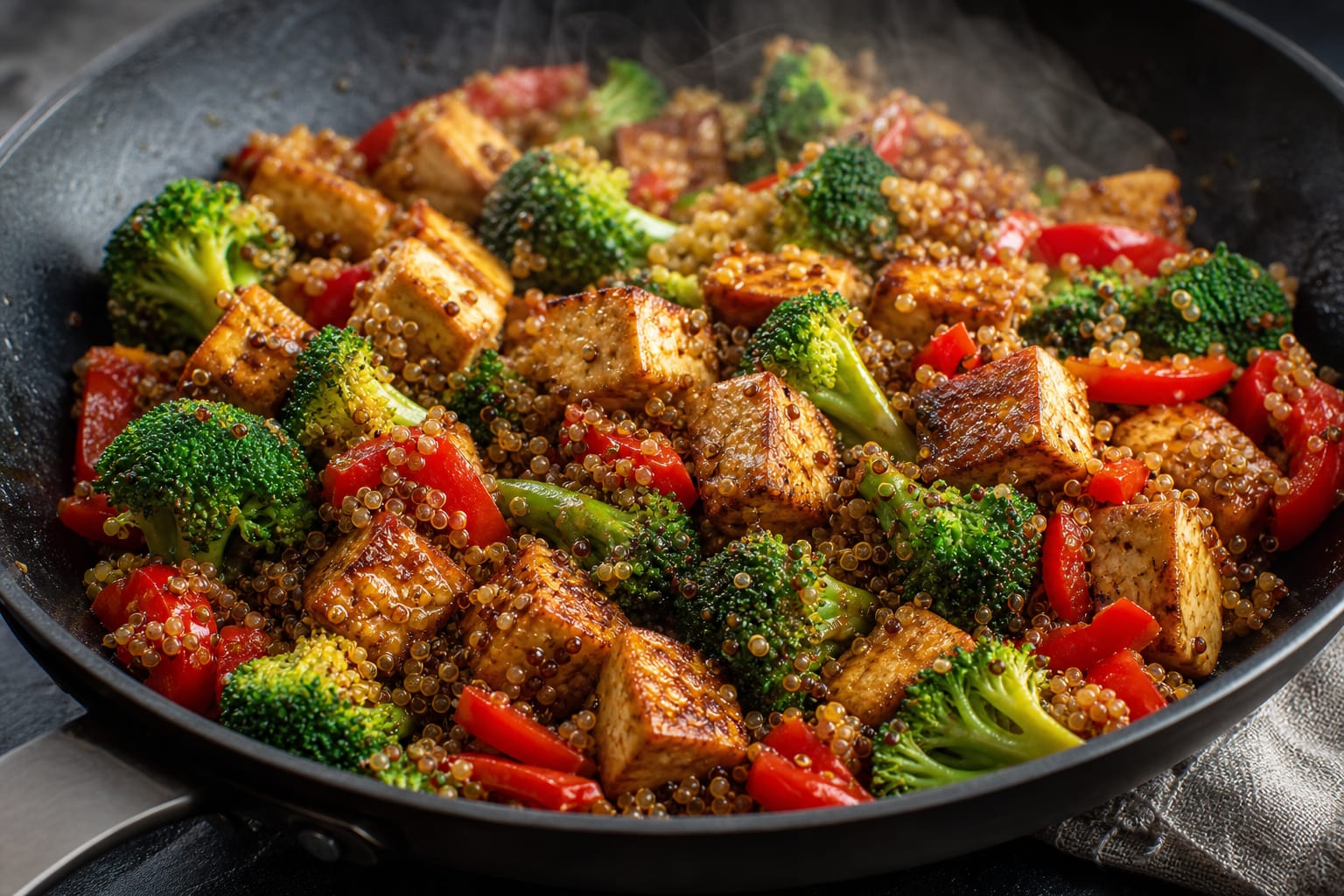
3. Ginger Tofu Broccoli Quinoa Skillet
Ingredients:
- 14 ounces pre-pressed firm tofu prepared with calcium sulfate, cubed
- The reserved half of the cooked quinoa batch from recipe 2 (about 3 cups)
- 5 cups small broccoli florets
- 1 red bell pepper, sliced
- 1 tablespoon toasted sesame oil
- 2 tablespoons low-sodium tamari
- 1 tablespoon rice vinegar
- 2 teaspoons grated fresh ginger
- 1 teaspoon honey
Directions:
Heat the sesame oil in a large skillet over medium-high heat, add the pre-pressed tofu in one layer, and cook for 8 to 10 minutes, turning every few minutes, until golden on several sides. Add the broccoli, bell pepper, and 2 tablespoons water, cover, and cook for 5 minutes until the broccoli is bright green and crisp-tender. Stir in the tamari, vinegar, ginger, and honey, then add the reserved cooked quinoa and toss for 3 to 4 minutes until hot throughout and coated to make 4 servings.
Why It Works: Reserved quinoa changes from a cool lemony bowl into a hot ginger skillet. Pre-pressed tofu removes a hidden waiting step and browns more reliably. In a lower inflammation diet, reusing quinoa this way adds variety without another full prep session.
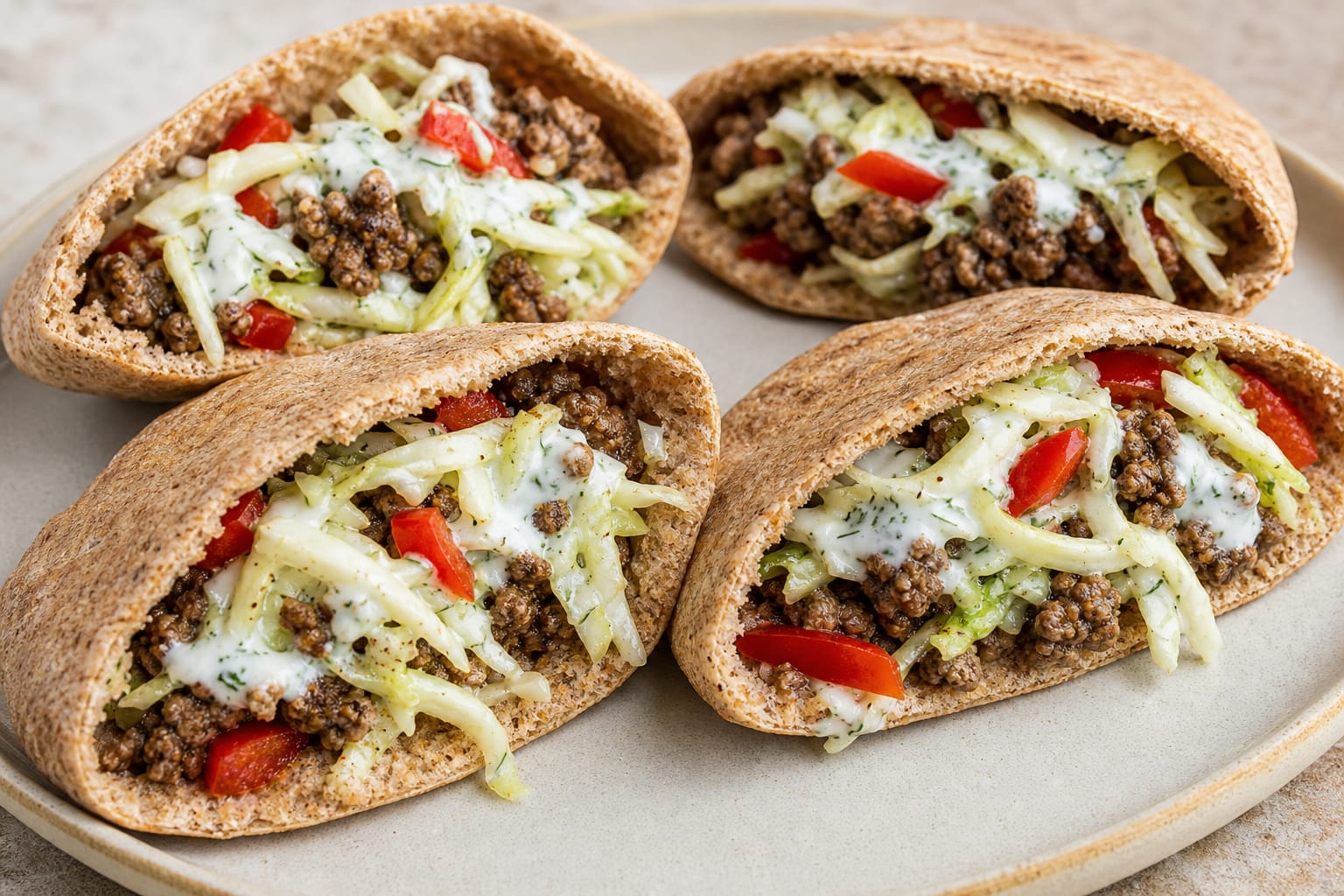
4. Cumin Beef and Cabbage Stuffed Pitas
Ingredients:
- 1 pound 90% lean ground beef
- 4 cups shredded green cabbage
- 1 red bell pepper, sliced
- 1 teaspoon ground cumin
- 1/2 teaspoon garlic powder
- 4 whole-grain pitas
- The reserved half of the lemon-dill yogurt dressing from recipe 2 (about 3/4 cup)
Directions:
Heat a large skillet over medium-high heat, add the ground beef, and cook for 6 to 8 minutes, breaking it into small pieces, until browned and it reaches 160°F, then spoon off excess fat if needed. Add the cabbage, bell pepper, cumin, and garlic powder and cook for 6 minutes, until the vegetables soften but still have some bite. Cut each pita across the top third, gently open the pocket with your fingers, divide the beef mixture among the 4 pitas, and spoon the reserved lemon-dill yogurt dressing inside to make 4 stuffed pitas.
Why It Works: The same dressing that cooled a quinoa bowl now balances a warm cumin filling. Cabbage keeps enough crunch to make the second sauce use feel entirely different, and the whole-grain pita makes the meal portable.
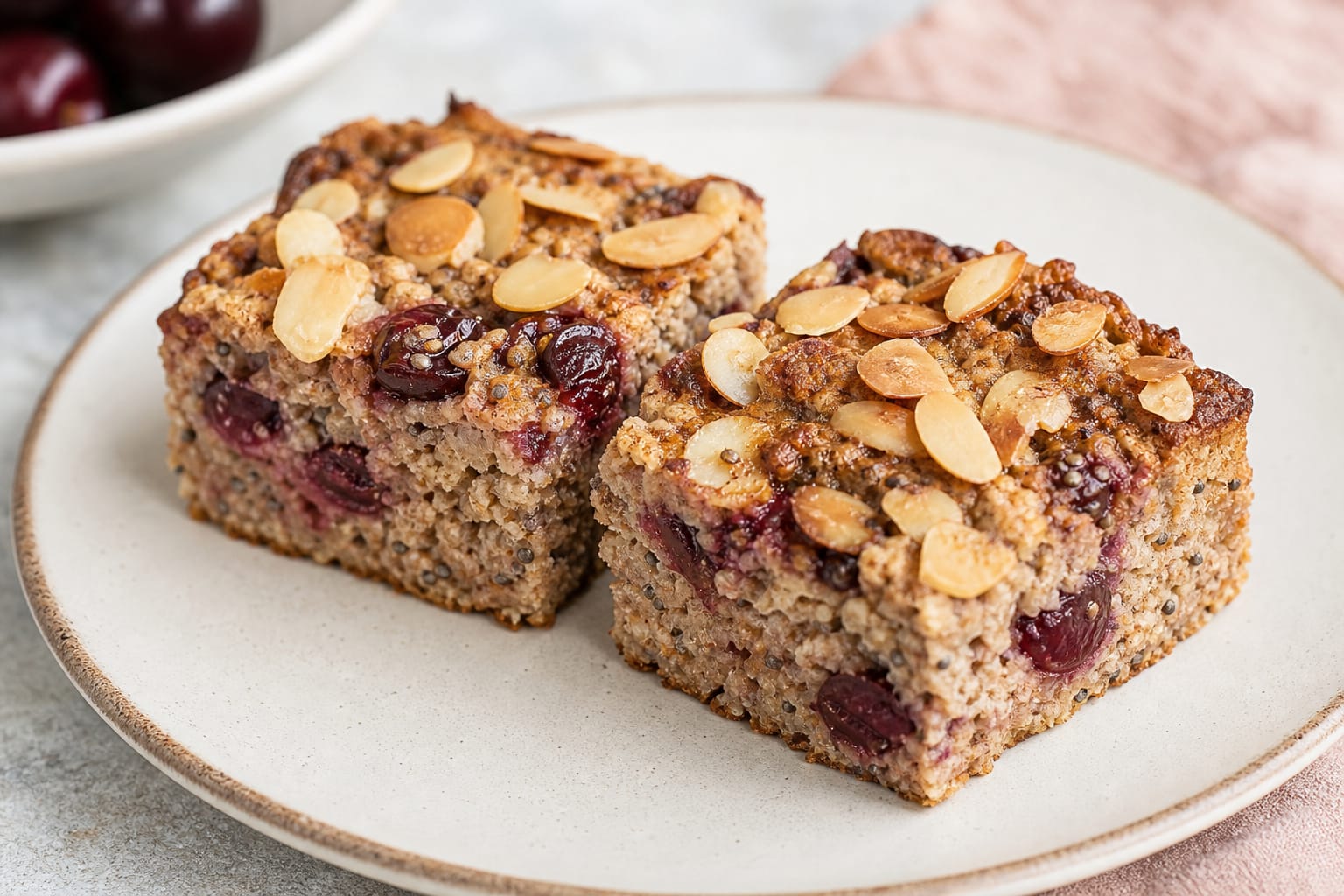
5. Cherry Almond Oat Breakfast Bake
Ingredients:
- 3 cups old-fashioned rolled oats
- 2 1/2 cups unsweetened fortified soy milk
- 3 large eggs
- 2 cups frozen cherries, thawed and drained
- 1/2 cup sliced almonds
- 2 tablespoons chia seeds
- 1 teaspoon ground cinnamon
- 2 tablespoons maple syrup
Directions:
Heat the oven to 350°F, lightly oil a 9-by-13-inch baking dish, and whisk the milk, eggs, cinnamon, and maple syrup in the dish. Stir in the oats, cherries, chia seeds, and half of the almonds, spread evenly, top with the remaining almonds, and bake for 35 to 40 minutes, until the edges are firm and the center is set but still moist. Cool for 15 minutes before cutting into 8 squares to make 8 squares.
Why It Works: The larger pan gives the oat mixture room to bake into tender, clean-cut squares instead of a wet center. Cherries keep the bake moist while almonds add a crisp top. Oats, chia, fruit, and almonds bring make-ahead convenience to high fiber recipes.
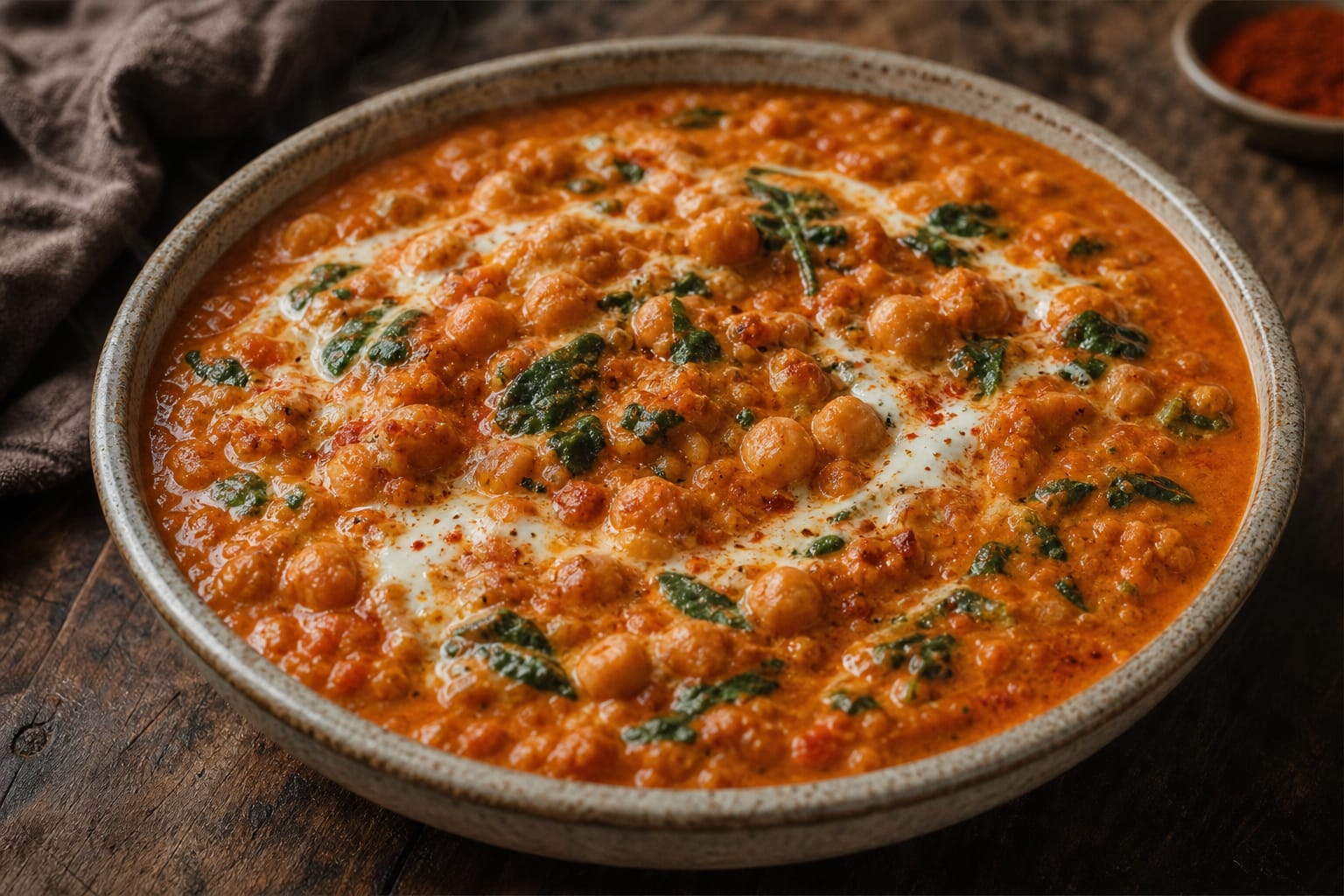
6. Creamy Roasted Pepper Chickpea Stew
Ingredients:
- 1 tablespoon extra-virgin olive oil
- 1 yellow onion, diced
- 2 cans (15 ounces each) chickpeas, drained and rinsed
- 1 jar (12 ounces) roasted red peppers, drained and chopped
- 1 can (14.5 ounces) crushed tomatoes
- 3 cups low-sodium vegetable broth
- 1 teaspoon smoked paprika
- 1/2 cup plain low-fat Greek yogurt
- 3 cups baby kale
Directions:
Heat the olive oil in a pot over medium heat and cook the onion for 6 minutes, then add the chickpeas, roasted peppers, crushed tomatoes, broth, and smoked paprika. Cover and bring to a boil, about 4 to 6 minutes, then lower the heat, simmer uncovered for 18 minutes, and mash about 1 cup of chickpeas against the side of the pot. Stir in the kale for 3 minutes, remove from the heat, cool for 2 minutes, and stir in the yogurt to make 6 servings.
Why It Works: Mashing part of the chickpeas creates a thick red pepper-tomato body without a blender. Yogurt rounds out the smoky pantry stew after it comes off the heat. For a lower inflammation diet, this no-blender pantry stew is the kind of backup that keeps a busy week on track.
Quick Reference
|
Recipe |
Prep |
Cook |
Protein |
Key Benefit |
|
Roasted Vegetable Pesto Frittata |
15 min |
39-45 min |
~12 g/serving |
Roasted base starts 2 meals |
|
Lemon Dill Quinoa Roasted Vegetable Bowls |
12 min |
20 min |
~16 g/serving |
Preps grain and dressing for later |
|
Ginger Tofu Broccoli Quinoa Skillet |
10 min |
16-19 min |
~27 g/serving |
Hot second use for cooked quinoa |
|
Cumin Beef and Cabbage Stuffed Pitas |
10 min |
12-14 min |
~33 g/serving |
Second dressing use in a warm pita |
|
Cherry Almond Oat Breakfast Bake |
12 min |
35-40 min |
~10 g/serving |
Set squares from a 9-by-13-inch pan |
|
Creamy Roasted Pepper Chickpea Stew |
10 min |
33-35 min |
~10 g/serving |
Thick pantry stew without blending |