6 Easy Anti-Inflammatory Dinners That Reheat Surprisingly Well
Sep 02, 2026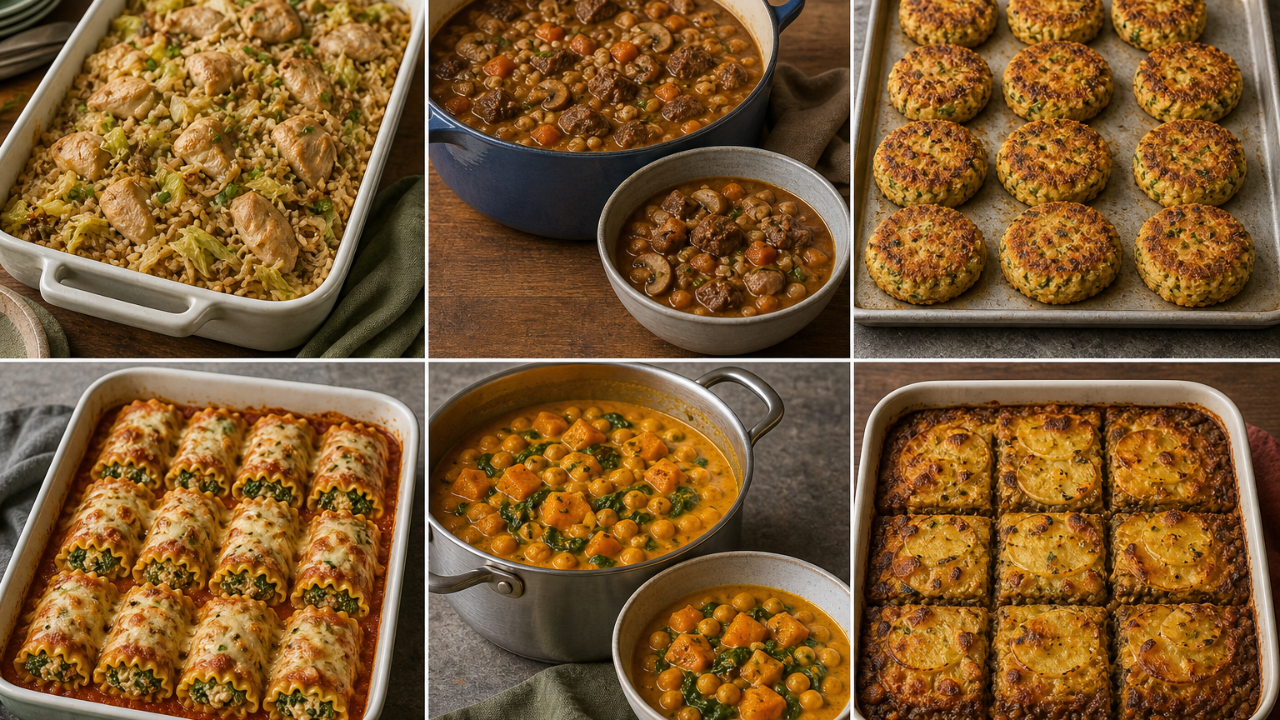
You pack tonight's leftovers with good intentions, then tomorrow's lunch turns dry, soggy, or strangely separated in the microwave. You can keep cooking from scratch every night, or choose dinners designed to stay tender when reheated.
From my experience working with clients:
A dinner that only tastes good once creates more work than its ingredient list suggests. Nutrition can support your health when the overall eating pattern is easy to repeat, and anti-inflammatory dinners become more useful when sauces keep leftovers tender, stews thicken overnight, and patties or roll-ups reheat in clear portions. Each recipe below includes a specific cooling and reheating plan rather than leaving tomorrow's texture to chance.
Pick one dinner, label the leftover portions before refrigerating them, and use its exact reheating method tomorrow.
This is general wellness information based on current research, not medical advice. If you have specific health concerns, please consult with a healthcare provider.
1. Ginger Chicken Cabbage Brown Rice Casserole
Ingredients:
- 1 1/4 pounds raw boneless, skinless chicken thighs, cut into 1-inch pieces
- 3 cups cooked long-grain brown rice, cooled
- 5 cups raw green cabbage, thinly sliced
- 2 medium raw carrots, grated
- 1 cup low-sodium chicken broth
- 2 tablespoons low-sodium tamari
- 1 tablespoon grated raw fresh ginger
- 2 raw garlic cloves, minced
- 1 tablespoon toasted sesame oil
- 1 tablespoon raw sesame seeds
Directions:
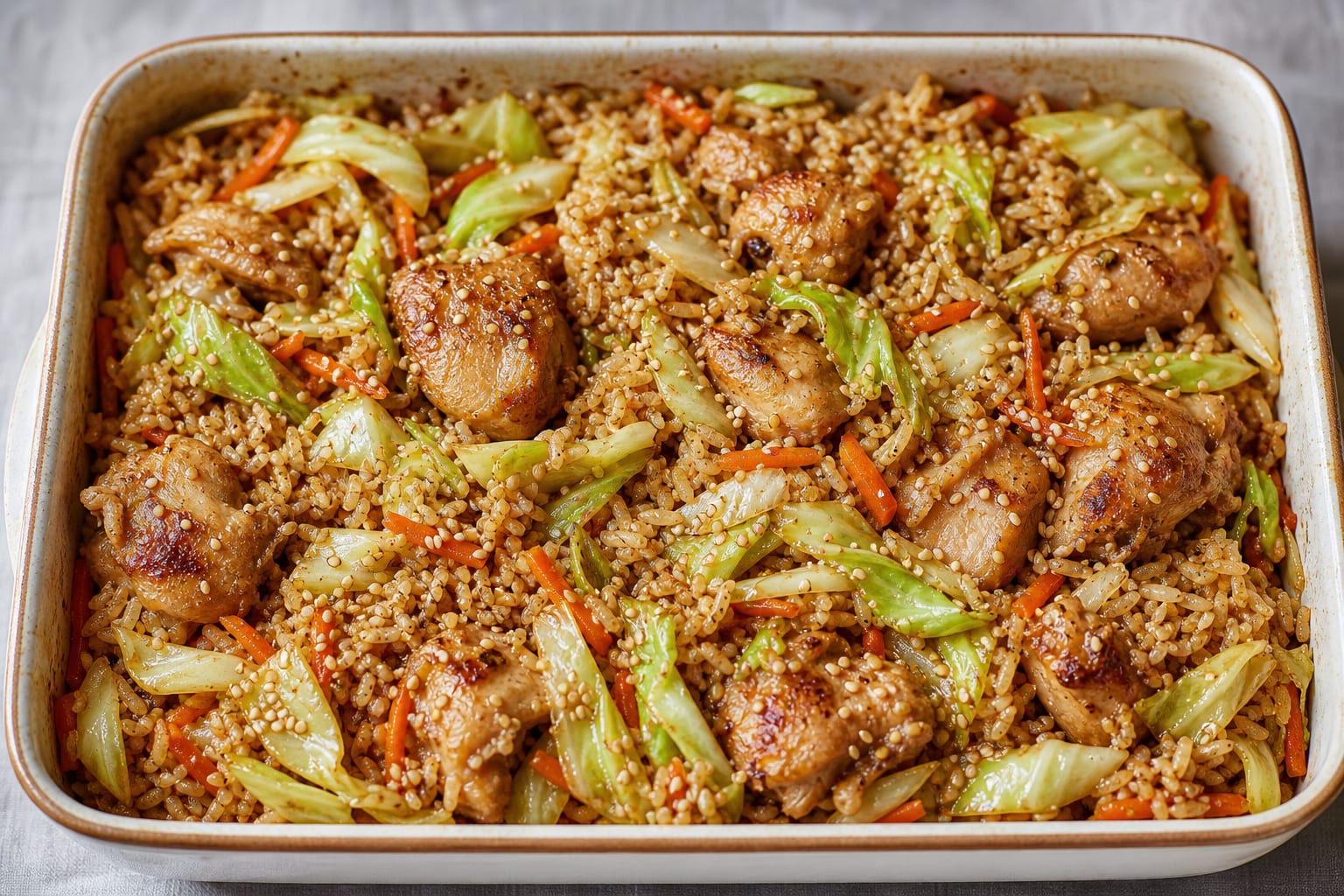
Heat the oven to 400°F, combine the chicken, cooked rice, raw cabbage, carrots, broth, tamari, ginger, garlic, and sesame oil in a 9-by-13-inch baking dish, cover tightly with foil, and bake for 28 minutes. Remove the foil, stir thoroughly, and bake for 10 to 12 minutes more until the chicken reaches 165°F and the cabbage is tender, then sprinkle with sesame seeds and divide into 6 equal portions to make 6 servings. Cool leftover portions uncovered for 20 minutes, cover and refrigerate for up to 4 days, then reheat 1 portion with 1 tablespoon water in a covered microwave-safe bowl for 2 to 3 minutes, stirring halfway through, until it reaches 165°F.
Why It Works: Anti-inflammatory dinners hold up better as leftovers when moisture is built into the dish. Broth and cabbage protect the rice, chicken thighs stay tender overnight, and sesame with ginger remains noticeable after reheating. Healthy anti-inflammatory meals are easier to assemble when the vegetables, whole grains, and protein already share one casserole.
2. Beef Mushroom Barley Stew
Ingredients:
- 1 1/2 pounds raw boneless beef chuck under blade pot roast, separable lean only, trimmed of all visible fat and cut into 1-inch cubes
- 12 ounces raw cremini mushrooms, quartered
- 1 cup dry pearled barley
- 2 medium raw carrots, peeled and diced
- 2 medium raw celery stalks, diced
- 1 medium raw yellow onion, diced
- 6 cups low-sodium beef broth
- 2 tablespoons no-salt-added tomato paste
- 1 tablespoon extra-virgin olive oil
- 1 teaspoon dried thyme
- 1/2 teaspoon fine salt
- 1/4 teaspoon ground black pepper
Directions:
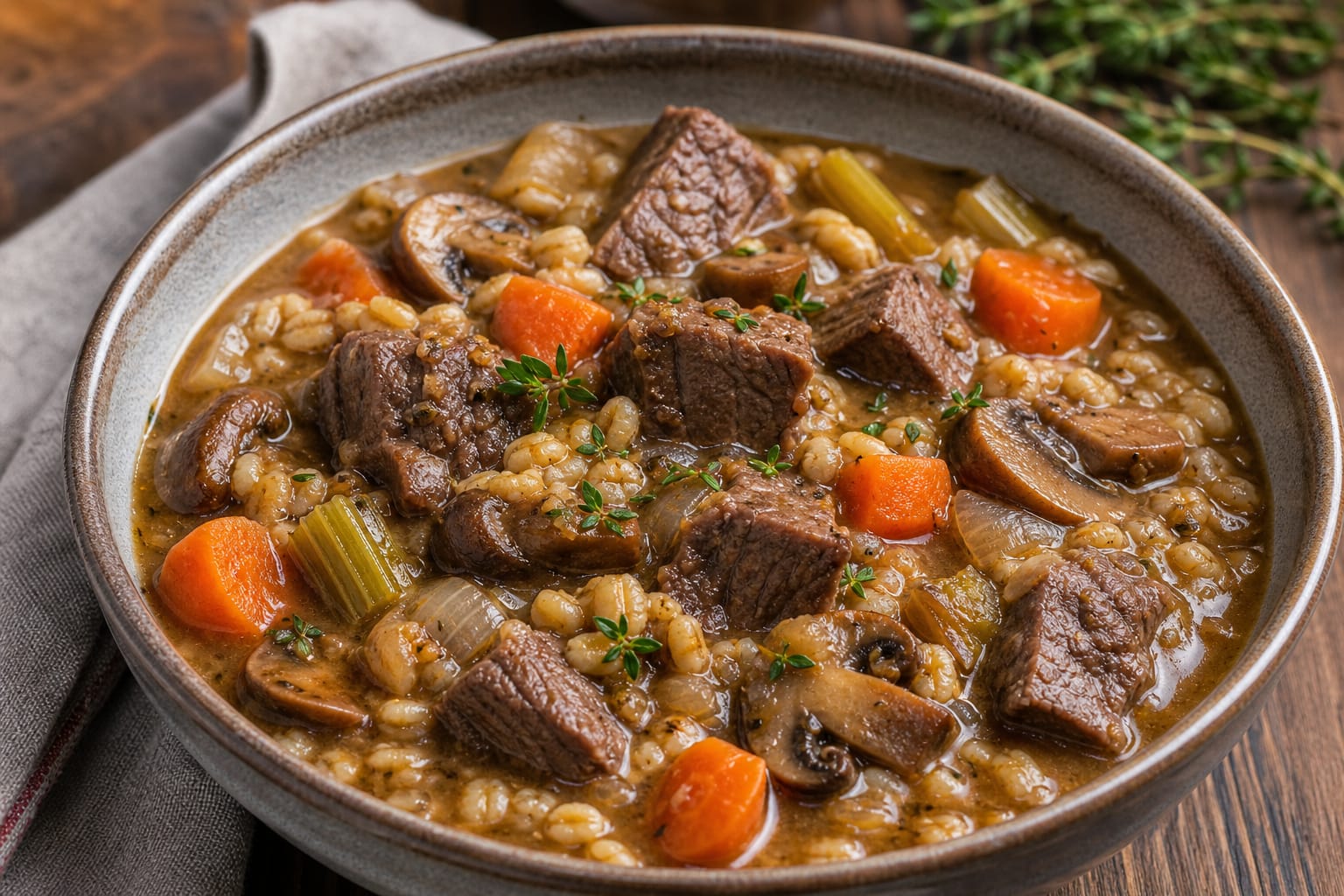
Heat the olive oil in a Dutch oven over medium-high heat, brown the beef in one layer for 7 to 9 minutes while turning twice, cook the mushrooms, carrots, celery, and onion for 8 minutes, then stir in the tomato paste and thyme for 1 minute. Add the dry barley, broth, salt, and pepper, bring to a boil, reduce to a low simmer, cover partially, and cook for 55 to 65 minutes until the beef and barley are tender, then divide into 6 servings of about 2 cups each to make 6 servings. Cool leftover servings uncovered for 20 minutes, cover and refrigerate for up to 4 days, then reheat 1 serving with 2 tablespoons broth or water in a covered saucepan over medium-low heat for 7 to 9 minutes, stirring twice, until it reaches 165°F.
Why It Works: High fiber recipes benefit from ingredients that improve as they rest. Barley releases starch overnight to enrich the broth, while a splash of water restores the stew without diluting the mushrooms or thyme.
Before we get to Meal #3...
My clients frequently ask me “Which foods actually help with inflammation?”
Knowing the foods is only useful if you understand why they matter and how to use them consistently.
Because knowledge is power.
So I ranked 10 science-backed foods that can support a lower-inflammatory eating pattern, including why they matter and practical ways to use them.
I hope you find it helpful!
3. Lemon Dill Salmon Quinoa Patties
Ingredients:
- 2 cans (14.75 ounces each) pink salmon, drained with skin and bones removed
- 2 cups cooked quinoa, cooled
- 2 large raw eggs
- 1/2 cup whole-grain breadcrumbs
- 1/4 cup chopped fresh dill
- 2 tablespoons fresh lemon juice
- 1 teaspoon Dijon mustard
- 2 tablespoons extra-virgin olive oil, divided
- 1/2 teaspoon fine salt
- 1/4 teaspoon ground black pepper
- 4 cups raw baby spinach
Directions:
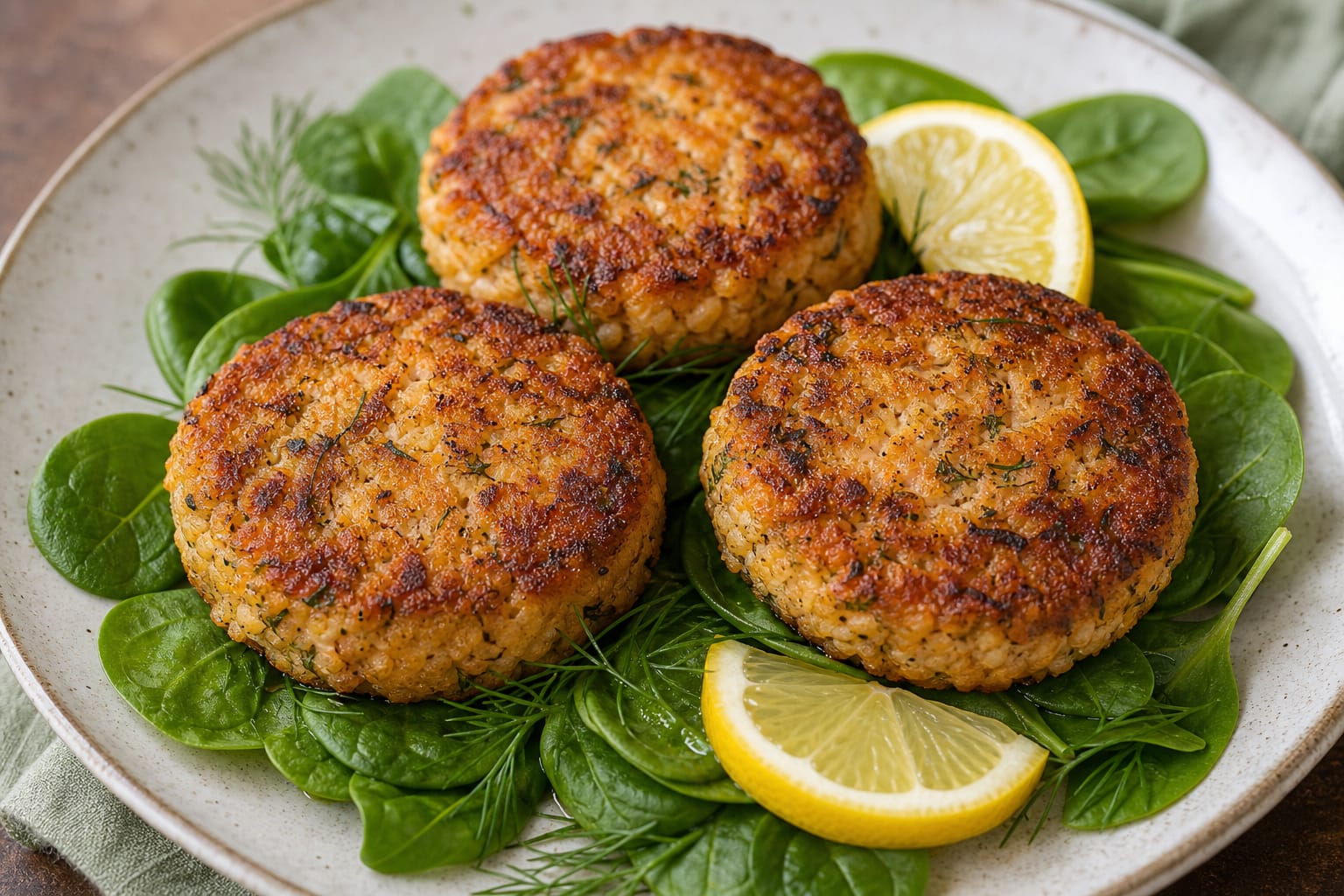
Combine the drained salmon, cooked quinoa, eggs, breadcrumbs, dill, lemon juice, mustard, salt, and pepper, then shape into 12 equal patties about 1/2 inch thick. Heat 1 tablespoon olive oil in a large nonstick skillet over medium heat and cook 6 patties for about 4 minutes per side until browned and 160°F in the center, repeat with the remaining oil and patties, and serve 3 patties over 1 cup raw spinach per person to make 4 servings. Cool leftover patties on a wire rack for 15 minutes, refrigerate in a single layer for up to 3 days, then reheat 3 patties on a parchment-lined sheet pan at 375°F for 10 to 12 minutes until crisp and 165°F in the center.
Why It Works: Healthy anti-inflammatory meals are easier to repack when the portions are already clear. Quinoa and egg bind these salmon patties without making them dense, and oven reheating restores the browned surface instead of steaming it soft.
4. Turkey Spinach Lasagna Roll-Ups
Ingredients:
- 12 ounces dry whole-wheat lasagna noodles (12 noodles)
- 1 pound raw 93% lean ground turkey
- 220 grams cooked frozen chopped spinach, boiled and drained without salt, then squeezed dry
- 15 ounces part-skim ricotta cheese
- 1 large raw egg
- 3 cups no-salt-added marinara sauce, divided
- 1 cup part-skim mozzarella cheese, shredded
- 1/4 cup grated Parmesan cheese
- 1 tablespoon extra-virgin olive oil
- 1 teaspoon dried Italian seasoning
- 1/2 teaspoon fine salt
Directions:
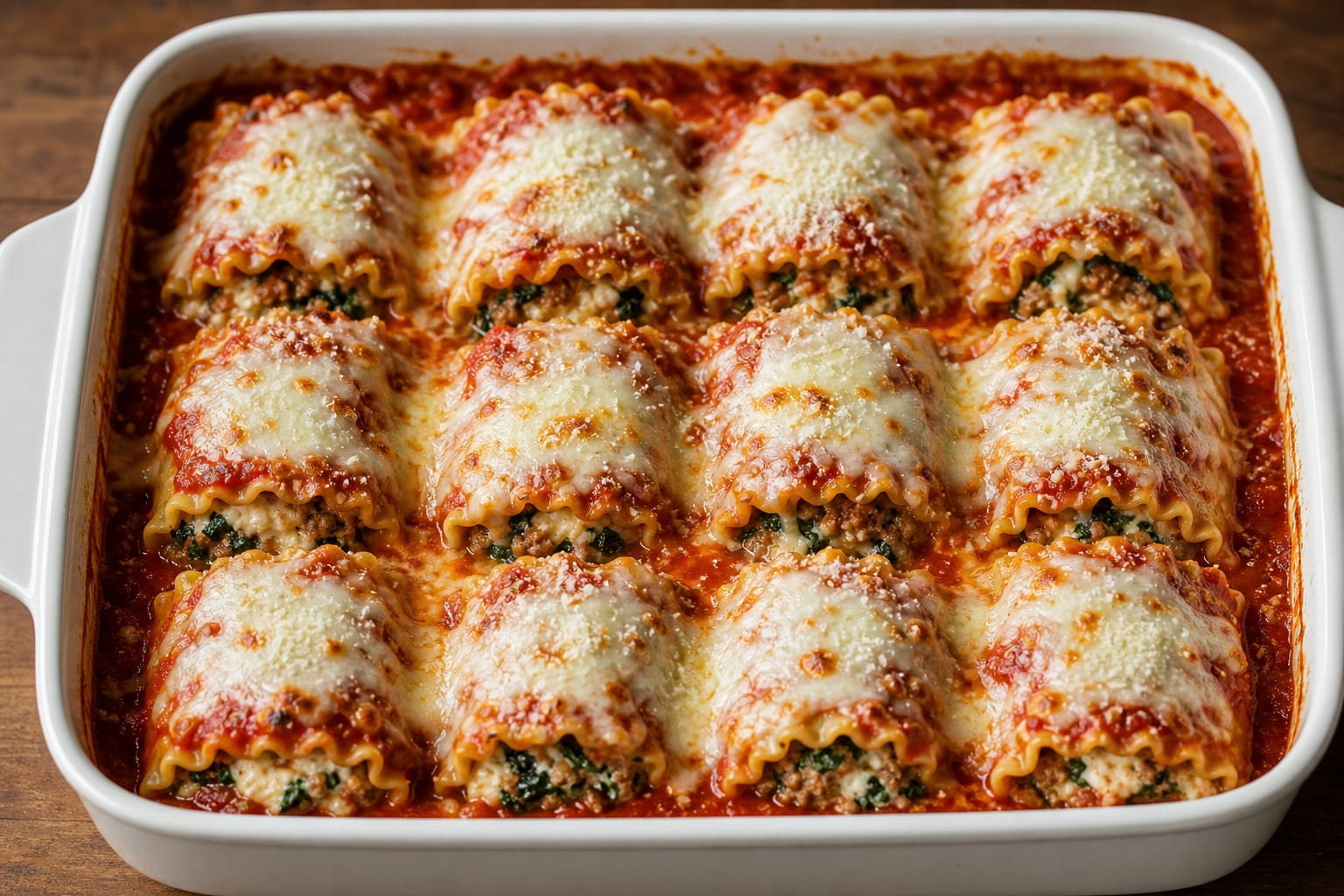
Heat the oven to 375°F, boil the dry noodles until flexible but 2 minutes short of fully tender, drain and lay them flat, then heat the olive oil in a skillet over medium heat and cook the ground turkey, Italian seasoning, and salt for 7 to 9 minutes until browned before stirring it together with the ricotta, egg, and squeezed spinach. Spread 1 cup marinara in a 9-by-13-inch baking dish, divide the filling evenly among the 12 noodles, roll them around the filling, place seam-side down, cover with the remaining 2 cups marinara, mozzarella, and Parmesan, cover with foil and bake for 25 minutes, then uncover and bake for 10 minutes to make 6 servings of 2 roll-ups each. Cool leftovers uncovered for 20 minutes and refrigerate with sauce for up to 4 days, then reheat 2 roll-ups covered at 350°F for 20 to 25 minutes until 165°F.
Why It Works: The tomato, olive oil, spinach, and herbs common in Mediterranean diet recipes keep these individual rolls bright and savory. Each roll holds its shape better than a loose lasagna slice. High fiber recipes can use whole-wheat pasta without becoming dense. Here, spinach and ricotta keep the filling tender, while marinara protects the noodle edges through refrigeration and reheating.
5. Chickpea Pumpkin Coconut Curry
Ingredients:
- 2 cans (15 ounces each) no-salt-added chickpeas, drained and rinsed
- 1 can (15 ounces) plain pumpkin puree, not pie filling
- 1 can (13.5 ounces) unsweetened canned coconut milk, liquid expressed from grated coconut meat and water, shaken
- 1 can (14.5 ounces) no-salt-added diced tomatoes, undrained
- 4 cups raw baby spinach
- 1 medium raw yellow onion, diced
- 3 raw garlic cloves, minced
- 1 tablespoon grated raw fresh ginger
- 1 tablespoon extra-virgin olive oil
- 2 teaspoons curry powder
- 1/2 teaspoon ground turmeric
- 1/2 teaspoon fine salt
Directions:
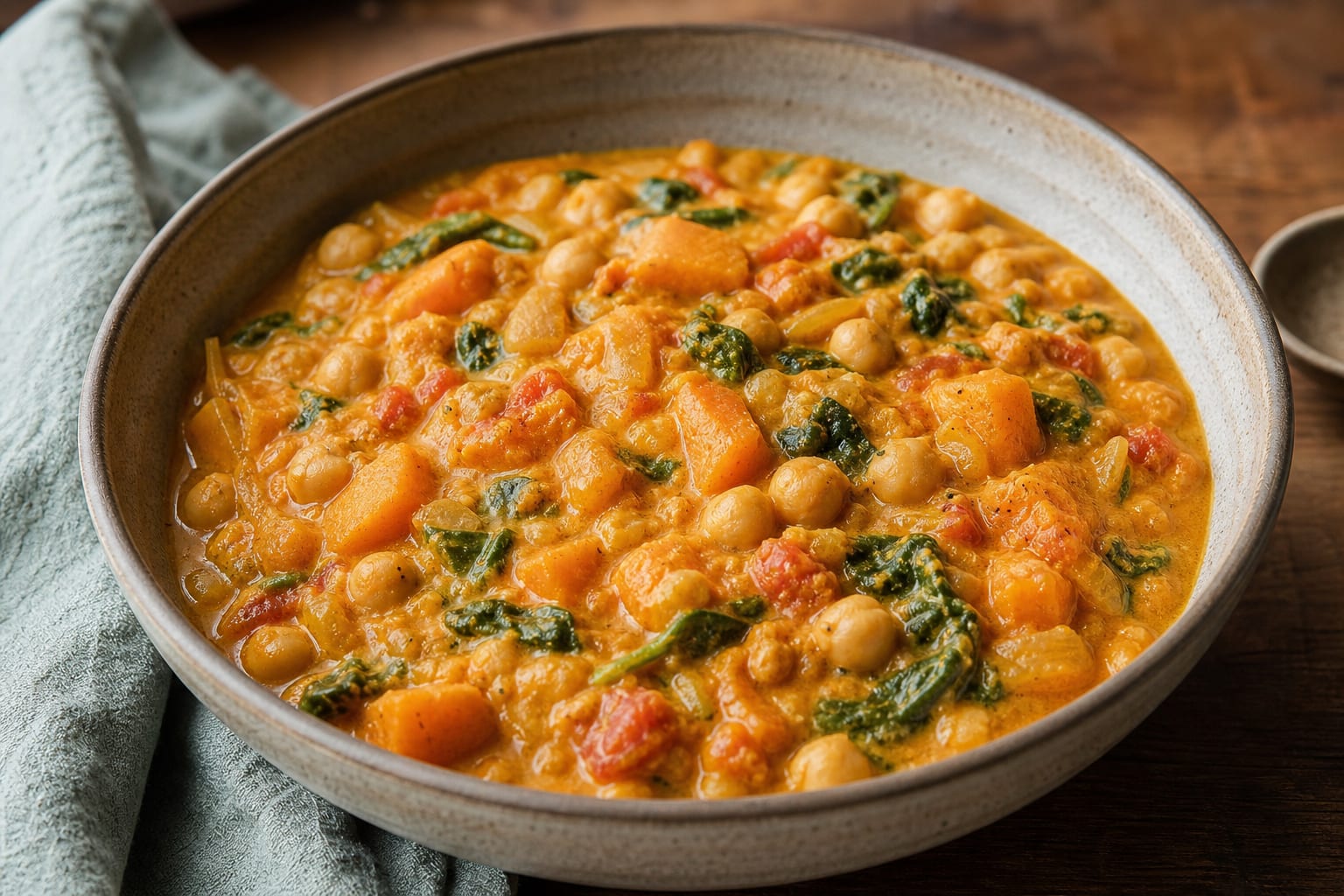
Heat the olive oil in a large saucepan over medium heat, cook the onion for 6 minutes, then add the garlic, ginger, curry powder, and turmeric and cook for 1 minute. Stir in the drained chickpeas, pumpkin puree, coconut milk, tomatoes with their liquid, and salt, bring to a simmer and cook uncovered for 18 to 22 minutes while stirring every 5 minutes, then fold in the raw spinach and cook for 2 minutes until wilted before dividing into 6 servings of about 1 1/2 cups each to make 6 servings. Cool leftovers uncovered for 20 minutes and refrigerate for up to 4 days, then reheat 1 serving in a covered saucepan over medium-low heat for 6 to 8 minutes, stirring twice, until 165°F.
Why It Works: Low inflammation recipes are more appealing as leftovers when their texture improves overnight. Pumpkin keeps this curry creamy, chickpeas stay intact, and spinach softens into the sauce without disappearing.
6. Roasted Vegetable Lentil Moussaka
Ingredients:
- 1 1/2 pounds raw eggplant, cut into 1/2-inch rounds
- 1 pound raw zucchini, cut into 1/2-inch rounds
- 3 cups cooked brown lentils, drained
- 1 can (28 ounces) no-salt-added crushed tomatoes, undrained
- 1 medium raw yellow onion, diced
- 2 raw garlic cloves, minced
- 3 tablespoons extra-virgin olive oil, divided
- 1 teaspoon dried oregano
- 1/2 teaspoon ground cinnamon
- 1/2 teaspoon fine salt
- 2 cups plain low-fat Greek yogurt
- 2 large raw eggs
- 1/2 cup grated Parmesan cheese
Directions:
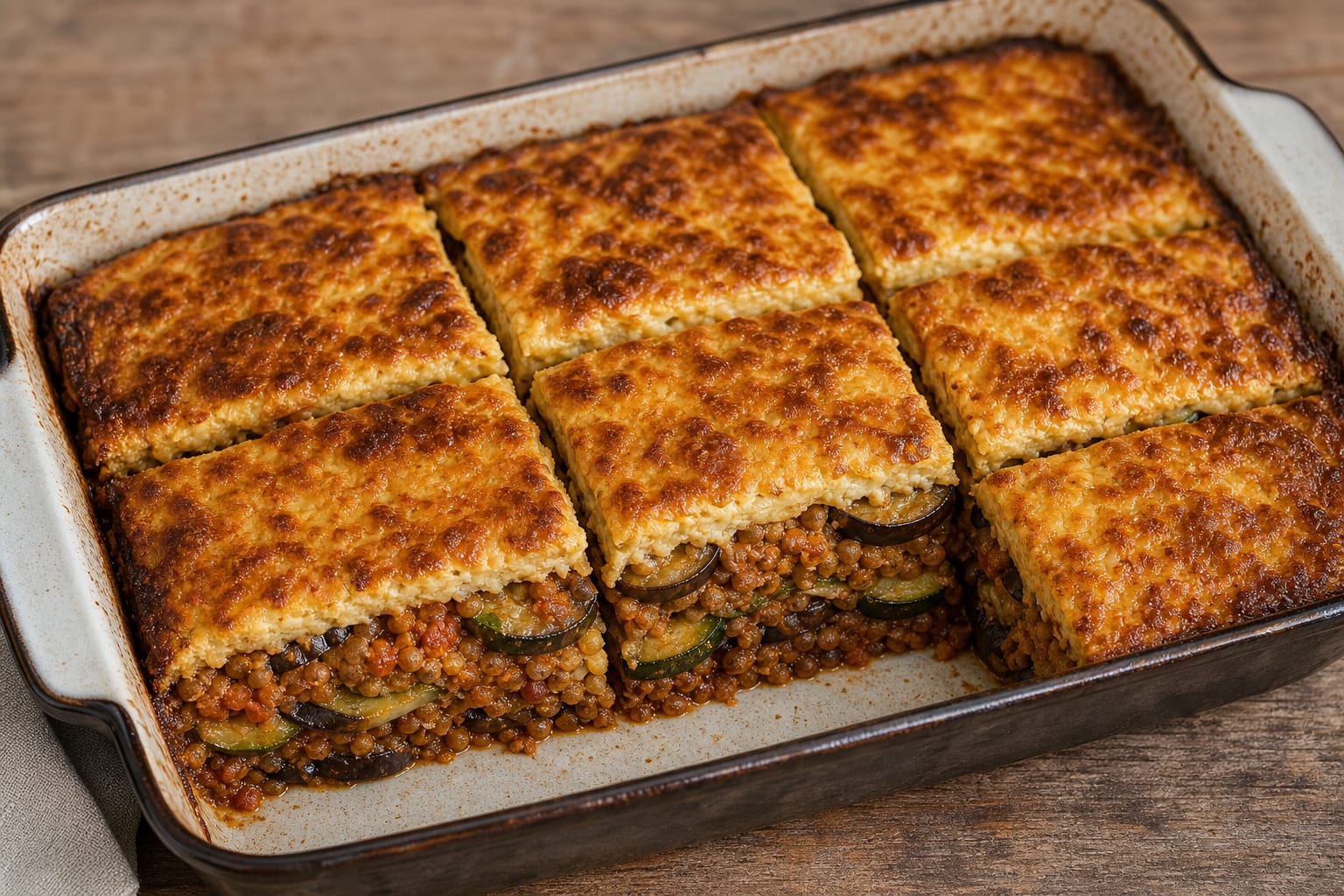
At 425°F, brush raw eggplant and zucchini with 2 tablespoons olive oil on two large rimmed sheet pans and roast for 22 to 26 minutes, turning once, until tender; meanwhile, heat the remaining 1 tablespoon olive oil in a saucepan over medium heat, cook the onion for 6 minutes and garlic for 30 seconds, then add cooked lentils, crushed tomatoes, oregano, cinnamon, and salt and simmer for 12 minutes. Lower the oven to 375°F, layer half the roasted vegetables in a 9-by-13-inch baking dish, spread all the lentil sauce over them, top with the remaining vegetables, whisk the yogurt, eggs, and Parmesan and spread it evenly over the top, then bake for 30 to 35 minutes until set and browned, rest for 15 minutes, and cut into 8 equal squares to make 8 servings. Cool leftover squares uncovered for 20 minutes and refrigerate for up to 4 days, then reheat 1 square covered at 350°F for 18 to 22 minutes until 165°F.
Why It Works: Roasting drives moisture from the vegetables before assembly, so each square stays structured. The yogurt topping sets into a creamy layer that reheats without splitting. The layered bake offers a substantial make-ahead dinner beyond another soup or loose casserole.
Quick Reference
|
Recipe |
Prep |
Cook |
Protein |
Key Benefit |
|
Ginger Chicken Cabbage Brown Rice Casserole |
15 min |
38-40 min |
~24 g/serving |
Moist rice after microwaving |
|
Beef Mushroom Barley Stew |
20 min |
71-83 min |
~32 g/serving |
Broth that improves overnight |
|
Lemon Dill Salmon Quinoa Patties |
20 min |
16 min |
~40 g/serving |
Crisp patties in clear portions |
|
Turkey Spinach Lasagna Roll-Ups |
25 min |
42-44 min |
~39 g/serving |
Sauced rolls that stay tender |
|
Chickpea Pumpkin Coconut Curry |
15 min |
27-31 min |
~10 g/serving |
Stable, creamy next-day texture |
|
Roasted Vegetable Lentil Moussaka |
30 min |
70-79 min |
~20 g/serving |
Structured squares for reheating |