6 Anti-Inflammatory Soups With Toppings That Make Them Feel Like Dinner
Oct 16, 2026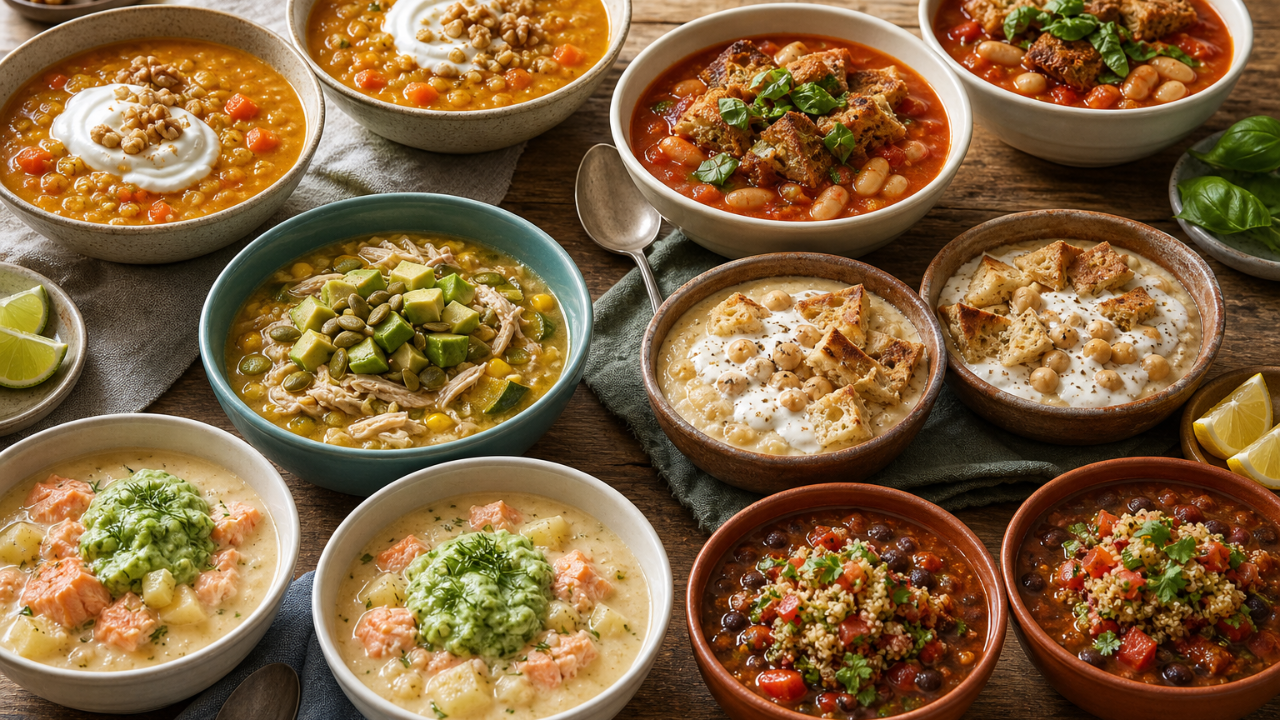
Your soup is hot, the bowls are out, and you're deciding whether dinner needs something else. A sprinkle of herbs looks nice, but it leaves the same thin bowl underneath. Set aside a measured topping with beans, yogurt, seeds, or bread, and the meal gets more substantial without another main dish.
Here's why:
Useful nutrition starts with enough food to make the eating pattern practical for your evening. These anti-inflammatory recipes pair a vegetable-rich soup with a topping that adds protein, fiber, or extra substance. The 6 combinations below give you both parts in clear amounts, with the topping added after the hot soup goes into the bowl so each part keeps its texture.
Choose one soup and measure its dinner topping before you start cooking.
This is general wellness information based on current research, not medical advice. If you have specific health concerns, please consult with a healthcare provider.
Each recipe makes 2 dinner servings, with the full topping divided evenly between them.
Refrigerate leftover soup promptly in shallow dishes and toppings separately at 40°F or below, within 2 hours or 1 hour above 90°F, and use within 3 to 4 days. For leftover reheating, bring the soup to a rolling boil and verify at least 165°F before adding the separately stored toppings. Reheat the milk-based salmon soup over gentle heat, stirring frequently and scraping the bottom to prevent scorching, until it reaches that rolling boil and temperature; the gentler initial-cooking directions below apply only to first preparation.
Listed cook times include warm-up and sequential bread or pita heating; heating allowances are estimates, with tenderness and temperature taking priority if your stove needs longer. Protein values are conservative, rounded-down subtotals from the first ingredient only, so toppings and other ingredients may supply additional protein.
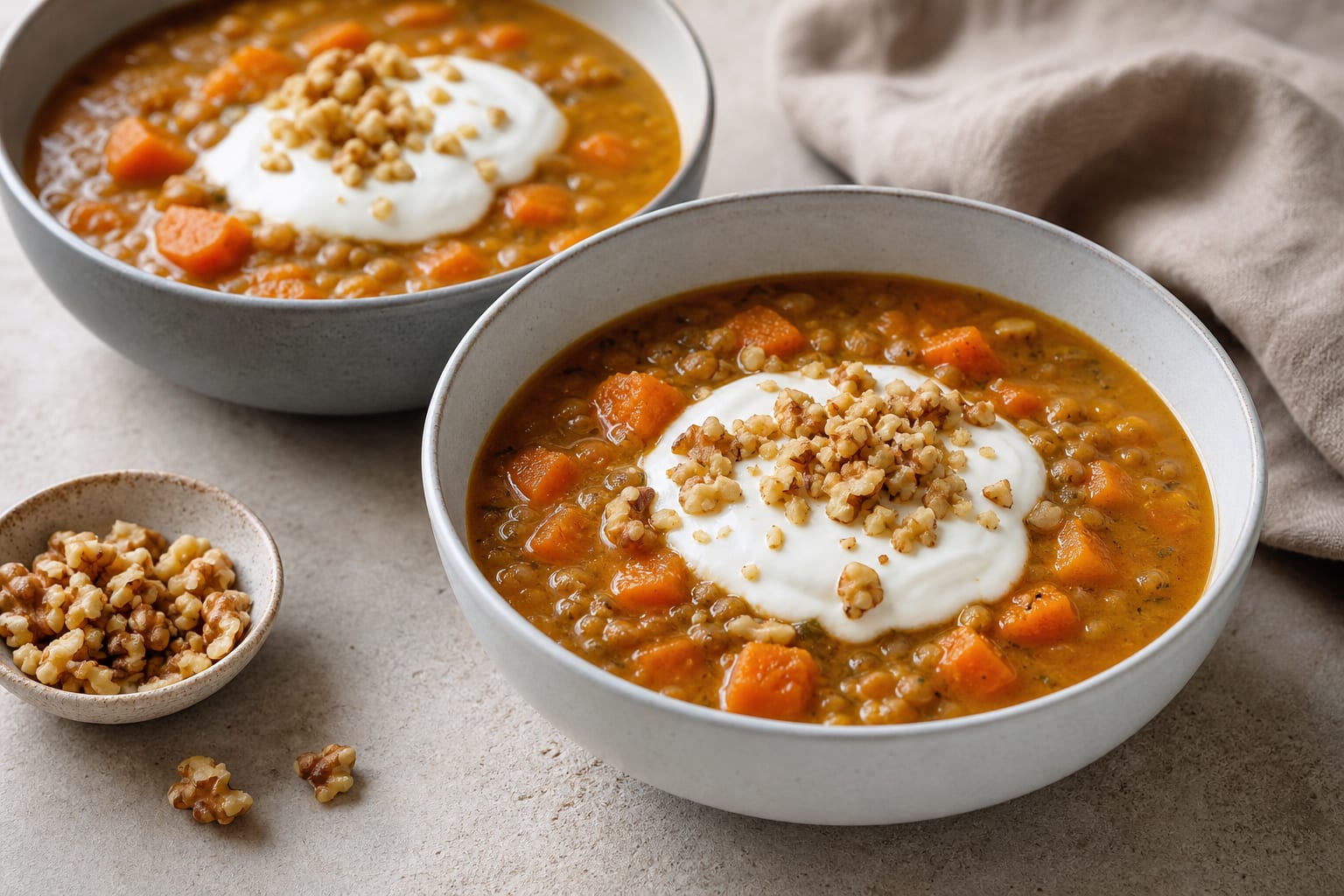
1. Carrot Lentil Soup with Yogurt and Walnuts
Cook Time: 28 minutes
Ingredients:
- 360 g cooked unsalted lentils, drained
- 200 g carrots, cut into 1/4-inch dice
- 80 g onion, finely chopped
- 600 mL water
- 2 teaspoons extra-virgin olive oil
- 1 teaspoon ground cumin
- 1/4 teaspoon salt
- 160 g plain low-fat Greek yogurt
- 30 g chopped walnuts
Directions:
Warm olive oil in a saucepan over medium heat for about 1 minute, soften onion and carrot for 5 minutes, then add lentils, water, cumin, and salt. Heat for about 5 minutes until gently bubbling, then simmer for 17 minutes until carrots are tender and soup reaches 165°F, making 28 minutes total cooking. Divide the hot soup into 2 servings and top each bowl immediately with 80 g yogurt and 15 g walnuts.
Why It Works: Yogurt gives each spoonful a creamy counterpoint and adds protein beyond the lentil subtotal. Walnuts stay crisp when they meet the soup at the table.
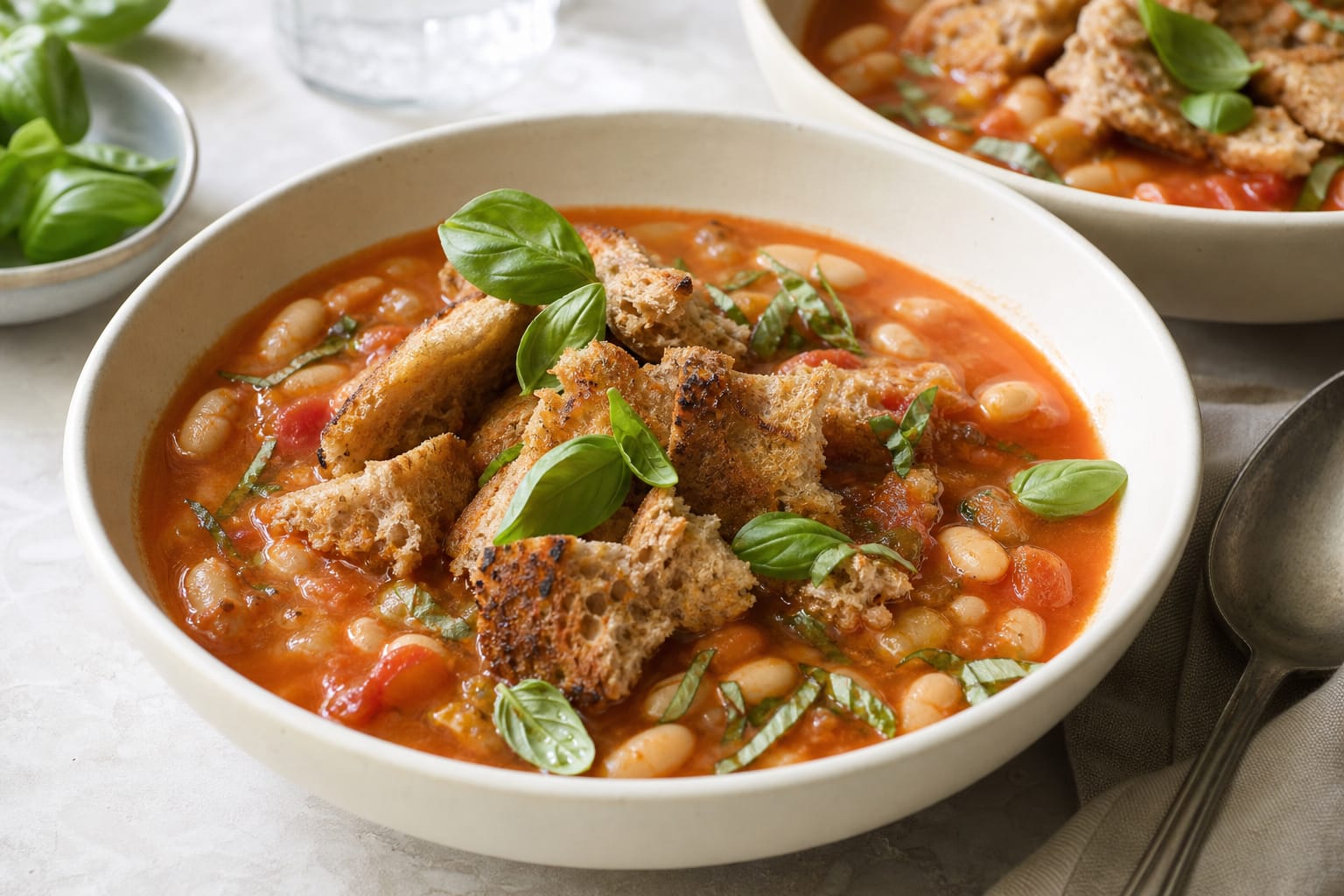
2. Tomato White Bean Soup with Basil Toast
Cook Time: 23 minutes
Ingredients:
- 360 g cooked unsalted white beans, drained
- 400 g no-salt-added crushed tomatoes
- 350 mL water
- 2 teaspoons extra-virgin olive oil
- 1/2 teaspoon garlic powder
- 1/4 teaspoon salt
- 4 slices whole-wheat bread, 35 g each
- 20 g fresh basil, torn
Directions:
Combine beans, tomatoes, water, olive oil, garlic powder, and salt in a saucepan and heat over medium for about 5 minutes until gently bubbling, then simmer over medium-low for 14 minutes until the soup reaches 165°F. Remove the pan from the burner and toast bread for about 4 minutes from switching on the toaster until crisp, making 23 minutes total cooking. Spoon hot soup into 2 servings and top each with 2 torn toasts and 10 g basil just before eating.
Why It Works: Beans make the tomato base thick enough to hold bread at the surface briefly. Adding the toast at the end lets the edges soften while the center keeps some bite.
Before we get to Meal #3...
My clients frequently ask me “Which foods actually help with inflammation?”
Knowing the foods is only useful if you understand why they matter and how to use them consistently.
Because knowledge is power.
So I ranked 10 science-backed foods that can support a lower-inflammatory eating pattern, including why they matter and practical ways to use them.
I hope you find it helpful!
3. Chicken Corn Soup with Avocado and Seeds

Cook Time: 20 minutes
Ingredients:
- 260 g cooked roasted chicken breast, skin and bones removed, shredded
- 200 g frozen corn kernels
- 150 g diced zucchini
- 600 mL low-sodium chicken broth
- 1/2 teaspoon ground cumin
- 1/4 teaspoon black pepper
- 140 g avocado flesh, diced
- 30 g roasted unsalted pumpkin seed kernels
- 2 teaspoons lime juice
Directions:
Put chicken, corn, zucchini, broth, cumin, and pepper in a saucepan and heat over medium for about 5 minutes until gently bubbling, then simmer over medium-low for 15 minutes until zucchini is tender and soup reaches 165°F, for 20 minutes total cooking. Toss avocado with lime juice, divide the hot soup into 2 servings, and add 70 g avocado and 15 g pumpkin seeds to each bowl immediately before eating.
Why It Works: Avocado adds creamy substance without disappearing into the broth. The seeds supply crunch and extra protein, while the chicken makes this a full bowl from the start.
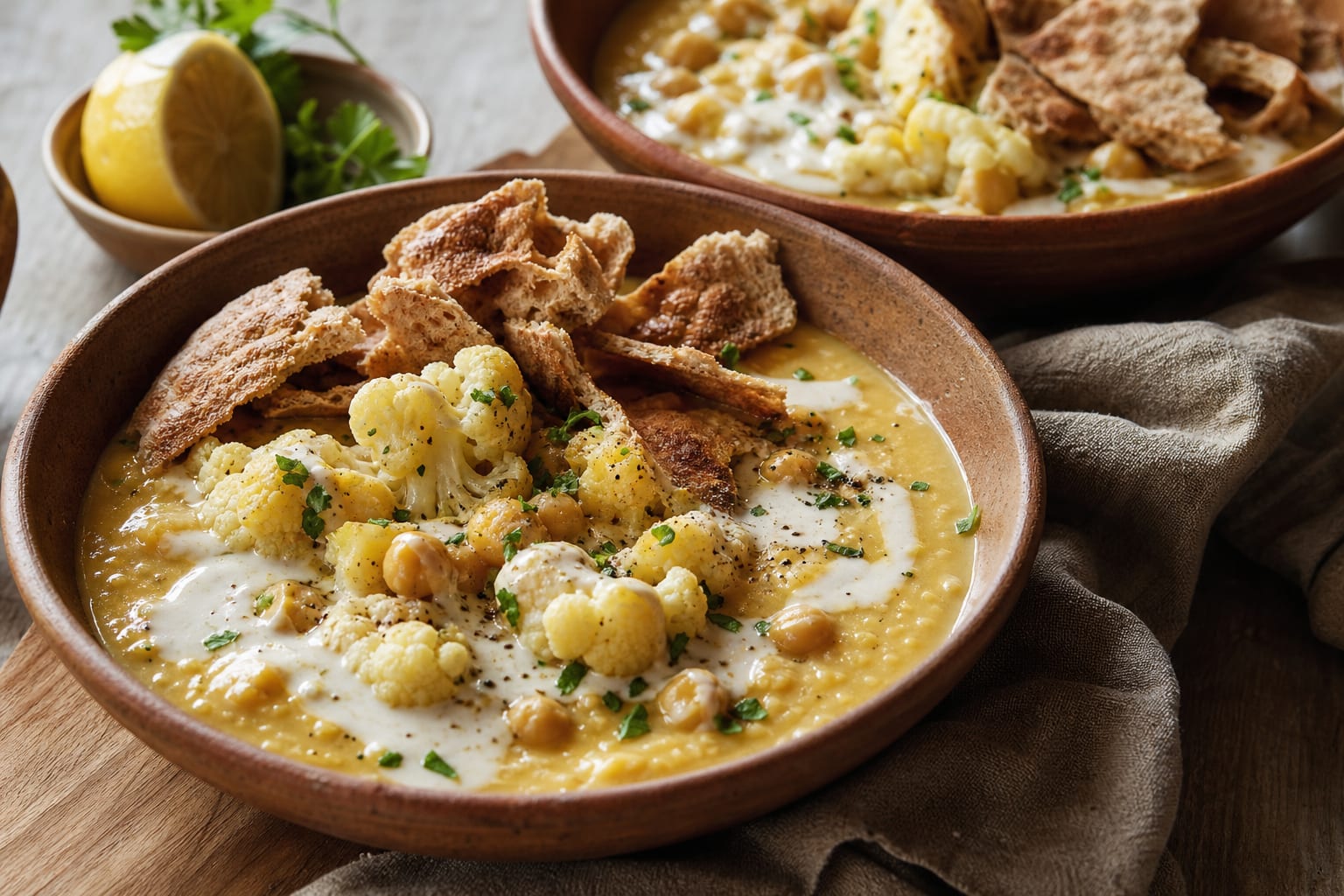
4. Cauliflower Chickpea Soup with Tahini Pita
Cook Time: 27 minutes
Ingredients:
- 360 g canned chickpeas, drained and rinsed
- 240 g cauliflower, cut into small florets
- 600 mL water
- 2 teaspoons extra-virgin olive oil
- 1 teaspoon ground coriander
- 1/4 teaspoon salt
- 40 g tahini
- 2 tablespoons lemon juice
- 2 tablespoons water for topping
- 2 whole-wheat pitas, 60 g each
Directions:
Heat chickpeas, cauliflower, 600 mL water, oil, coriander, and salt in a saucepan over medium for about 5 minutes until gently bubbling, then simmer for 18 minutes until cauliflower is tender and soup reaches 165°F. Take soup off the burner, mash a few chickpeas against the pan, and toast pitas for about 4 minutes from switching on the toaster until crisp, making 27 minutes total cooking. Mix tahini with lemon juice and the 2 tablespoons water, then divide hot soup into 2 servings and top each with half the sauce and 1 torn toasted pita.
Why It Works: Mashing a few chickpeas thickens the soup while leaving most of the beans intact. For anti-inflammatory dinners built around beans and vegetables, a measured tahini drizzle and a full pita make this bowl substantial enough to serve on its own.
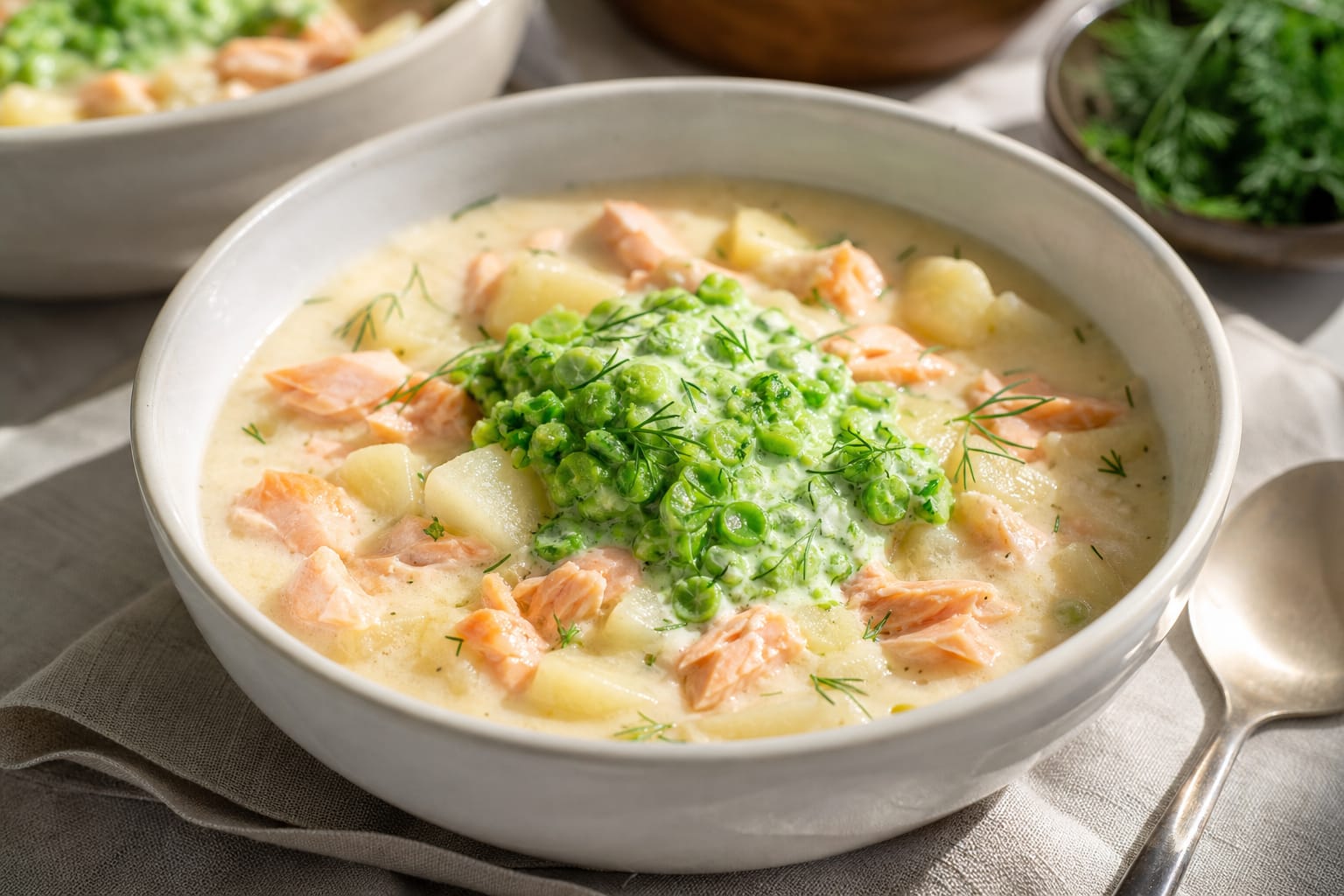
5. Salmon Potato Soup with Pea Yogurt Topping
Cook Time: 12 minutes
Ingredients:
- 260 g baked farmed Atlantic salmon flesh, weighed after cooking with skin and bones removed, flaked
- 280 g cooked peeled potatoes, diced
- 500 mL low-fat milk
- 200 mL water
- 1/4 teaspoon salt
- 1/8 teaspoon black pepper
- 160 g cooked and chilled peas
- 120 g plain low-fat Greek yogurt
- 10 g fresh dill, chopped
Directions:
Warm salmon, potatoes, milk, water, salt, and pepper in a saucepan over medium-low heat, stirring gently for about 12 minutes from putting the pan on heat, including warm-up, until the soup reaches 165°F without a hard boil during this initial preparation. Mash chilled peas lightly with yogurt and dill, then divide hot soup into 2 servings and spoon half the pea topping over each just before eating.
Why It Works: Cooked potatoes make the milk broth substantial without a flour thickener. The cool pea topping adds vegetables and a thick spoonful of yogurt alongside the salmon.
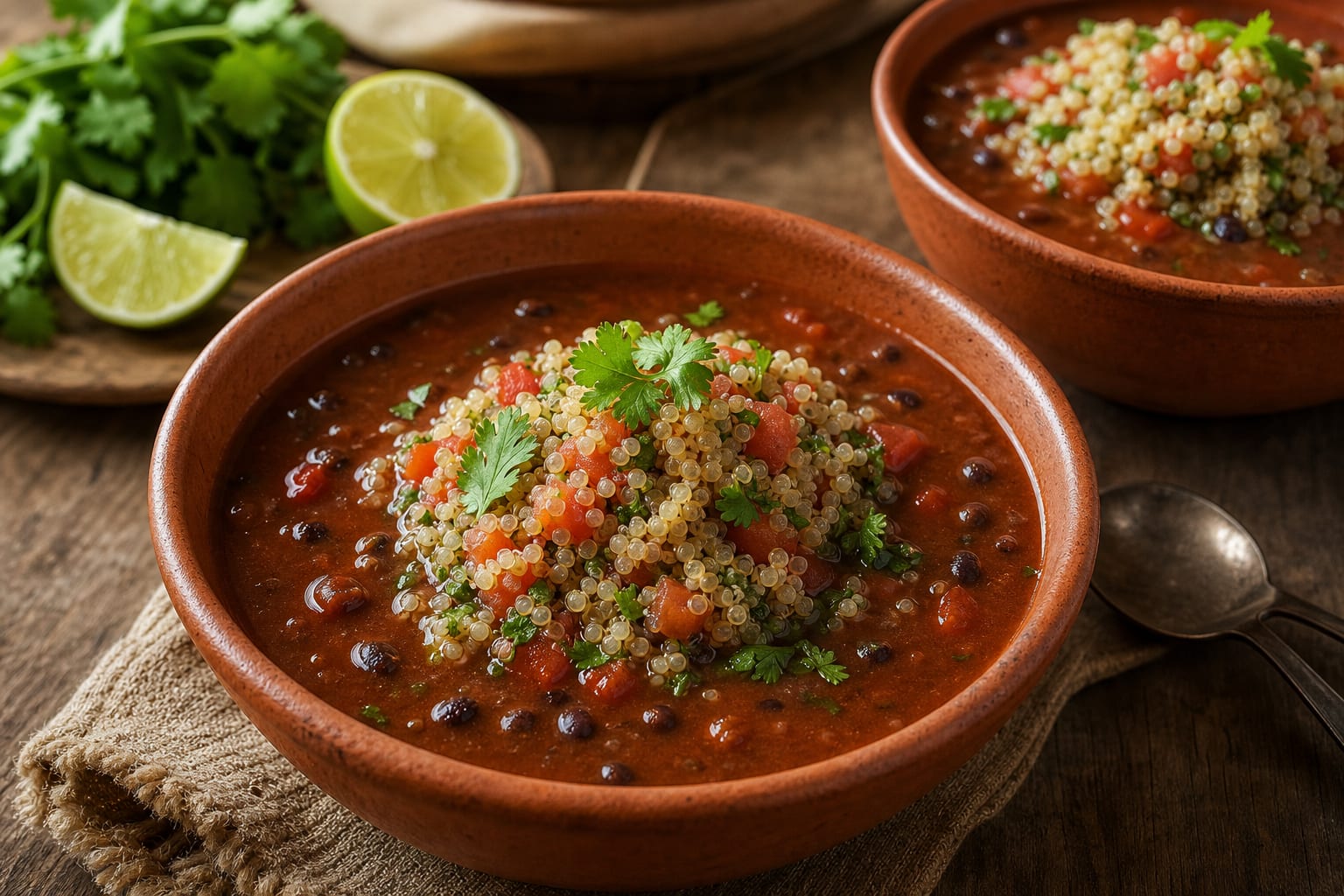
6. Black Bean Pepper Soup with Quinoa Salsa
Cook Time: 26 minutes
Ingredients:
- 360 g cooked unsalted black beans, drained
- 200 g red bell pepper, finely diced
- 400 g no-salt-added crushed tomatoes
- 400 mL water
- 2 teaspoons extra-virgin olive oil
- 1 teaspoon smoked paprika
- 1/4 teaspoon salt
- 200 g cooked and chilled quinoa
- 120 g diced tomato
- 20 g fresh cilantro, chopped
- 1 tablespoon lime juice
Directions:
Warm olive oil in a saucepan over medium heat for about 1 minute, soften pepper for 5 minutes, then add black beans, crushed tomatoes, water, paprika, and salt. Heat for about 5 minutes until gently bubbling, then simmer for 15 minutes until the soup reaches 165°F, for 26 minutes total cooking. Stir chilled quinoa with diced tomato, cilantro, and lime juice, divide hot soup into 2 servings, and mound half the quinoa salsa onto each bowl just before serving.
Why It Works: The cooked quinoa topping contributes more food than a light herb garnish. Keeping it separate until serving preserves the tomato pieces and makes each bowl easy to portion.
Quick Reference
|
Recipe |
Prep |
Cook |
Protein |
Key Benefit |
|
Carrot Lentil Soup with Yogurt and Walnuts |
12 min |
28 min |
~16 g/serving |
Lentils and yogurt provide a substantial protein base |
|
Tomato White Bean Soup with Basil Toast |
8 min |
23 min |
~17 g/serving |
Beans and toast make tomato soup a filling dinner |
|
Chicken Corn Soup with Avocado and Seeds |
10 min |
20 min |
~40 g/serving |
Chicken and seed topping add protein to vegetable soup |
|
Cauliflower Chickpea Soup with Tahini Pita |
12 min |
27 min |
~12 g/serving |
Chickpeas and pita make a filling meatless bowl |
|
Salmon Potato Soup with Pea Yogurt Topping |
10 min |
12 min |
~28 g/serving |
Salmon anchors protein while pea topping adds vegetables |
|
Black Bean Pepper Soup with Quinoa Salsa |
12 min |
26 min |
~15 g/serving |
No-cook quinoa topping saves preparing a separate dinner side |